
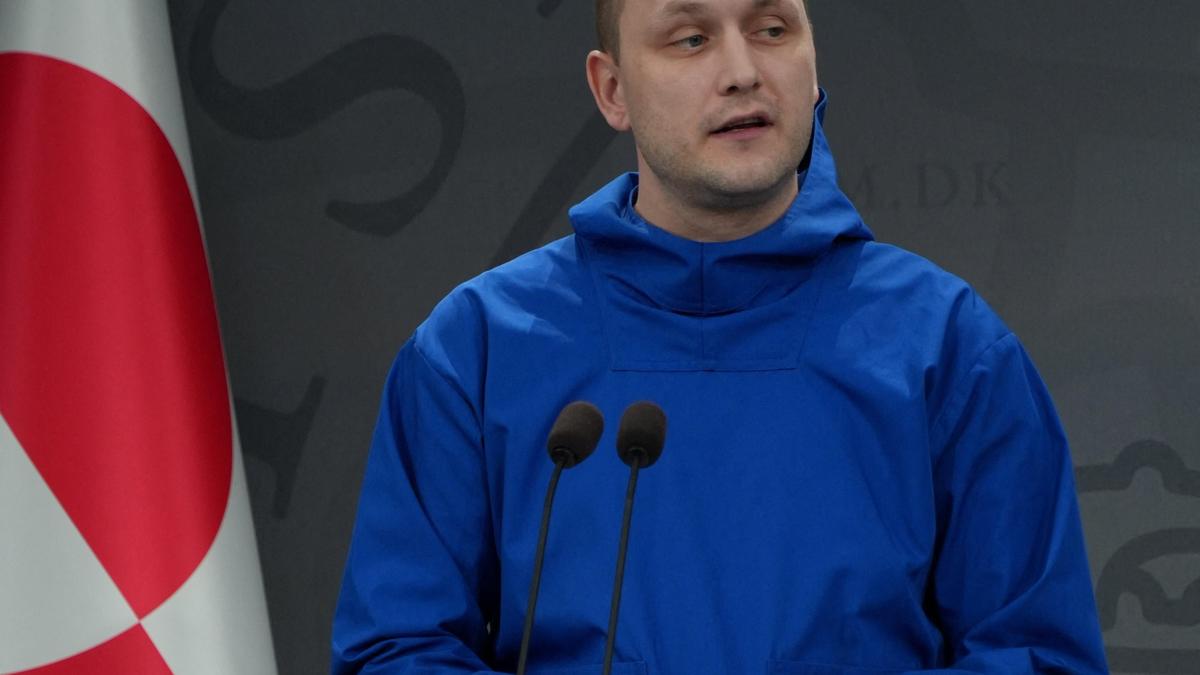
Wed Jan 14 06:55:00 UTC 2026: ### Greenland Rejects Trump’s Overture, Sticking with Denmark and NATO
The Story:
Greenland is at the center of a geopolitical dispute as former U.S. President Donald Trump seeks to acquire the island, raising concerns in both Greenland and Denmark. Despite Greenland’s strategic importance due to melting ice opening up trade routes and access to critical minerals, Greenland Prime Minister Jens-Frederik Nielsen has made it clear that Greenland prefers to remain aligned with Denmark, NATO, and the EU. U.S. Vice President J.D. Vance met with Danish and Greenlandic officials in Washington to discuss the matter, but the situation remains tense.
Key Points:
- Jens-Frederik Nielsen, Greenland’s Prime Minister, stated Greenland chooses Denmark, NATO, and the EU over the United States.
- Donald Trump desires to control Greenland, potentially even “at any cost,” according to the article.
- The U.S. cites security concerns, particularly regarding Russian and Chinese activity, as justification for acquiring Greenland, a claim disputed by Greenlanders.
- Greenlanders value their relationship with Denmark, which provides social benefits like free healthcare and education.
- Naaja Nathanielsen, Greenland’s minister for business and mineral resources, found the U.S. discussions “unfathomable.”
- A meeting in Washington on Wednesday, January 14, 2026 between U.S. Vice President J.D. Vance, Denmark’s Foreign Minister Lars Lokke Rasmussen and his Greenlandic counterpart Vivian Motzfeldt failed to alter the U.S. position.
Critical Analysis:
The historical context reveals that the U.S. position remains unchanged after talks, and that Greenland and Denmark believe Trump is set on “conquering” the territory. This suggests a deeply entrenched disagreement and a potentially escalating crisis. The comparison made by a Greenlander, Hans Norgaard, drawing parallels between Trump’s Greenland ambition, Putin’s actions in Ukraine, and Xi Jinping’s stance on Taiwan, indicates a broader concern about global power dynamics and territorial expansion.
Key Takeaways:
- Greenland’s strong preference is to remain aligned with Denmark and NATO.
- The United States’ pursuit of Greenland is creating a rift with a key NATO ally.
- Resource competition and strategic positioning in the Arctic are driving forces behind the U.S. interest.
- The situation raises questions about the future of Arctic sovereignty and international relations.
- The failure of initial talks suggests a prolonged and potentially difficult negotiation process.
Impact Analysis:
This situation could have significant long-term implications. A forced acquisition of Greenland by the U.S. would severely damage relations with Denmark and potentially weaken NATO. The pursuit of Greenland highlights the increasing geopolitical importance of the Arctic due to climate change and resource availability, potentially leading to further tensions in the region. The outcome of this dispute will set a precedent for how international relations are conducted in the Arctic and how resource claims are handled in the future.
 First Piper