
Thu Jan 15 15:11:13 UTC 2026: ### Headline: Japan Seeks Stronger India Ties Amidst China Tensions and Quad Summit Delay
The Story:
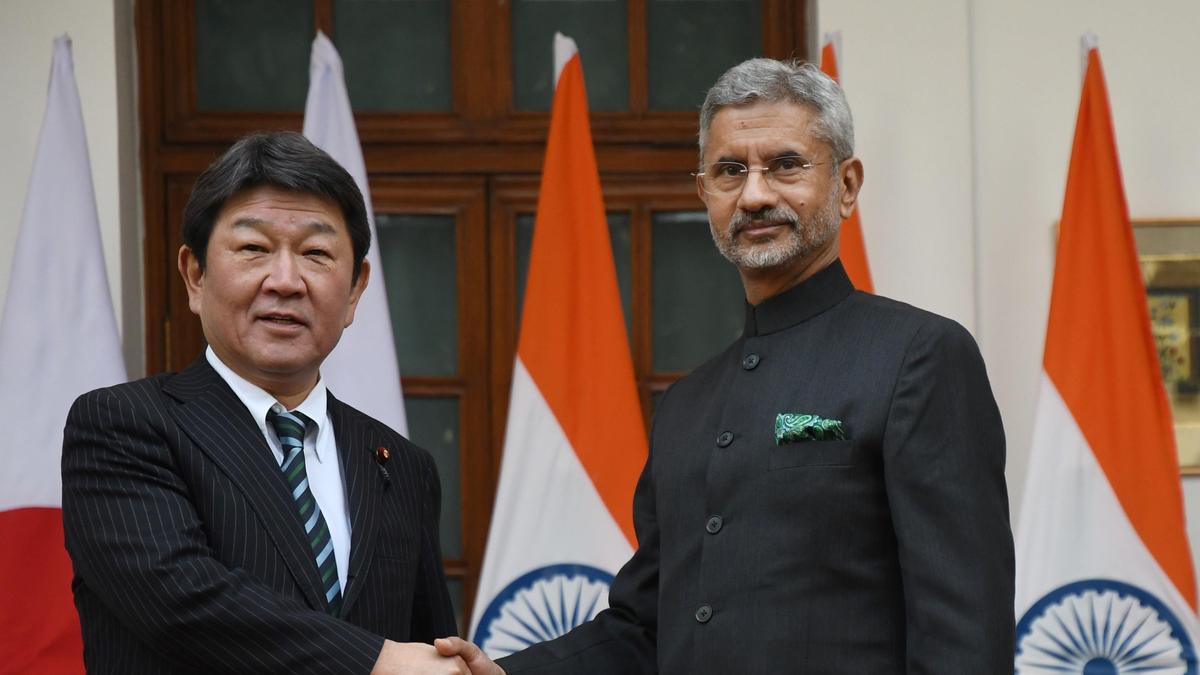
Japan’s Foreign Minister Toshimitsu Motegi is in Delhi on January 16, 2026, for talks with External Affairs Minister S. Jaishankar. The discussions aim to bolster India-Japan ties within the Indo-Pacific region amidst growing concerns over tensions with China and the stalled Quad Summit. Key topics include advancing the “Free and Open Indo-Pacific” (FOIP) initiative, cooperation in Artificial Intelligence and semiconductor technology, and economic security. The visit occurs after a 9-day tour encompassing Israel, Palestine, and Qatar, and follows defense agreements signed with the Philippines.
Key Points:
- The 18th Japan-India Strategic Dialogue will focus on strengthening ties in the Indo-Pacific.
- Japan is pushing for collaboration on Artificial Intelligence (AI), semiconductor technology, and innovation.
- Prime Minister Sanae Takaichi is expected to call snap elections in February 2026 to consolidate her position.
- Mr. Motegi’s tour included stops in Israel, Palestine, Qatar, and the Philippines, suggesting a broad diplomatic agenda.
- Japan signed defense agreements with the Philippines, including reciprocal military access and funding for patrol boats, amidst South China Sea concerns.
- Economic security is a high priority for Japan, especially following a 2-month spat with China over Taiwan.
- The Quad Summit is currently stalled due to India-U.S. tensions over trade and other issues.
- Japan will participate in the upcoming Artificial Intelligence (AI) Summit in Delhi on February 19-20, 2026.
- Progress on the “FOIP” agenda includes infrastructure development in India’s North Eastern States.
Critical Analysis:
Japan’s proactive engagement with India is a direct response to escalating tensions with China. Prime Minister Takaichi’s strong stance on Taiwan has resulted in economic retaliation from Beijing, highlighting Japan’s vulnerability. Simultaneously, the stalled Quad Summit indicates weakening cohesion within the alliance, pushing Japan to seek stronger bilateral relationships, particularly with India, to counterbalance China’s growing influence. The defense pacts with the Philippines further illustrate Japan’s strategy to contain Chinese expansion in the South China Sea.
Key Takeaways:
- Japan is strategically pivoting towards stronger bilateral ties with India as a hedge against China’s growing influence.
- Economic security is now a central pillar of Japan’s foreign policy, driven by recent trade disputes with China.
- The delay of the Quad Summit underscores underlying tensions and challenges to multilateral cooperation in the region.
- The FOIP initiative remains a cornerstone of Japan’s regional strategy, focusing on both security and economic development.
- Japan is actively seeking to diversify its partnerships to mitigate risks associated with over-reliance on any single alliance.
Impact Analysis:
The deepening India-Japan relationship has significant long-term implications for the balance of power in the Indo-Pacific. Increased cooperation on AI and semiconductor technology could foster technological innovation and reduce reliance on China. The focus on infrastructure development in India’s North Eastern States strengthens regional connectivity and challenges China’s Belt and Road Initiative. The enhanced defense cooperation between Japan and the Philippines, alongside closer ties with India, forms a crucial part of a broader strategy to contain China’s maritime expansion and safeguard regional stability. These developments suggest a more multipolar Indo-Pacific region, with India and Japan playing increasingly prominent roles.
 First Piper