
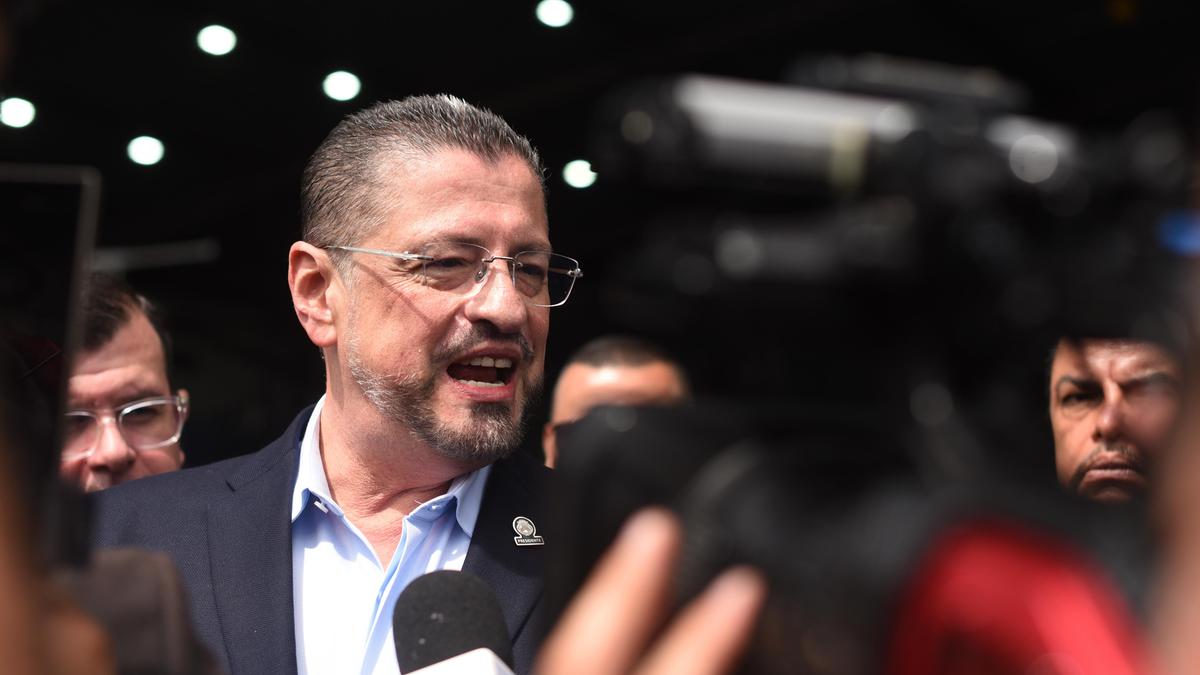
Wed Jan 14 01:29:45 UTC 2026: Headline: Costa Rican President Rodrigo Chaves Targeted in Alleged Assassination Plot
The Story:
Costa Rican President Rodrigo Chaves is reportedly the target of an assassination plot, according to the nation’s national security chief, Jorge Torres. The revelation comes shortly before presidential and legislative elections scheduled for February 1, 2026. Mr. Torres stated that he received confidential information regarding the threat, including a supposed payment made to a hitman. The security measures for President Chaves have been reinforced amidst these allegations.
The announcement coincides with a scheduled visit from El Salvador’s President Nayib Bukele, known for his stringent security policies. President Chaves is set to lay the cornerstone for a new mega-prison modeled after Bukele’s facilities. While Chaves is ineligible for reelection, the ruling party’s Laura Fernández is a presidential candidate.
Key Points:
- Costa Rican President Rodrigo Chaves is allegedly the target of an assassination plot.
- Jorge Torres, the Director of Intelligence and National Security, revealed the plot on January 13, 2026.
- A tip was received from a woman reporting a payment to a hitman.
- Security has been increased for President Chaves.
- The announcement comes before presidential and legislative elections on February 1, 2026.
- El Salvador’s President Nayib Bukele is scheduled to visit Costa Rica.
- Chaves is scheduled to lay the cornerstone for a new mega-prison modeled on a facility built by Bukele.
- The ruling party’s Laura Fernández is a presidential candidate.
Critical Analysis
The timing of the alleged assassination plot is significant. With elections looming, the news could be used to rally support for the ruling party or to destabilize the political landscape. The association with Bukele, whose security policies are controversial but have yielded tangible results in El Salvador, adds another layer of complexity. The announcement is potentially an attempt to influence public opinion on crime and security policy before the election.
Key Takeaways:
- The alleged assassination plot against President Chaves introduces instability ahead of the upcoming elections.
- The timing of the announcement, coinciding with President Bukele’s visit and the mega-prison groundbreaking, is likely strategic.
- The events highlight the growing focus on “tough-on-crime” policies in Costa Rica, mirroring trends in other Latin American nations.
- The integrity of the election may be questioned due to the assassination plot news.
- The reliance on information from an anonymous tip raises questions about the credibility of the threat.
Impact Analysis:
The assassination plot could significantly impact the upcoming elections and Costa Rica’s political future. It may lead to:
- Increased Security Measures: Heightened security will likely become the norm, potentially infringing on civil liberties.
- Polarized Electorate: The incident could deepen political divisions, with some supporting more stringent security measures and others fearing authoritarianism.
- Election Interference: The plot, regardless of its validity, could be exploited to influence voter sentiment and potentially delegitimize the election outcome.
- Regional Implications: A successful assassination or even a perceived threat could encourage similar actions in other countries in the region with similar security concerns.
- Shift in Policy: The focus on security may overshadow other crucial policy areas like economic development, social welfare, and environmental protection.
 First Piper