
Thu Jan 15 12:46:37 UTC 2026: # Significant Maoist Surrender in Chhattisgarh Signals Intensified Anti-Naxal Efforts
The Story:
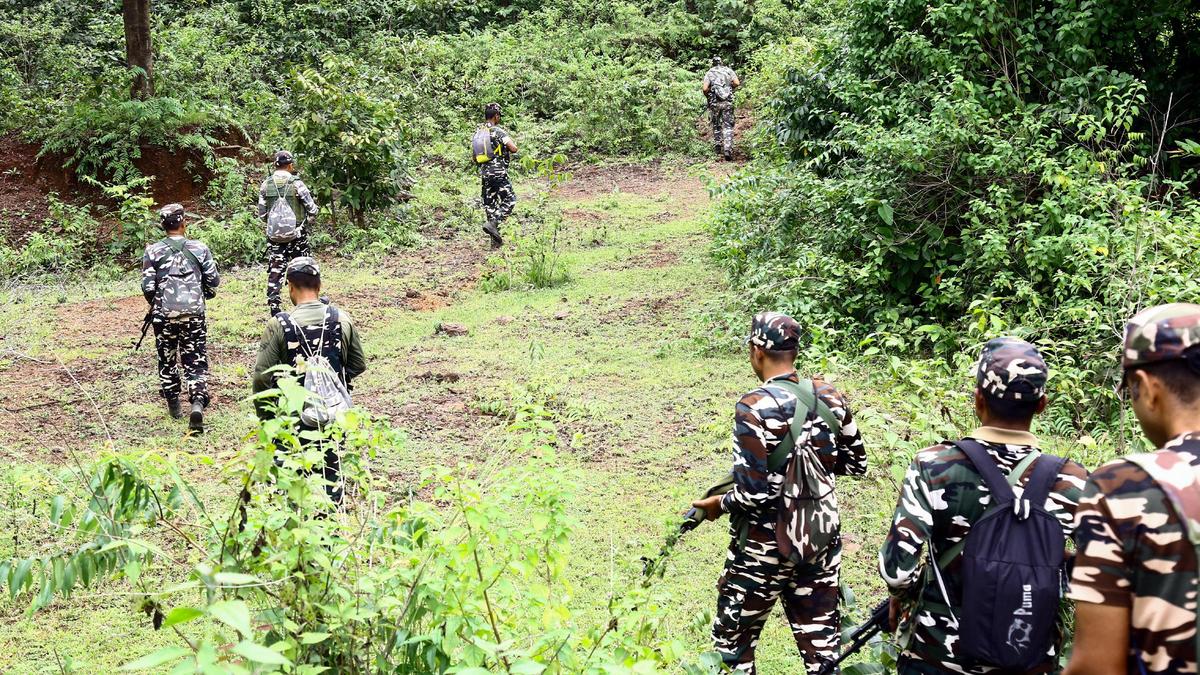
On January 15, 2026, a significant number of 52 Maoists, including 21 women, surrendered to police in Chhattisgarh’s Bijapur district. These individuals, carrying a collective bounty of over ₹1.41 crore, were active in various Maoist groups, including Dandakaranya Special Zonal Committee (DKSZC), Andhra-Odisha Border division, and Bhamragarh area committee (Maharashtra). The surrender took place under the “Poona” Margem initiative, aimed at rehabilitation and social reintegration.
The surrendered Maoists cited the state government’s surrender and rehabilitation policy as a key factor in their decision. The authorities have promised immediate assistance of ₹50,000 each and rehabilitation as per government policy. This surrender follows similar events in neighboring districts like Sukma and Dantewada, suggesting an increasing trend of Maoists abandoning the insurgency.
Key Points:
- 52 Maoists surrendered in Bijapur, Chhattisgarh on January 15, 2026.
- 49 of them carried a collective bounty of over ₹1.41 crore.
- The surrendered cadres were active in DKSZC, Andhra-Odisha Border division, and Bhamragarh area committee (Maharashtra).
- The surrender was facilitated by the “Poona” Margem initiative.
- Each surrendered Maoist will receive immediate assistance of ₹50,000 and rehabilitation.
- Surrenders have also recently occurred in Sukma (29 Maoists on January 14, 2026; 26 Maoists on January 7, 2026) and Dantewada (63 Maoists on January 8, 2026).
- Over 1,500 Maoists surrendered in the State in 2025.
- The Centre aims to eliminate Naxalism by March 31, 2026.
Critical Analysis:
The related historical context reveals an accelerating trend of Maoist surrenders in Chhattisgarh and surrounding regions. This surge in surrenders coincides with government initiatives like “Poona Margem” and the promise of rehabilitation, suggesting these policies are having a tangible impact on the ground. Furthermore, the central government’s stated goal to eliminate Naxalism by March 31, 2026, likely intensifies pressure on Maoist groups, possibly contributing to disillusionment among their ranks. The historical context also shows the government is attempting to integrate these areas into the mainstream society by providing tribal women with opportunities for employment and by reintroducing wildlife into the area.
Key Takeaways:
- The government’s surrender and rehabilitation policies appear to be gaining traction in Maoist-affected regions.
- The increased surrenders indicate a potential weakening of Maoist influence in certain areas.
- The central government’s deadline to eliminate Naxalism may be driving both increased pressure on Maoist groups and a desire for cadres to seek amnesty.
- Integration of Maoist affected areas into the Indian economy could create long-term stability.
- A coordinated strategy that combines security operations with socio-economic development initiatives is critical for sustainable success.
Impact Analysis:
The continued surrenders, if sustained, could significantly weaken the Maoist insurgency in Chhattisgarh and neighboring states. This could lead to improved security conditions, facilitating development projects and improved governance in previously inaccessible areas. Long-term, it could create opportunities for economic growth and social integration, addressing some of the root causes of the Naxalite movement. However, the success of these surrenders hinges on the government’s ability to effectively rehabilitate former Maoists and provide them with sustainable livelihoods. Failure to do so could lead to disillusionment and a resurgence of violence.
 First Piper