
Thu Jan 15 00:30:00 UTC 2026: ### Makar Sankranti Celebrated in Jhalawar with Traditional Fervor, Scientific Underpinnings Emphasized
The Story:
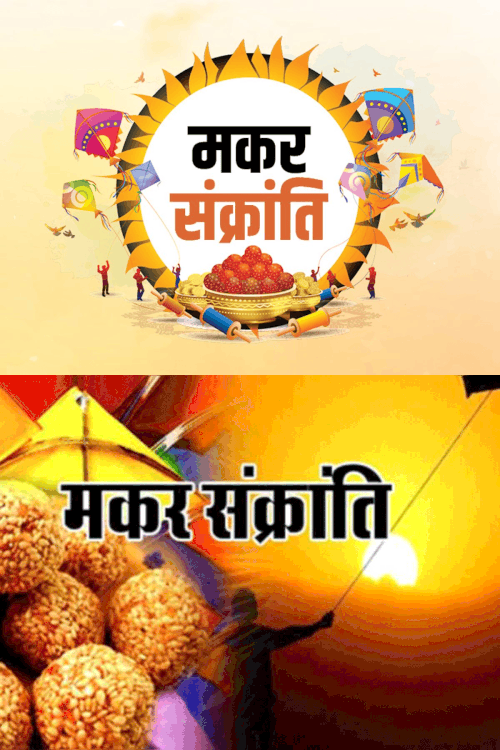
Makar Sankranti, a major festival in the Indian Sanatan tradition, was celebrated in Jhalawar on January 14th. According to international Vedic astrologer Hemant Kasat, the Sun God entered the Makar (Capricorn) zodiac sign from Dhanu (Sagittarius) at 3:13 PM, marking the beginning of Uttarayan, considered the day of the gods in Vedic astrology. The festival’s traditions, including the consumption of sesame seeds and jaggery, and the practice of kite flying, are highlighted for their intertwined religious, Ayurvedic, and scientific benefits, promoting health and well-being during the winter season.
Key Points:
- Makar Sankranti was celebrated in Jhalawar on January 14th.
- The Sun God entered the Makar (Capricorn) zodiac sign at 3:13 PM, marking Uttarayan.
- Uttarayan is considered the day of the gods in Vedic astrology.
- Consuming sesame seeds and jaggery is a tradition with Ayurvedic and scientific benefits.
- Kite flying and outdoor activities during Makar Sankranti facilitate Vitamin D absorption and promote physical health.
- The festival is described as a confluence of astrology, Ayurveda, and modern science.
Key Takeaways:
- Makar Sankranti is more than just a religious festival; it encompasses scientific and health benefits.
- The celebration reflects a deep understanding of the relationship between nature, health, and well-being.
- The festival traditions are designed to counteract the effects of winter, promoting physical and mental health.
 First Piper