
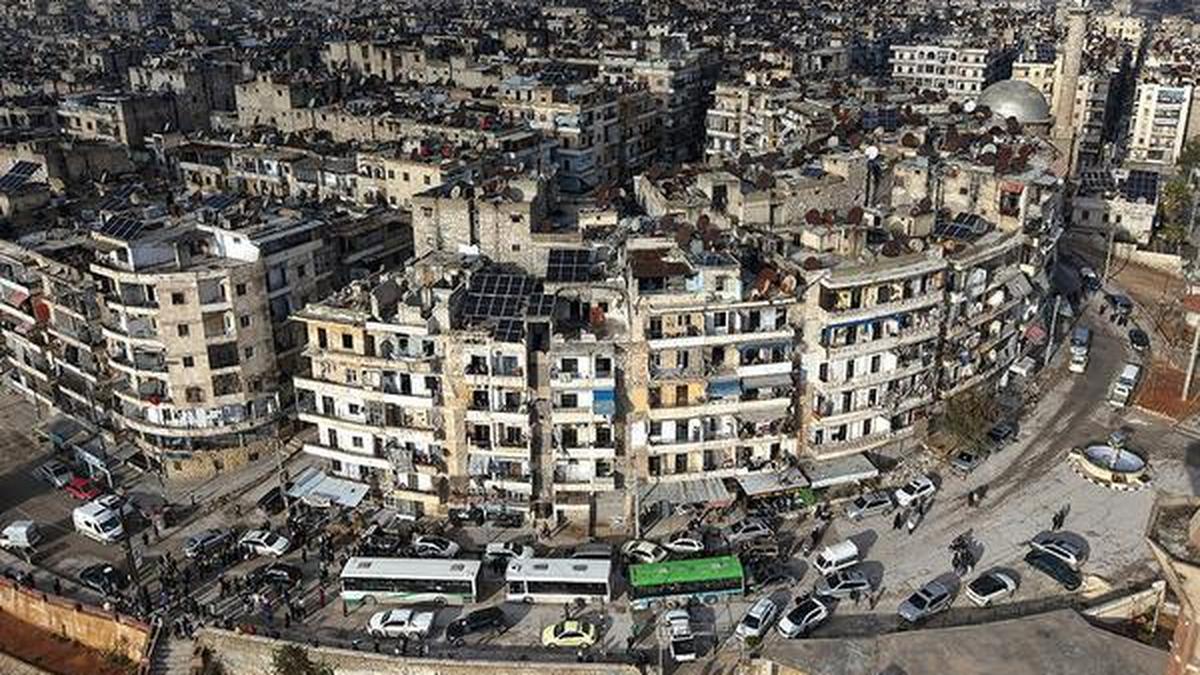
Wed Jan 14 06:20:11 UTC 2026: ### Aleppo Erupts in Renewed Clashes as Syrian Forces and SDF Tensions Escalate
The Story:
Syrian government forces and the Kurdish-led Syrian Democratic Forces (SDF) engaged in renewed fire exchanges on Tuesday, January 13, 2026, in eastern Aleppo province. This marks a potential escalation following days of deadly clashes in the northern city. The fighting centers around a deadlock in negotiations regarding the integration of SDF fighters into the Syrian national army, a key condition of a March 2025 deal brokered under interim President Ahmad al-Sharaa. Accusations of troop mobilizations and drone attacks have been exchanged, further fueling the conflict.
The renewed violence has displaced tens of thousands of people, with the Syrian Army now claiming full control of the Sheikh Maqsoud and Achrafieh neighborhoods after the evacuation of Kurdish fighters. The SDF has voiced frustration with both Damascus and Washington, accusing the former of not implementing the March 2025 agreement and the latter of failing to clarify its position on the Syrian government’s actions.
Key Points:
* Clashes between Syrian government forces and the SDF occurred in eastern Aleppo province on January 13, 2026.
* The SDF and Syrian government are in an impasse over merging SDF fighters into the national army, per a March 2025 agreement.
* Both sides accuse each other of attacks and troop mobilizations, including drone strikes.
* Tens of thousands have been displaced by recent fighting in Aleppo.
* The SDF criticizes the U.S.’s ambiguous stance and accuses Damascus of violating the merger agreement.
* The Syrian Army has declared an area east of Aleppo a “closed military zone.”
* The SDF denies being behind a drone attack on the Aleppo governorate building.
* The former Turkiye-backed insurgent groups that make up the new Syrian Army have a long history of clashing with Kurdish forces.
Critical Analysis:
The events unfolding in Aleppo are a direct consequence of the uneasy power-sharing arrangement established after the fall of Bashar Assad in December 2024. The deal intended to integrate the SDF into the Syrian Army faces significant hurdles because of pre-existing animosities, particularly the inclusion of former Turkiye-backed insurgents within the national army. Furthermore, the ambiguity in U.S. foreign policy under the Trump administration, which simultaneously supports the SDF and cultivates ties with the al-Sharaa government, is exacerbating tensions and creating mistrust. This three-way power play, involving the Syrian government, the Kurdish SDF, and external actors such as Turkiye and the U.S., makes a peaceful resolution increasingly difficult.
Key Takeaways:
* The integration of the SDF into the Syrian Army is a highly contested process with deeply rooted challenges.
* External actors, particularly the U.S. and Turkiye, play a significant role in shaping the conflict’s dynamics.
* The ambiguous U.S. policy in Syria is creating uncertainty and potentially fueling further conflict.
* The presence of former Turkiye-backed insurgents within the Syrian Army complicates relations with the SDF.
* The ongoing clashes risk undermining the fragile stability in the region and could lead to further displacement and humanitarian crises.
Impact Analysis:
The ongoing conflict in Aleppo carries several long-term implications. Firstly, the failure to integrate the SDF into the Syrian Army could lead to a protracted insurgency and instability in northeastern Syria. Secondly, the ambiguous U.S. stance risks alienating the SDF, potentially undermining future counter-terrorism efforts against the Islamic State group. Thirdly, the involvement of Turkiye, which views the SDF as a terrorist organization, introduces a regional dimension to the conflict, with the potential to escalate tensions between Ankara and other actors. Ultimately, the events in Aleppo highlight the complexities of post-conflict stabilization and the challenges of reconciling competing interests in a volatile geopolitical landscape.
 First Piper