
Tue Jan 13 23:52:28 UTC 2026: ### India’s Gaganyaan Mission Aims to “Hold Space” for the World
The Story:
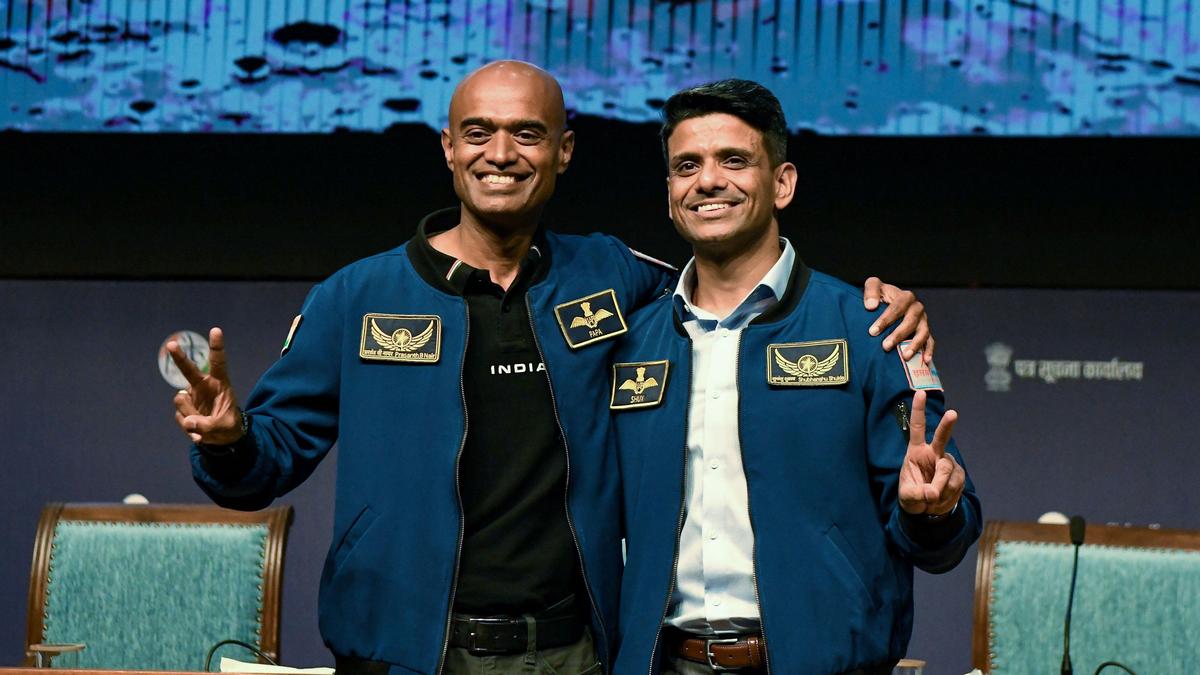
Indian Air Force Group Captain Prasanth Balakrishnan Nair, an astronaut selected for India’s first crewed spaceflight mission, Gaganyaan, stated that India’s space program will “hold space for the rest of the world.” Speaking at the third edition of the Deep Science Forum, a deep-tech event held by Ankur Capital, Nair emphasized the significance of India developing indigenous space capabilities and contributing to the global space arena. He highlighted India’s prior role in providing vaccines to other countries during the COVID-19 crisis as an example of its global responsibility and contrasted it with what he perceives as a more nationalistic approach taken by the U.S. He called on Indian startups and investors to forge a unique path different from the “American way,” urging a collaborative model reminiscent of the COVID-19 vaccine efforts.
Key Points:
- Group Captain Prasanth Balakrishnan Nair is one of the astronauts selected for the Gaganyaan mission.
- The Gaganyaan mission is expected to launch in 2027.
- The mission aims to make India the fourth country to independently send humans into space, after Russia, the US, and China.
- Nair emphasizes that India’s space program will be different from other nations.
- Nair criticizes the current renegotiations of the Outer Space Treaty, expressing concerns about potential weaponization of space.
Critical Analysis:
The statement by Group Captain Nair reflects a growing sentiment in India regarding its role on the global stage. The historical context provided shows India’s recent economic growth, as noted by the World Bank projecting a 7.2% growth rate. This economic confidence likely fuels the ambition behind the Gaganyaan mission and the desire to project Indian values of collaboration and shared responsibility into the realm of space exploration. The reference to the Outer Space Treaty also points to broader geopolitical concerns about the potential militarization of space, indicating India’s intention to advocate for peaceful and equitable access to space resources.
Key Takeaways:
- India views its space program as an extension of its foreign policy, emphasizing global collaboration and responsibility.
- The Gaganyaan mission is a significant step towards India’s self-reliance in space technology and its ambition to become a leading spacefaring nation.
- Concerns about the potential weaponization of space highlight the importance of India’s advocacy for the peaceful use of space resources.
- India aims to create an alternative model for deep-tech development and space exploration that differs from the perceived nationalistic approach of other countries.
Impact Analysis:
The successful launch of Gaganyaan in 2027 would have a significant impact on India’s technological capabilities, international standing, and economy. It would enhance India’s position as a key player in the global space industry, potentially leading to increased collaborations with other nations and attracting foreign investment. Furthermore, it could inspire a new generation of scientists and engineers in India, fostering innovation and technological advancement across various sectors. The mission also has implications for the renegotiation of the Outer Space Treaty, potentially strengthening the arguments for a more equitable and demilitarized approach to space exploration.
 First Piper