
Wed Jan 14 00:50:34 UTC 2026: ### U.S.-Iran Tensions Rise as Trump Threatens Intervention and Tariffs; India Caught in the Crossfire
The Story:
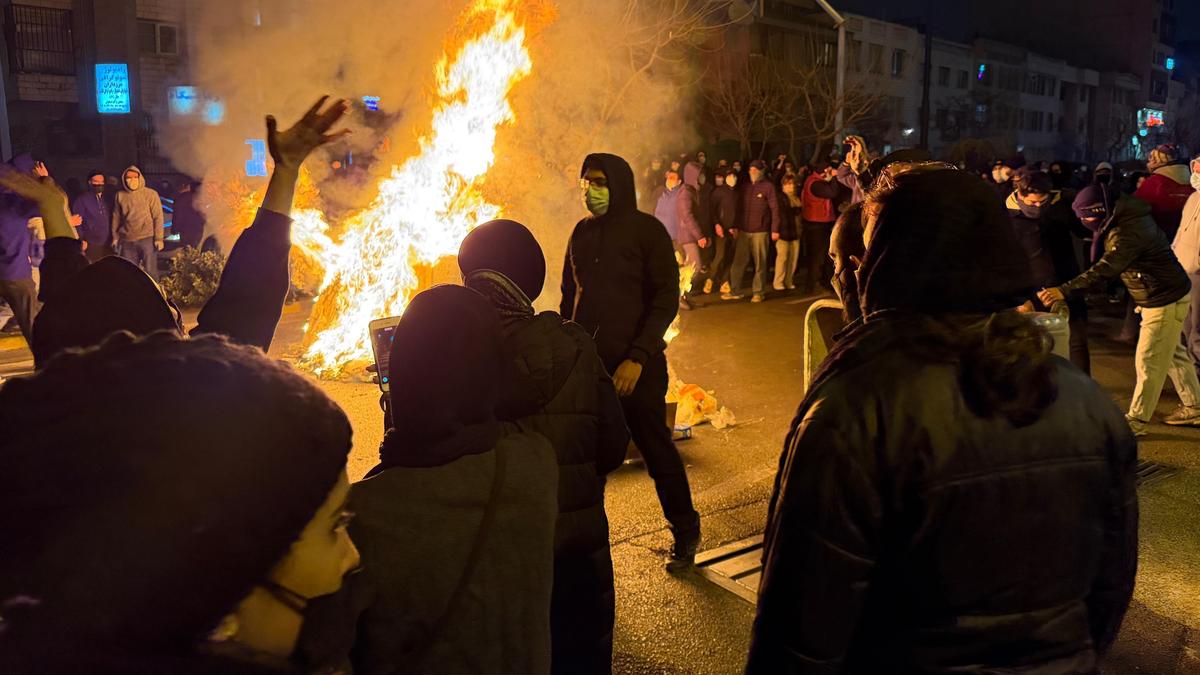
The relationship between the U.S. and Iran has escalated sharply, with U.S. President Donald Trump increasing pressure on the Iranian government amidst ongoing protests. Trump has threatened intervention and announced potential tariffs of 25% on any country trading with Iran. This development places India in a difficult position as it prepares to host Iran’s President Masoud Pezeshkian for the upcoming BRICS summit while simultaneously facing pressure from the U.S. to reduce trade ties with Iran.
Key Points:
- January 13, 2026: President Trump threatens intervention in Iran and claims Iranian officials have sought talks with Washington.
- January 13, 2026: President Trump announces potential 25% tariffs on countries trading with Iran.
- India is preparing to reduce its trade with Iran due to “external economic factors.”
- India is still scheduled to host President Masoud Pezeshkian for the BRICS summit.
- Iranian state media broadcasts confession videos allegedly showing foreign plots behind the protests.
- S. Jaishankar held a phone conversation with U.S. Secretary of State Marco Rubio, focusing on cooperation in areas of trade, critical minerals, nuclear energy and defence.
Critical Analysis:
The timing of President Trump’s escalating rhetoric and economic threats appears calculated to isolate Iran further on the global stage. His remarks come amid internal unrest within Iran, providing a pretext for potential intervention. This strategy is consistent with Trump’s previous foreign policy approaches, which often involve unilateral action and aggressive economic measures.
Key Takeaways:
- The U.S. is exerting significant pressure on Iran, both politically and economically.
- India is facing a complex balancing act between maintaining relations with Iran and avoiding economic repercussions from the U.S.
- The BRICS summit presents an opportunity for India to navigate these conflicting interests, potentially seeking alternative strategies to maintain economic ties with Iran.
- The Iranian government is attempting to portray internal unrest as the result of foreign interference.
Impact Analysis:
- Short-term: Increased geopolitical instability in the Middle East, potential for further economic strain on Iran, and diplomatic challenges for India.
- Long-term: Potential realignment of trade relationships in the region, impact on the future of the Iran nuclear deal, and possible escalation of conflict in the Middle East. India’s ability to navigate this situation will likely influence its standing as a global power.
 First Piper