
Tue Jan 13 08:28:52 UTC 2026: ### Artemis II Mission Nears Launch Amidst Other NASA Developments
The Story:
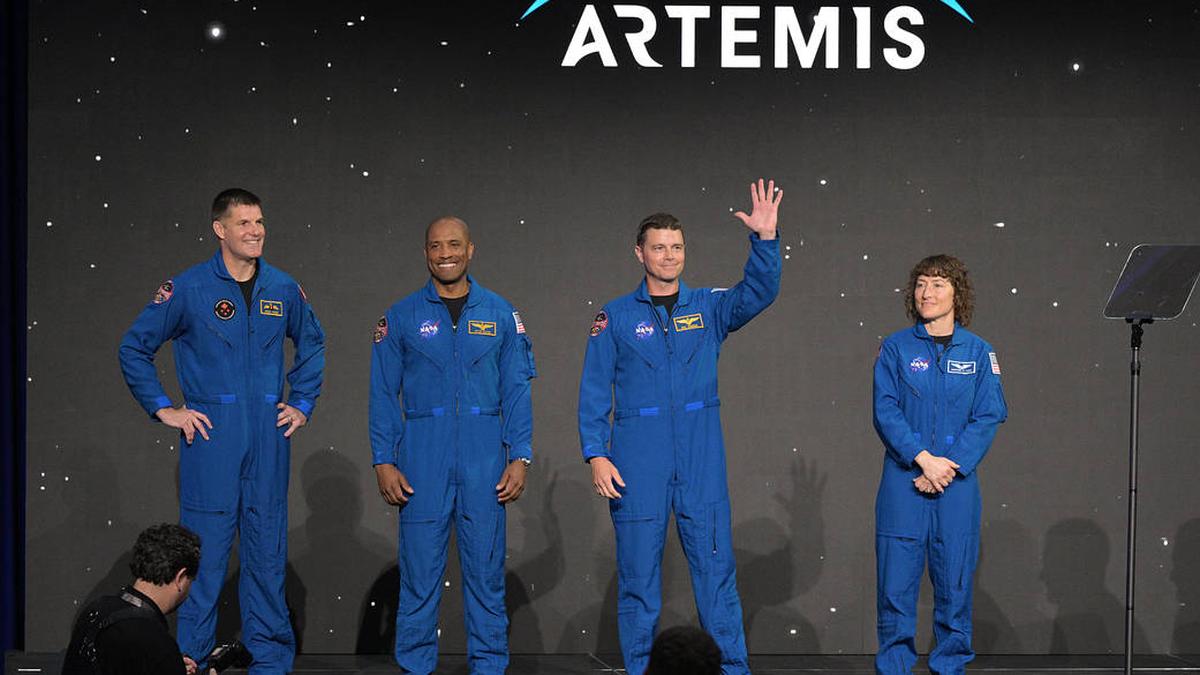
NASA’s Artemis II mission, the first crewed mission to the vicinity of the moon since 1972, is in its final preparation stages, with a targeted launch date of February 6, 2026. This 10-day flight will rigorously test the Space Launch System (SLS) rocket and Orion spacecraft, ensuring the safety and reliability of life-support and navigation systems for future lunar missions. The mission, commanded by Reid Wiseman, with pilot Victor Glover, and mission specialists Christina Koch and Jeremy Hansen (from the Canadian Space Agency), will follow a hybrid free-return trajectory, orbiting Earth twice before venturing 10,300 km beyond the far side of the moon.
Key Points:
- Artemis II is the first crewed mission to the moon’s vicinity since 1972.
- The mission is scheduled to launch no earlier than February 6, 2026.
- The four-person crew includes Reid Wiseman (commander), Victor Glover (pilot), Christina Koch, and Jeremy Hansen (mission specialists).
- The flight will test the SLS rocket and Orion spacecraft in a 10-day mission.
- The mission will follow a hybrid free-return trajectory, not landing on the moon, but orbiting 10,300 km beyond it before returning to Earth.
Critical Analysis:
The multiple related news events paint a picture of an agency experiencing both forward momentum and internal strain. The planned attendance of Sunita Williams at the Kerala Literature Festival suggests a continued effort to engage the public and foster international collaboration. However, the “unprecedented” call to bring astronauts home after illness and the “ballooning” library shutdown scandal suggest internal challenges and potential resource allocation issues. The timing of the Artemis II preparations amidst these other concerns hints at the high stakes and pressure surrounding this mission’s success.
Key Takeaways:
- Artemis II represents a significant step in NASA’s long-term lunar exploration goals.
- The mission’s success is crucial for greenlighting future lunar landing missions, specifically Artemis III.
- Recent events suggest that NASA is facing internal challenges that could potentially impact its overall operations.
- Public engagement, as evidenced by Sunita William’s planned appearance, remains a key priority for NASA, despite internal issues.
- The health and safety of astronauts are paramount, as seen by the urgent medical evacuation plans.
Impact Analysis:
The success of Artemis II will have a profound impact on the future of space exploration. It will validate the SLS and Orion systems, paving the way for a sustained human presence on the moon. A successful mission could also revitalize public interest in space exploration and strengthen international partnerships. However, failure could significantly delay future lunar missions and raise questions about the effectiveness of NASA’s current strategy. The ongoing internal challenges within NASA, if not addressed, could hinder its long-term ability to achieve its ambitious goals. Addressing issues like astronaut health and resource allocation (as seen in the library closure controversy) are essential for sustained success.
 First Piper