
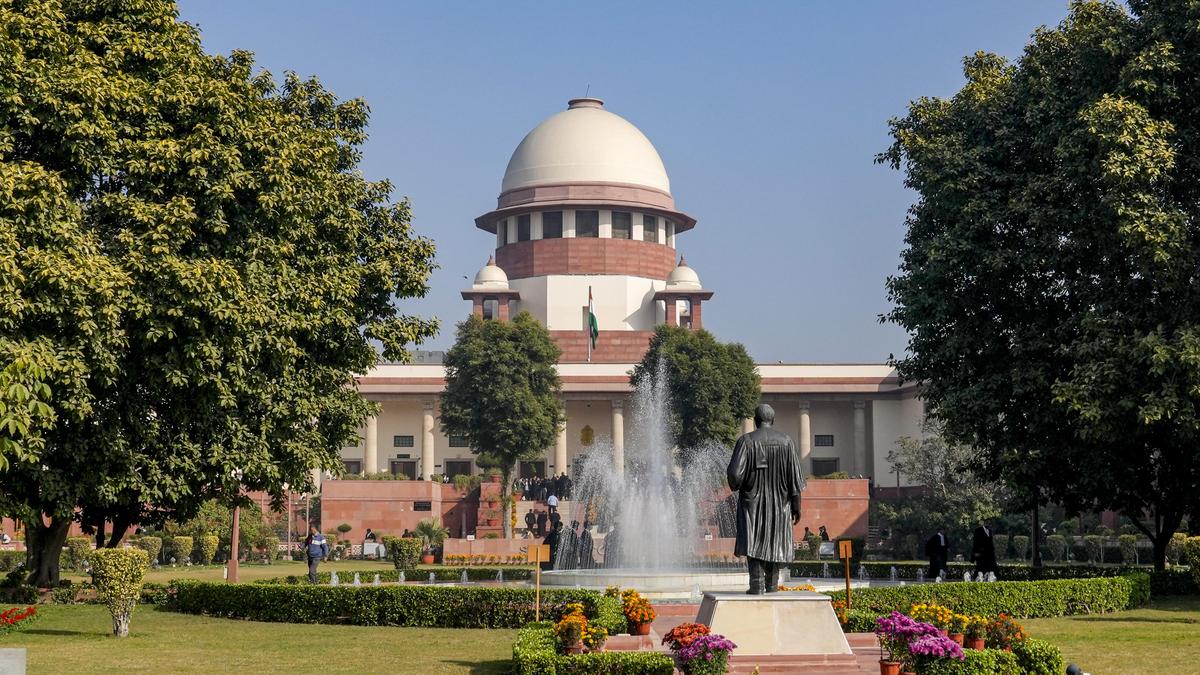
Tue Jan 13 07:19:49 UTC 2026: # Supreme Court Hears Arguments on Election Commission’s Special Intensive Revision, Citizenship Verification
The Story:
The Supreme Court heard arguments regarding the Election Commission of India’s (ECI) Special Intensive Revision (SIR) of electoral rolls on January 13, 2026. Senior Advocate Rakesh Dwivedi, representing the ECI, argued that the ECI’s role in the SIR is limited to verifying citizenship for electoral roll inclusion and does not automatically lead to deportation, which remains under the Centre’s jurisdiction. The court debated the extent to which Electoral Registration Officers (EROs) can inquire into citizenship status during the revision process.
The hearing raised constitutional questions about the ECI’s powers, citizenship rights, and the right to vote. The court considered the historical context of citizenship in India, referencing Constituent Assembly debates and previous judgments like the Sarbananda Sonowal case, to understand the evolving stringency of citizenship verification. The bench will reconvene on January 15, 2026.
Key Points:
- The Supreme Court is hearing petitions challenging the ECI’s decision to undertake the SIR of electoral rolls.
- Senior Advocate Rakesh Dwivedi argued the ECI’s role is limited to citizenship verification for voter rolls, not deportation.
- The court discussed the power of Electoral Registration Officers (EROs) to inquire into citizenship.
- References were made to the Constituent Assembly debates and the Sarbananda Sonowal judgment to understand the historical context of citizenship.
- The hearing was adjourned and will resume on January 15, 2026.
Key Takeaways:
- The Supreme Court is grappling with the balance between ensuring fair elections and protecting the citizenship rights of individuals.
- The extent of the ECI’s power to verify citizenship is a central point of contention.
- Historical perspectives on citizenship, as reflected in the Constitution and past judgments, are critical to the legal arguments.
- The outcome of this case could significantly impact the electoral process and the citizenship status of numerous individuals, especially in states undergoing intensive revisions.
Impact Analysis:
The Supreme Court’s decision on the ECI’s SIR and the extent of its powers will have far-reaching consequences. A ruling that broadly empowers the ECI could lead to increased scrutiny of citizenship, potentially disenfranchising a significant number of voters, especially marginalized communities. Conversely, a ruling that restricts the ECI’s power could be perceived as undermining the integrity of the electoral process. The long-term impact includes defining the scope of the ECI’s authority in electoral matters and setting a precedent for future citizenship verification processes. The outcome will likely influence political dynamics and the rights of citizens and non-citizens alike.
 First Piper