
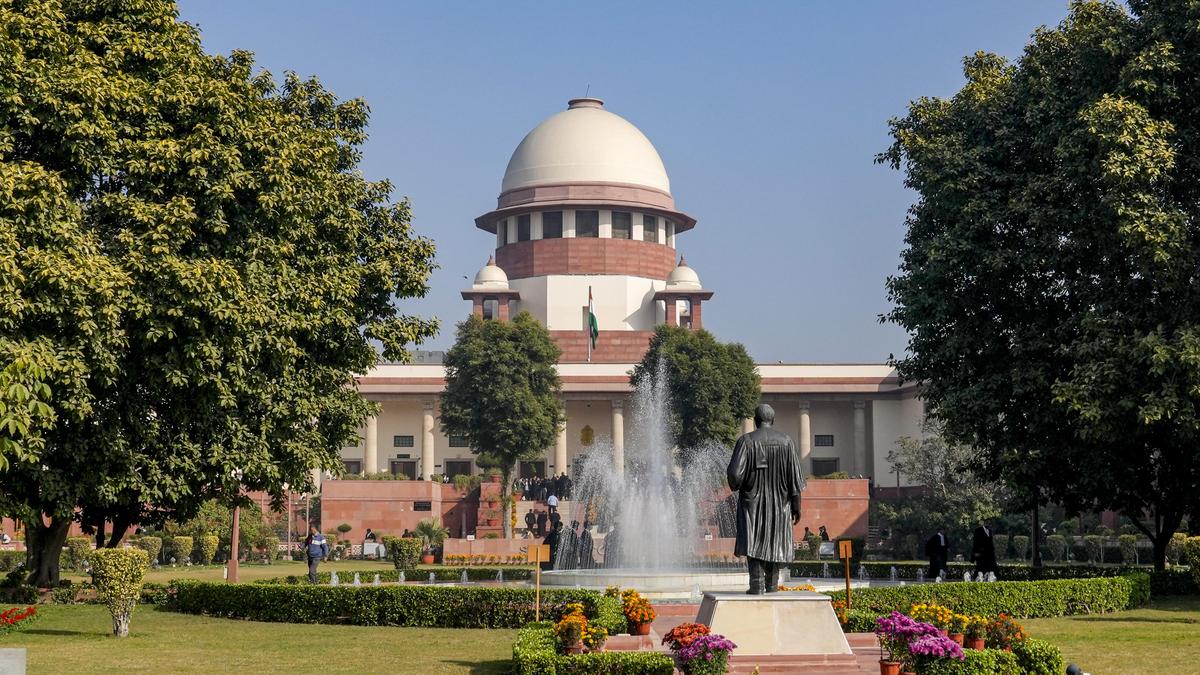
Tue Jan 13 07:19:49 UTC 2026: ### Supreme Court to Hear Petitions Challenging Election Roll Revisions
The Story:
The Supreme Court is scheduled to hear a batch of petitions challenging the Election Commission of India’s (ECI) decision to undertake a Special Intensive Revision (SIR) of electoral rolls in several states, including West Bengal, Tamil Nadu, and Bihar. The court had previously deferred the hearing on January 8, 2026. The ECI maintains its constitutional duty and the power to conduct the SIR to ensure that no foreigners are registered as voters. The ongoing SIR in West Bengal has already resulted in the deletion of approximately 58 lakh names, sparking political debate and concerns about the scope of the ECI‘s powers, citizenship, and the right to vote.
Key Points:
- The Supreme Court is hearing petitions challenging the ECI‘s SIR of electoral rolls.
- The SIR is being conducted in states like West Bengal, Tamil Nadu, and Bihar.
- The ECI asserts its constitutional duty to ensure that only eligible citizens are registered to vote.
- Approximately 58 lakh names have been deleted from the electoral rolls in West Bengal as part of the SIR.
- The petitions raise constitutional questions about the ECI‘s powers and the right to vote.
Key Takeaways:
- The ECI‘s authority to revise electoral rolls is being challenged in the Supreme Court.
- The large-scale deletion of names from electoral rolls raises concerns about disenfranchisement.
- The focus on potential foreign voters suggests a heightened concern about citizenship verification in the electoral process.
- The political sensitivity surrounding the SIR is evident from the debate in poll-bound West Bengal.
Impact Analysis:
The Supreme Court’s decision on these petitions could significantly impact the ECI‘s authority and the electoral process. If the court upholds the ECI‘s decision, it could set a precedent for stricter voter verification processes nationwide. Conversely, if the court rules against the ECI, it could restrict the commission’s powers to revise electoral rolls and potentially lead to challenges to future revision efforts. The outcome will directly influence the integrity and inclusivity of the electoral process, especially in regions with high levels of migration or citizenship disputes. The political ramifications could be considerable, particularly in states where the composition of the electorate is closely contested.
 First Piper