
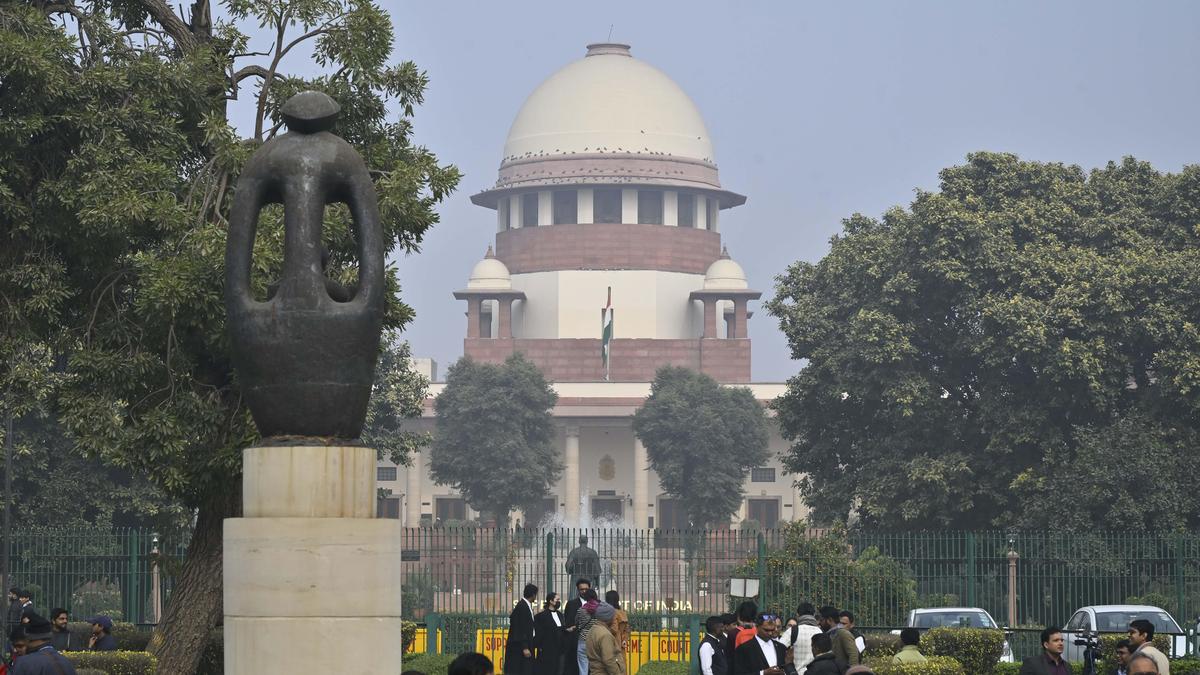
Tue Jan 13 06:13:28 UTC 2026: # Supreme Court Delivers Split Verdict on Anti-Corruption Law Provision
The Story: On January 13, 2026, the Supreme Court of India issued a split verdict regarding the legality of Section 17A of the Prevention of Corruption Act, 1988. This section, introduced in July 2018, mandates prior sanction before prosecuting public servants for actions taken in discharge of their official duties. Justice B.V. Nagarathna deemed the provision unconstitutional, arguing it undermines the prosecution of corrupt officials. Conversely, Justice K.V. Viswanathan advocated for retaining the provision but suggested that an independent body, like the Lok Pal or Lok Ayukta, should decide on sanctions.
Key Points:
- The Supreme Court delivered a split verdict on the legality of Section 17A of the Prevention of Corruption Act, 1988.
- Justice Nagarathna found Section 17A unconstitutional, arguing it protects corrupt officials.
- Justice Viswanathan proposed that sanctions should be decided by an independent authority, maintaining the need for protection against frivolous prosecution of honest officials.
- The petition challenging Section 17A was filed by the Centre for Public Interest Litigation, represented by advocate Prashant Bhushan.
- The Union government argued that Section 17A protects public servants from malicious lawsuits.
- Mr. Bhushan submitted that only about 40% of the cases, involving the Central Bureau of Investigation, got prior approval under Section 17A for investigation.
Key Takeaways:
- The split verdict highlights the ongoing debate over balancing the need to prosecute corruption with the protection of honest public servants from potential harassment.
- The potential involvement of the Lok Pal or Lok Ayukta in sanctioning prosecutions could introduce a layer of independent oversight.
- The fate of Section 17A remains uncertain, pending further clarification or potential appeals based on the split decision.
- The case underscores the challenges in effectively combating corruption within the government while safeguarding the integrity of public service.
 First Piper