
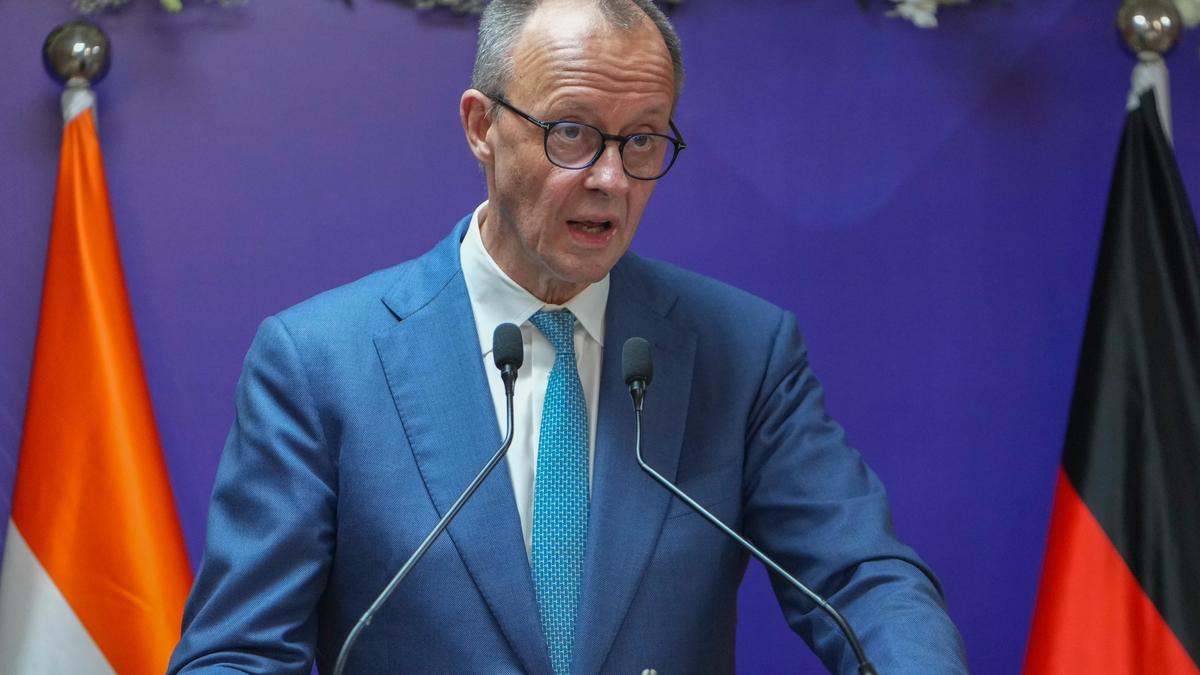
Tue Jan 13 10:05:15 UTC 2026: ### German Chancellor Predicts Imminent Fall of Iranian Regime Amidst Widespread Protests
The Story:
German Chancellor Friedrich Merz stated on Tuesday, January 13, 2026, during a visit to India, that he believes the Iranian leadership is in its “final days and weeks” due to widespread protests challenging the legitimacy of the clerical establishment. He emphasized that the regime’s reliance on violence to maintain power signals its impending collapse, as the population is rising up against it. Merz also noted Germany’s close coordination with the United States and other European governments regarding the Iranian situation, urging Tehran to cease its violent crackdown on protesters.
The statement comes amidst escalating economic hardships and growing discontent in Iran. Simultaneously, U.S. President Donald Trump announced on Monday, January 12, 2026, a potential 25% tariff on trade with any country doing business with Iran. While Germany maintains limited trade relations with Iran, it remains Tehran’s most important trading partner in the European Union. German exports to Iran fell by 25% to just under 871 million euros ($1.02 billion) in the first 11 months of 2025.
Key Points:
- German Chancellor Friedrich Merz predicts the Iranian regime is in its “final days and weeks.”
- Protests in Iran have evolved from economic grievances to calls for regime change.
- Germany is in close contact with the United States and other European governments regarding Iran.
- U.S. President Donald Trump threatens a 25% tariff on countries trading with Iran.
- German exports to Iran decreased by 25% in the first 11 months of 2025.
Critical Analysis:
The convergence of Merz’s strong statement and Trump’s trade threat suggests a coordinated Western effort to increase pressure on the Iranian regime. The historical context points to increasing internal unrest within Iran coupled with external pressure from the United States. The opinion pieces suggest that the Trump administration might be miscalculating some aspects of the Iranian situation, hinting at potential pitfalls in their approach. The timeline of crises underscores the long history of instability within Iran, implying that the current situation is not entirely unprecedented, but the internal protests against the supreme leader are a new development.
Key Takeaways:
- The Iranian regime faces a confluence of internal and external pressures.
- International coordination, particularly between Germany and the United States, is intensifying regarding Iran.
- Economic sanctions and trade threats are being used as leverage against Iran.
- The protests in Iran represent a significant challenge to the legitimacy of the ruling establishment.
- The situation in Iran is volatile and unpredictable, with the potential for rapid escalation.
Impact Analysis:
The potential collapse of the Iranian regime could have far-reaching geopolitical consequences. A power vacuum in Iran could lead to increased regional instability, potentially drawing in other countries and leading to new conflicts. The future of Iran’s nuclear program would also be uncertain. A new regime could alter Iran’s relationship with regional allies and adversaries, redrawing the map of power in the Middle East. The impact on global oil markets could also be significant. The long term impact will depend greatly on the nature of any successor regime.
 First Piper