
Mon Jan 12 19:54:42 UTC 2026: # Rajasthan Village Pioneers Organic Farming, Sets Example for Sustainable Agriculture
The Story:
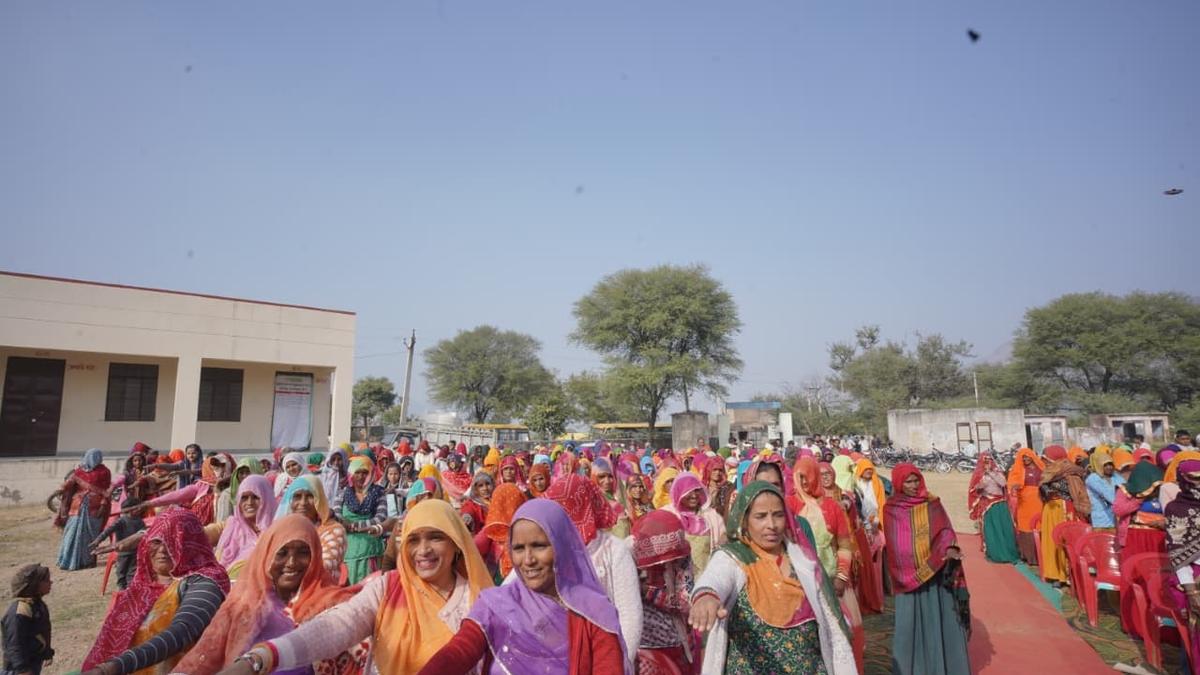
Bamanwas Kankar panchayat in Rajasthan has achieved the distinction of becoming the first fully organic village body in the state. The panchayat, located in the Kotputli-Behror district, implemented comprehensive measures to address soil degradation, declining groundwater levels, and health concerns linked to conventional chemical-based farming. This transition involved collective discussions among villagers, technical guidance from COFED (Cofarmin Federation of Organic Societies and Producer Companies), and a formal pledge against chemical-based agriculture.
Key Points:
- Bamanwas Kankar is the first panchayat in Rajasthan to be certified as fully organic.
- The panchayat comprises seven hamlets in the Kotputli-Behror district.
- The move to organic farming was driven by concerns over declining soil fertility, rising input costs, and health issues.
- Organic practices include crop rotation, mulching, vermicompost, and organic pest control.
- COFED provided technical guidance and institutional support.
- A ceremony was held on January 2, 2026, where villagers pledged against chemical-based agriculture.
- COFED aims to convert 300 panchayats into fully organic village bodies by the end of the year.
- Farmers report increased biodiversity, improved soil health, and better animal health as a result of organic practices.
Key Takeaways:
- Community-driven initiatives are crucial for successful transitions to sustainable agriculture.
- Organic farming addresses multiple challenges, including environmental degradation, health concerns, and economic sustainability for farmers.
- Support from organizations like COFED is essential in providing technical expertise and market access.
- The Bamanwas Kankar model offers a template for other villages and regions seeking to adopt organic farming practices.
- The success of this initiative could lead to a broader adoption of organic agriculture in Rajasthan and beyond.
Impact Analysis:
The Bamanwas Kankar panchayat’s achievement has significant long-term implications:
- Environmental Impact: Reduced chemical use will improve soil health, water quality, and biodiversity.
- Economic Impact: Access to premium markets and reduced dependence on costly chemical inputs can improve farmers’ livelihoods.
- Social Impact: Improved health outcomes and a stronger sense of community ownership can enhance the overall well-being of rural families.
- Policy Impact: The success of Bamanwas Kankar can inform and inspire policymakers to promote and support organic farming practices at a larger scale.
- Scalability: COFED’s goal to convert 300 panchayats demonstrates the potential for scaling up the organic farming model, potentially transforming the agricultural landscape of Rajasthan and serving as an example for other states.
 First Piper