
Tue Jan 13 03:00:00 UTC 2026: # U.S. Military Action in Venezuela Sparks International Law Concerns
The Story:
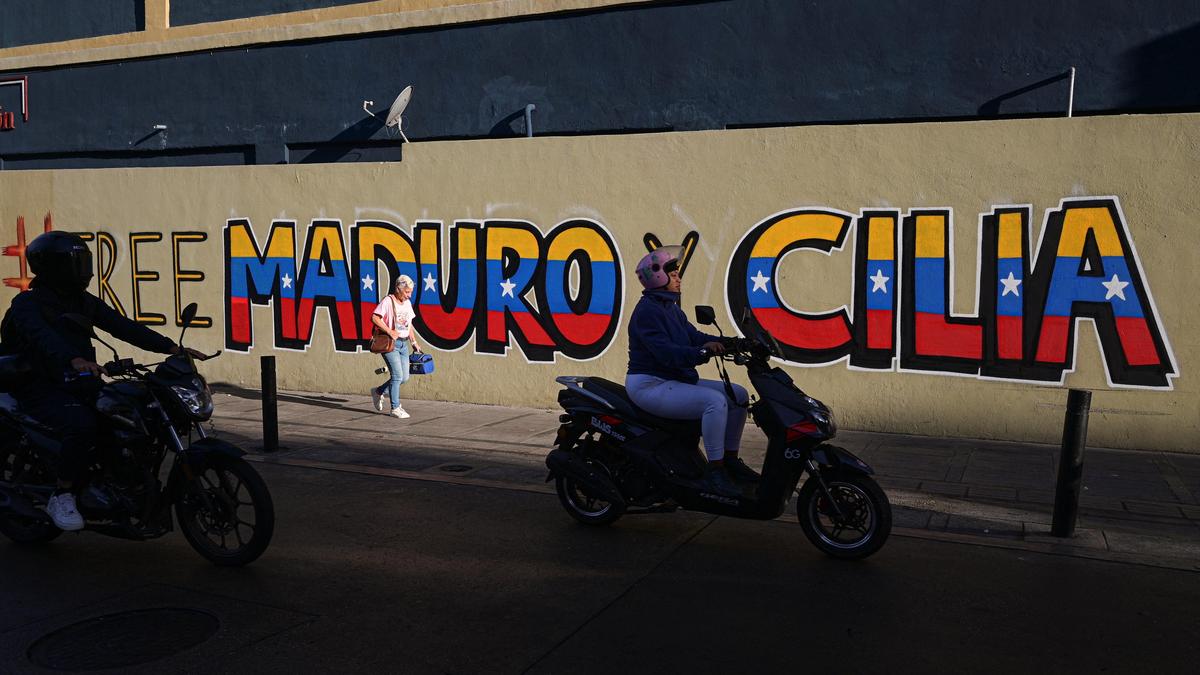
On January 12, 2026, the United States, under President Donald Trump, launched a military strike against Venezuela, capturing President Nicolas Maduro and his wife, Cilia Flores, in Caracas. President Trump announced this action from Mar-a-Lago, stating they would face trial in New York on charges of “narco-terrorism.” He further declared that the U.S. would “run” Venezuela and exploit its oil reserves to compensate U.S. companies nationalized two decades prior. The action has drawn condemnation as a violation of international law and raises questions about U.S. motivations.
Key Points:
- The U.S. captured Venezuelan President Nicolas Maduro and his wife, Cilia Flores, on January 12, 2026.
- President Donald Trump announced the action, citing “narco-terrorism” as justification.
- Trump stated the U.S. would control Venezuela and its oil resources.
- The article questions the validity of the “narco-terrorism” claim, noting that fentanyl from China is a more significant factor in U.S. drug overdoses.
- The action is described as a violation of the UN Charter, specifically Article 2(4), prohibiting the use of force against another state.
Critical Analysis:
The timing of this action is crucial when viewed against the backdrop of the related historical context. Protests continue in Iran, and Trump has sent a message to Iranians which could be interpreted as tacit approval and support. The related Trump announcement of new 25% tariffs could be seen as destabilization tactic against Iran. Trump’s attendance at the World Economic Forum in Davos could be an effort to gain international support for his aggressive foreign policy decisions.
Key Takeaways:
- The U.S. military intervention in Venezuela represents a significant breach of international law.
- The stated justification of “narco-terrorism” is questionable, given alternative sources of narcotics impacting the U.S.
- The action highlights the continued unipolar dominance of the U.S. in international relations.
- The event could prompt a realignment of global power dynamics, potentially strengthening ties between Russia and China.
- India needs to strengthen its military and develop an independent foreign policy to safeguard its security interests.
Impact Analysis:
The U.S. intervention in Venezuela has far-reaching implications.
- International Law: It undermines the authority of the UN and sets a dangerous precedent for unilateral military action.
- Geopolitics: It could accelerate the formation of a counter-alliance to U.S. dominance, led by China and Russia.
- Regional Stability: It further destabilizes Latin America, potentially leading to more conflict and humanitarian crises.
- Energy Markets: Control of Venezuelan oil reserves could significantly impact global energy prices and supply chains.
- U.S. Credibility: The action damages U.S. standing on the international stage, particularly in regions wary of American interventionism.
 First Piper