
Tue Jan 13 00:30:00 UTC 2026: ### China’s EAST Reactor Breaks Density Barrier in Fusion Energy Research
The Story:
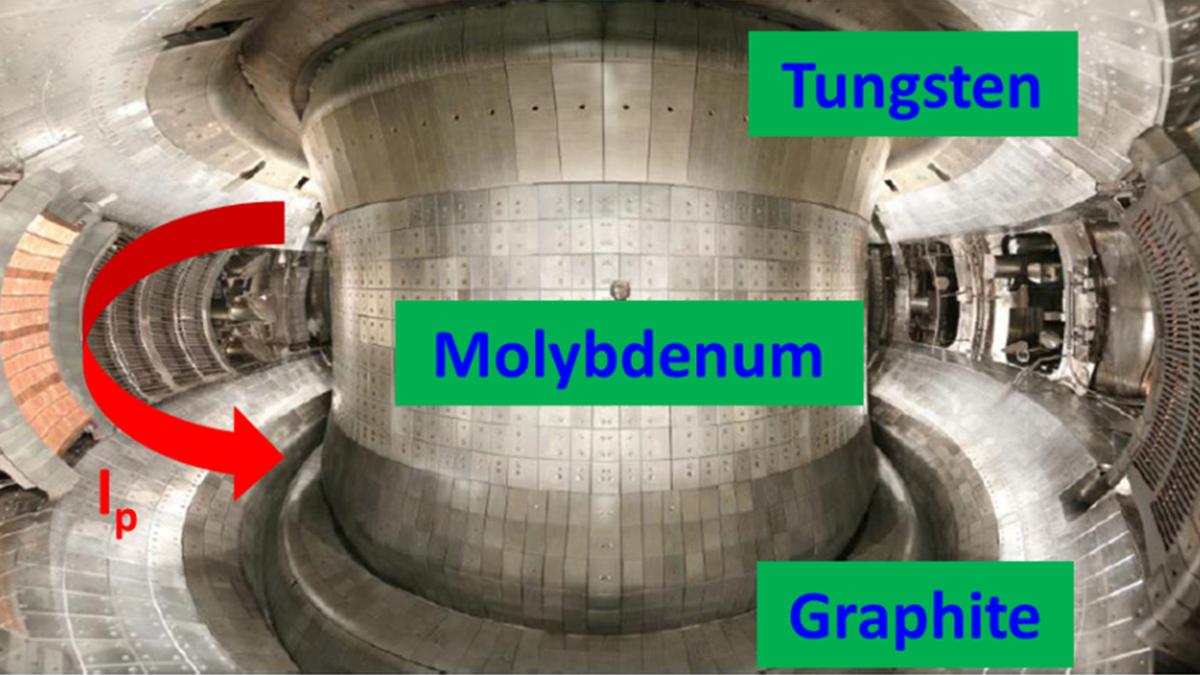
Scientists at the Experimental Advanced Superconducting Tokamak (EAST) nuclear fusion reactor in Hefei, China, have achieved a significant breakthrough by exceeding the Greenwald density limit in plasma operation. Reported on January 1, 2026, in Science Advances, the EAST team successfully operated stable plasmas at densities 1.3x to 1.65x beyond this established limit. This breakthrough uses techniques such as electron cyclotron resonance heating (ECRH) and modifications to fuel input, which allows for cooler divertor temperatures and reduced impurities. The development potentially paves the way for more efficient fusion reactors, reducing reliance on extreme temperatures or extended confinement times to reach self-sustaining fusion reactions.
Key Points:
- The EAST reactor pushed plasma density 65% beyond the Greenwald limit, reaching 5.6 × 10¹⁹ particles per cubic meter.
- The team combined Electron Cyclotron Resonance Heating (ECRH) with adjusted gas inputs (deuterium and hydrogen) to achieve this.
- A thin layer of lithium was used to coat the tungsten surfaces, further reducing impurities.
- The experiments supported the Plasma-Wall Self-Organization (PWSO) theory, predicting stable states beyond the Greenwald limit.
- The divertor temperature dropped by roughly a third, from about 1.1 million to 0.7-0.8 million degrees C.
Critical Analysis: (Omitted – No specific patterns related to the fusion developments were found in the provided historical context).
Key Takeaways:
- Breaking the Greenwald density limit is a significant step towards achieving sustained fusion reactions.
- The EAST reactor’s success validates the PWSO theory, providing a mathematical framework for understanding plasma-wall interactions.
- The results potentially impact the design and operation of future fusion reactors, like ITER, by challenging conventional density constraints.
- These findings could allow for ignition at lower temperatures or shorter confinement times, reducing the overall requirements for fusion reactors.
- China is positioning itself as a leader in fusion energy research, demonstrated by their successful operation of the EAST reactor.
Impact Analysis: (Omitted – No information regarding long-term impact).
 First Piper