
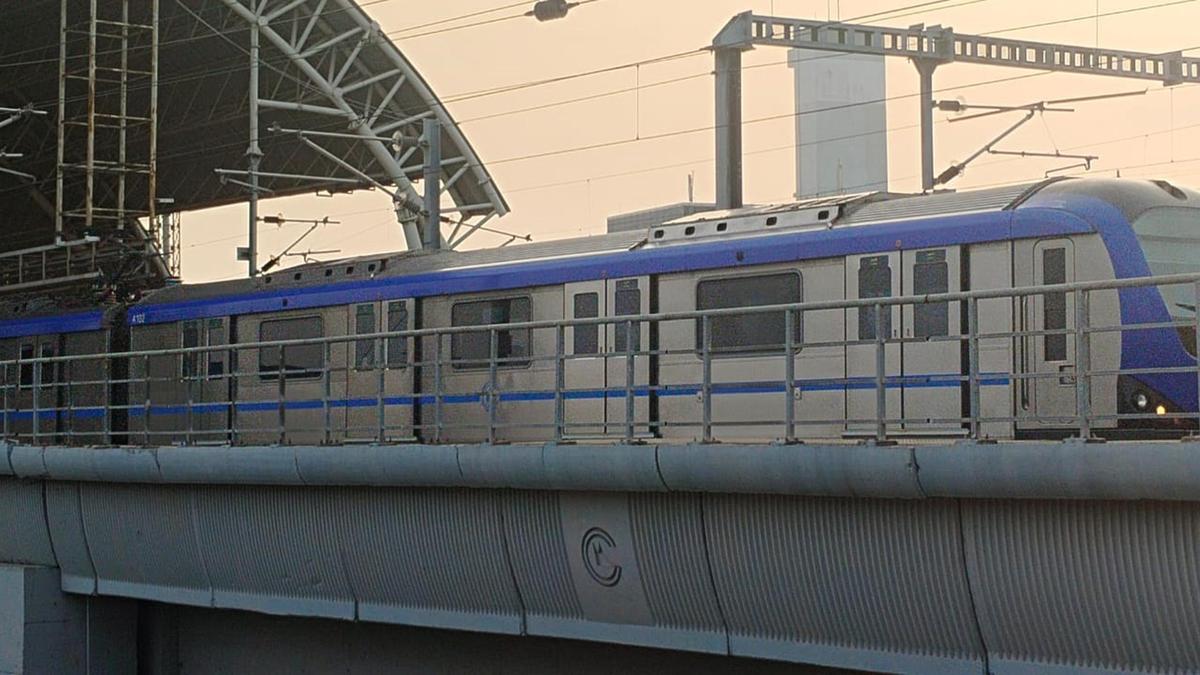
Tue Jan 13 09:37:08 UTC 2026: # Chennai Metro Expansion Faces Scrutiny Amidst Union Government Review
The Story:
Chennai Metro Rail’s ambitious expansion plans, encompassing three key extension projects, are currently under review by the Union government after the Institute of Urban Transport (IUT) raised queries. These projects, aimed at extending metro connectivity from Airport to Kilambakkam, Poonamallee to Sunguvarchathiram, and Koyambedu to Pattabiram, have an estimated combined cost exceeding ₹27,858 crore. While CMRL has initiated preliminary procedures such as land acquisition, central government approvals are crucial for the projects to proceed. The delays are primarily due to queries raised by the IUT, a body under the Ministry of Housing and Urban Affairs (MoHUA).
Key Points:
- The Chennai Metro Rail submitted detailed project reports (DPRs) for three extension projects to the Tamil Nadu government in 2025, which were then forwarded to the Union government.
- The projects include:
- Airport-Kilambakkam: 15.46-km corridor with 13 stations, costing ₹9,335 crore.
- Koyambedu-Pattabiram: 21.76 km with 19 stations, costing ₹9,744 crore.
- Poonamallee-Sunguvarchatram: 27.9 km with 14 stations, costing ₹8,779 crore.
- The Institute of Urban Transport (IUT) has raised queries regarding housing income classification, economic analysis viability, integration with other transport modes, and promotion of the “Make in India” scheme.
- CMRL expects it to take between 6 months to 1 year to receive approvals from the Centre.
- Land acquisition processes and utility shifting are set to begin once the State government deposits the necessary funds.
Critical Analysis:
The fact that the IUT is raising queries relating to “Make in India” and economic analysis reveals a desire from the central government to carefully examine project economic claims and ensure alignment with central industrial and development policy.
Key Takeaways:
- Central government scrutiny can significantly impact the timeline of large infrastructure projects like the Chennai Metro expansion.
- Economic viability and alignment with national initiatives like “Make in India” are key considerations for project approvals.
- State and Central government coordination, particularly regarding fund deposits and land acquisition, is crucial for minimizing project delays.
- The IUT queries suggest a focus on holistic urban planning, including integration with existing transport infrastructure.
Impact Analysis:
The delay in approvals could push back the timeline for completion of these metro extensions, potentially impacting commuters and regional development in the long term. However, more detailed examination of economic factors can also improve project quality. Successful implementation and integration of these projects are vital for improving urban mobility and supporting economic growth in the Chennai metropolitan area. If “Make in India” requirements are excessively onerous it could increase costs and complexity.
 First Piper