
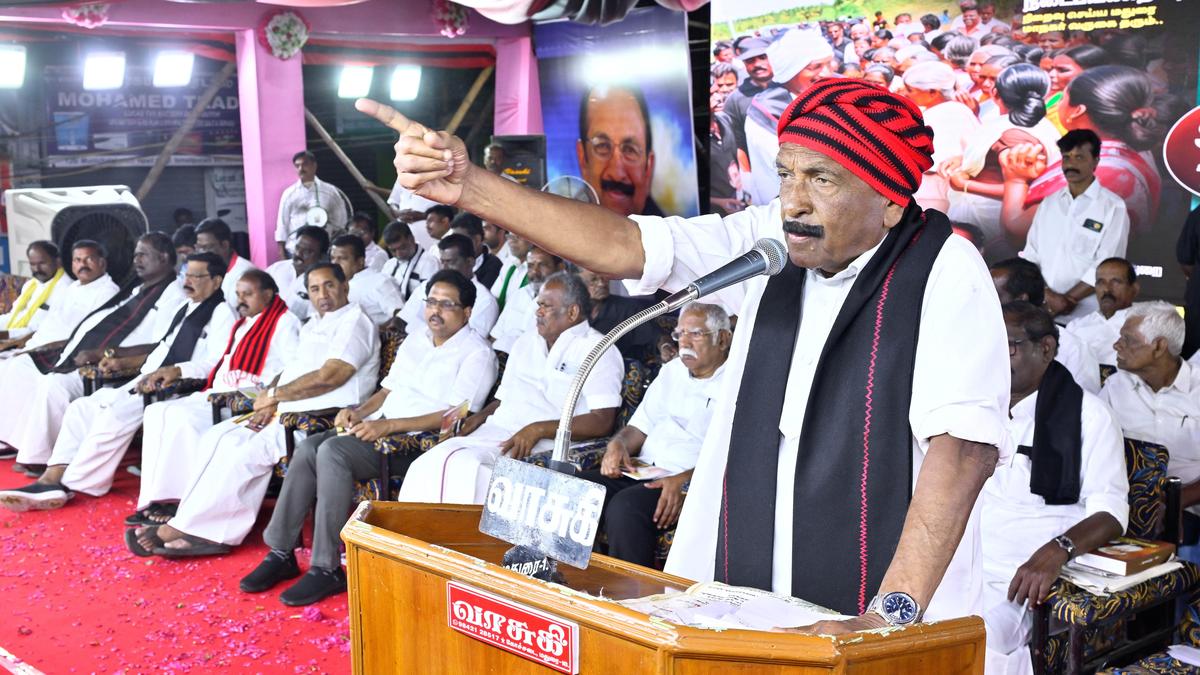
Mon Jan 12 18:03:47 UTC 2026: # Vaiko’s “Walk for Equality” Condemns Divisive Forces, BJP’s Agenda
The Story:
Marumalarchi Dravida Munnetra Kazhagam (MDMK) leader Vaiko concluded his 140-kilometer “Samathuva nadai payanam” (Walk for Equality) in Madurai on Monday, January 12, 2026, with a strong condemnation of Hindutva forces and their alleged attempts to divide Indian society along religious lines. Vaiko specifically cited the Thirupparankundram deepam controversy as an example of these divisive tactics, accusing a Madras High Court judge of overstepping their mandate by fueling religiously charged narratives. He also referenced a 2022 RSS-VHP conference where calls were made to remove “secularism” and “socialism” from the Indian Constitution’s Preamble and to disenfranchise Muslims and Christians.
Vaiko directly attacked BJP leaders, including Amit Shah, for what he perceived as arrogant attempts to undermine the Dravidian movement in Tamil Nadu. He urged the defeat of the BJP at the Centre and a strong victory for the DMK alliance in the State to safeguard India’s democratic principles.
Key Points:
- Vaiko completed a 140-kilometer “Walk for Equality” from Tiruchi to Madurai.
- He accused Hindutva forces of attempting to divide the people along religious lines, citing the Thirupparankundram deepam controversy.
- He criticized a Madras High Court judge for allegedly fueling religious tensions.
- Vaiko referenced a 2022 RSS-VHP conference calling for the removal of “secularism” and “socialism” from the Constitution and disenfranchisement of religious minorities.
- He accused BJP leaders, including Amit Shah, of attempting to undermine the Dravidian movement.
- He called for the defeat of the BJP at the Centre and a victory for the DMK alliance in Tamil Nadu.
Critical Analysis:
The unfolding of events suggests a volatile socio-political landscape in India. Vaiko’s “Walk for Equality” comes in the wake of heightened religious tensions and perceived threats to secularism, evidenced by his reference to the Thirupparankundram controversy and the 2022 RSS-VHP conference. The simultaneous launch of the “Heritage Walk Series” by TMA may inadvertently underscore the divisions Vaiko is addressing, depending on how heritage is interpreted and presented. The nurses’ strike and unity walk unrelated to Vaiko’s event demonstrates a broader pattern of social activism and protest, indicating a potentially significant level of public engagement and dissatisfaction.
Key Takeaways:
- Religious polarization remains a significant concern in India.
- There’s a perceived threat to secularism and minority rights.
- Regional political leaders are actively mobilizing against national parties like the BJP.
- Dravidian identity and its protection are central to the political discourse in Tamil Nadu.
- Public expressions of dissent and calls for unity are becoming more common.
Impact Analysis:
The Vaiko’s “Walk for Equality” has several potential impacts. Firstly, it could galvanize support for the DMK alliance in Tamil Nadu, potentially influencing future election outcomes. Secondly, it might contribute to a broader national debate on secularism, religious freedom, and the interpretation of Indian history. Thirdly, the event may further solidify existing divisions within Indian society, exacerbating tensions between different religious and political groups. Vaiko’s actions are likely to be interpreted differently by various segments of the population, with some viewing him as a defender of constitutional values and others seeing him as a divisive figure. The long-term impact will depend on how these narratives are framed and how the national political landscape evolves in the coming years.
 First Piper