
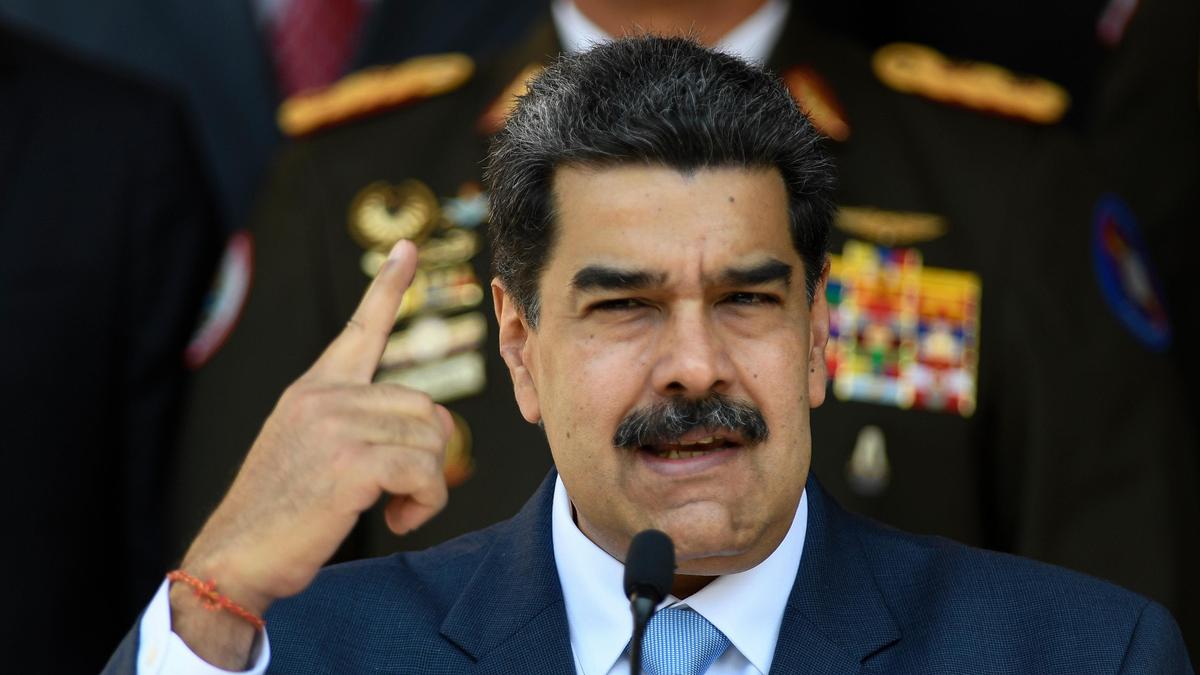
Sun Jan 11 16:40:12 UTC 2026: ### Headline: Maduro Ousted, Venezuela Grapples with Transition Under U.S. Influence
The Story:
Former Venezuelan President Nicolas Maduro has been captured by U.S. forces and is currently jailed in New York City, facing drug-trafficking and weapons charges. Following his ouster on January 3, 2026, interim President Delcy Rodriguez has begun releasing political prisoners in an apparent gesture of appeasement toward Washington. While President Donald Trump claims the U.S. is now “in charge” of Venezuela, Ms. Rodriguez maintains that Venezuela is pursuing a diplomatic route and is not subordinate to Washington. The events have sparked mixed reactions within Venezuela, with some protesting for Maduro’s return and others awaiting the release of their imprisoned relatives.
Key Points:
- Nicolas Maduro was captured on January 3, 2026, in a U.S. raid and is now jailed in the U.S.
- Interim President Delcy Rodriguez has begun releasing political prisoners.
- President Trump is asserting U.S. influence over Venezuela, while Ms. Rodriguez claims Venezuela will pursue a diplomatic route.
- Only 21 political prisoners have been released as of January 10, 2026.
- Rights groups estimate between 800 and 1,200 political prisoners remain.
- The U.S. is seeking access to Venezuela’s oil reserves, with Trump urging oil executives to invest.
- The U.S. Embassy in Colombia has warned Americans to leave Venezuela due to the “fluid” security situation.
Critical Analysis:
The historical context highlights escalating tensions leading up to Maduro’s capture, specifically the reported use of a “sonic weapon” by the U.S. against Venezuelan troops. This suggests a calculated escalation by the U.S., moving beyond diplomatic pressure to direct military intervention. Trump’s immediate focus on securing access to Venezuelan oil further reinforces the idea that geopolitical and economic interests played a significant role in the U.S. action. The interim President’s response, simultaneously placating the U.S. and asserting independence, suggests a delicate balancing act to maintain some semblance of sovereignty.
Key Takeaways:
- The U.S. has dramatically increased its involvement in Venezuela, culminating in military intervention and the capture of its former leader.
- Venezuela faces a period of significant political instability and uncertainty as it transitions under an interim leader and amidst U.S. influence.
- Access to Venezuela’s oil reserves is a key driver of U.S. policy in the region.
- The Venezuelan population is divided in its reaction to Maduro’s ouster.
- The long-term stability of Venezuela is at risk, given the warnings of a “fluid” security situation.
Impact Analysis:
The ousting of Maduro and the subsequent U.S. involvement could have long-term implications for Venezuela and the broader region. The possibility of renewed access to Venezuelan oil could reshape global energy markets, although the state of Venezuela’s oil infrastructure presents challenges. The domestic impact hinges on the actions of the interim government: successful reconciliation and reforms could stabilize the country, while failure could lead to further unrest and a potential power vacuum. The situation could also set a precedent for future U.S. interventions in Latin America, especially in countries with significant resources.
 First Piper