
Mon Jan 12 05:40:00 UTC 2026: ### ISRO’s PSLV-C62 Mission Faces Anomaly During Third Stage
The Story:
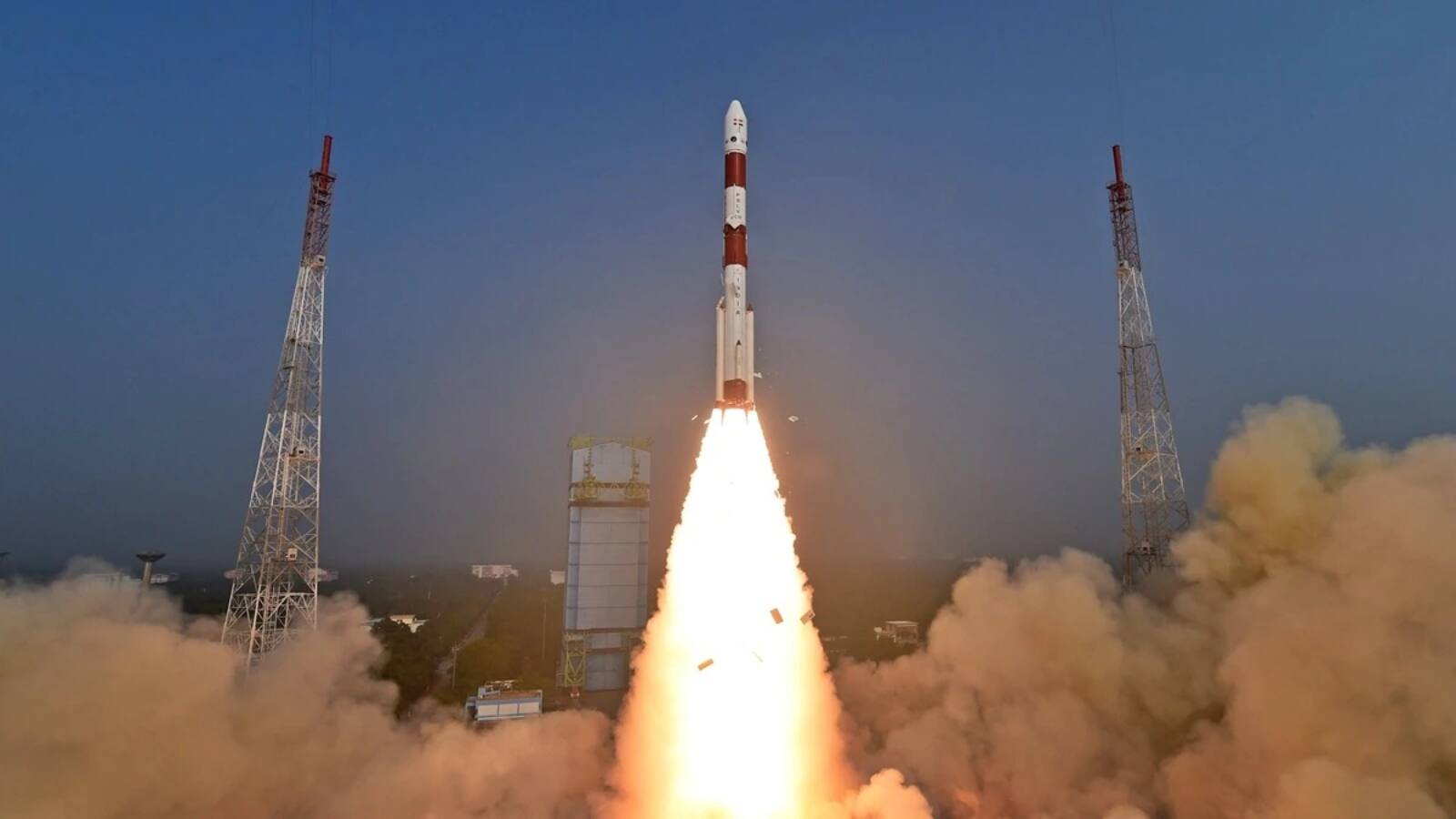
The Indian Space Research Organisation (ISRO) experienced an anomaly during the PSLV-C62 mission, launched on Monday, January 12, 2026. The mission, which marked ISRO’s first launch of the year, encountered a technical glitch during the third stage of the flight. The 44.4-meter tall, four-stage PSLV-C62 rocket lifted off from the Satish Dhawan Space Centre in Sriharikota at 10:18 AM as scheduled, carrying the EOS-N1 Earth observation satellite along with 14 co-passenger satellites for both domestic and international clients.
The mission was conducted by NewSpace India Limited (NSIL), ISRO’s commercial arm, and represented NSIL’s ninth dedicated commercial mission. This was also the 64th flight of the Polar Satellite Launch Vehicle (PSLV). Despite a successful launch, ISRO Chairman V. Narayanan reported that deviations in the vehicle’s flight path were observed near the end of the third stage. ISRO has initiated a detailed analysis of the data to understand the cause of the anomaly.
Key Points:
- The PSLV-C62 mission was launched on Monday, January 12, 2026, from Sriharikota.
- The mission encountered an anomaly during the third stage of the PSLV rocket.
- The rocket was carrying the EOS-N1 Earth observation satellite and 14 co-passenger satellites.
- The mission was the 64th flight of the PSLV and the ninth commercial mission for NSIL.
- ISRO has initiated a detailed analysis to determine the cause of the anomaly.
- The primary payload, EOS-N1, is a joint Earth observation satellite developed by Thailand and the United Kingdom.
- The mission also aimed to demonstrate the Kestrel Initial Technology Demonstrator (KID), a small prototype re-entry vehicle developed by a Spanish startup.
Critical Analysis:
The context provided indicates that this is the second consecutive PSLV mission failure, with the PSLV-C61 mission also encountering an anomaly. This raises concerns about potential systemic issues in the PSLV program, a workhorse launch vehicle for ISRO. The recurrence of anomalies warrants a thorough investigation into the quality control processes, component reliability, and flight control systems to identify and rectify any underlying problems.
Key Takeaways:
- The failure of the PSLV-C62 mission marks a setback for ISRO’s commercial launch capabilities.
- Two consecutive PSLV mission failures raise concerns about the reliability of the PSLV program.
- A comprehensive investigation is crucial to identify and address the root cause of the anomalies.
- The failure may impact ISRO’s future launch schedule and commercial agreements.
- Transparency and communication from ISRO regarding the investigation and corrective actions are essential to maintain public trust.
Impact Analysis:
The failure of the PSLV-C62 mission, following the PSLV-C61 anomaly, could have several significant long-term implications. Firstly, it may erode confidence in ISRO’s reliability as a launch provider, potentially affecting future commercial contracts and international collaborations. Secondly, the investigation into the failures could lead to delays in ISRO’s launch schedule, impacting scientific missions and satellite deployment plans. Thirdly, the financial impact of these failures, including the cost of investigations and potential redesigns, could strain ISRO’s budget. The organization’s response and corrective actions will be crucial in mitigating these potential negative impacts and restoring confidence in its launch capabilities.
 First Piper