
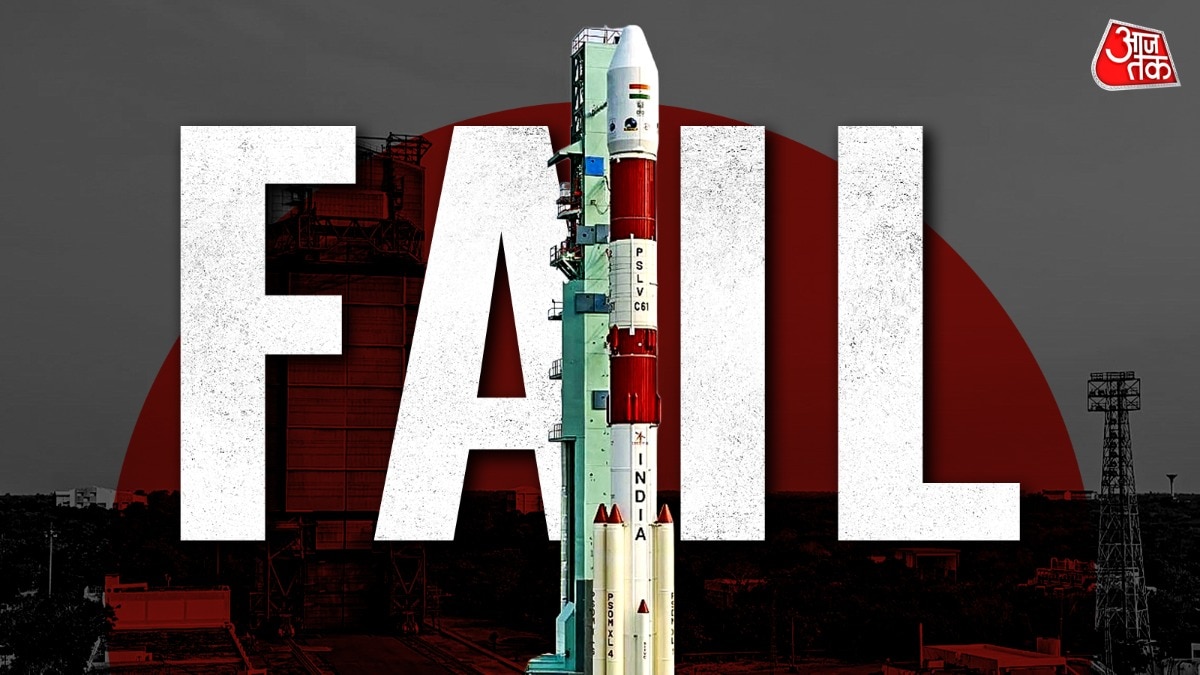
Mon Jan 12 05:40:00 UTC 2026: # ISRO’s PSLV Program Faces Second Consecutive Setback with PSLV-C62 Failure
The Story:
The Indian Space Research Organisation (ISRO) experienced a significant setback with the failure of the PSLV-C62 mission, which was intended as the first launch of 2026. The launch, which occurred at 10:18 AM, encountered a critical issue during the third stage (PS3), resulting in a deviation from the intended flight path and disturbances in the roll rate. Consequently, the mission failed to place its primary payload, the DRDO’s EOS-N1 (Anvesha) satellite, and 15 co-passenger satellites (a total of 16) into their designated orbits.
This marks the second consecutive failure related to the third stage of the PSLV rocket. A similar issue occurred during the PSLV-C61 mission in May 2025, where a drop in chamber pressure in the third stage led to the loss of the EOS-09 satellite. Despite a review and purported improvements following the PSLV-C61 failure, the problem has resurfaced, raising concerns about the reliability of the PSLV’s third stage.
Key Points:
- The PSLV-C62 mission failed due to an anomaly in the third stage (PS3).
- The failure resulted in the loss of the EOS-N1 (Anvesha) satellite and 15 other satellites.
- This is the second consecutive failure involving the third stage of a PSLV rocket, following the PSLV-C61 mission in May 2025.
- Following the PSLV-C61 failure, ISRO grounded the PSLV fleet, conducted a review, and implemented improvements.
- The cause of the PSLV-C61 failure was reportedly a drop in chamber pressure in the third stage.
- The report from the Failure Analysis Committee (FAC) regarding PSLV-C61 was submitted to the Prime Minister’s Office but has not been made fully public.
- Speculation suggests the issue may be related to manufacturing errors or weakness in the nozzle/casing of the solid motor in the third stage.
- ISRO Chairman V. Narayanan stated that a detailed analysis of the PSLV-C62 failure has been initiated.
Critical Analysis:
The back-to-back failures involving the PSLV’s third stage indicate a potentially systemic issue that was not adequately addressed after the PSLV-C61 incident. The lack of transparency regarding the full findings of the PSLV-C61 failure analysis, with the report submitted to the PMO but not publicly released, fuels speculation and hinders independent assessment. The repeating nature of the problem, despite claimed corrective measures, raises questions about the thoroughness of the initial investigation and the effectiveness of the implemented solutions. The fact that the problem re-occurred within the same stage despite grounding the PSLV after the first failure points to possible deficiencies in ISRO’s testing or quality control measures.
Key Takeaways:
- ISRO’s PSLV program faces a critical reliability challenge in its third stage.
- Lack of transparency regarding failure analysis reports may be hindering effective problem-solving.
- Repeated failures raise questions about the robustness of ISRO’s review and improvement processes.
- Enhanced testing and quality control measures are necessary for the PSLV’s third stage.
- The failures represent a setback for ISRO, DRDO, NSIL, and India’s space program, potentially affecting future missions and partnerships.
Impact Analysis:
The repeated failures of the PSLV program could have several significant long-term implications:
- Erosion of Confidence: The PSLV has traditionally been a reliable workhorse for ISRO. These failures risk eroding confidence in the program among international partners and domestic stakeholders.
- Financial Implications: Launch failures result in significant financial losses, including the cost of the rocket, the satellites, and the missed opportunity for revenue generation.
- Delays in Missions: Scheduled launches will likely be delayed as ISRO investigates and addresses the root cause of the failures.
- Impact on Strategic Capabilities: The failure affects not only commercial launches but also missions critical to India’s strategic capabilities, including those involving DRDO.
- Increased Scrutiny: ISRO will likely face increased scrutiny from government agencies, the media, and the public regarding its quality control processes and failure analysis procedures. A renewed commitment to transparency will be essential to restoring trust and ensuring the continued success of India’s space program.
 First Piper