
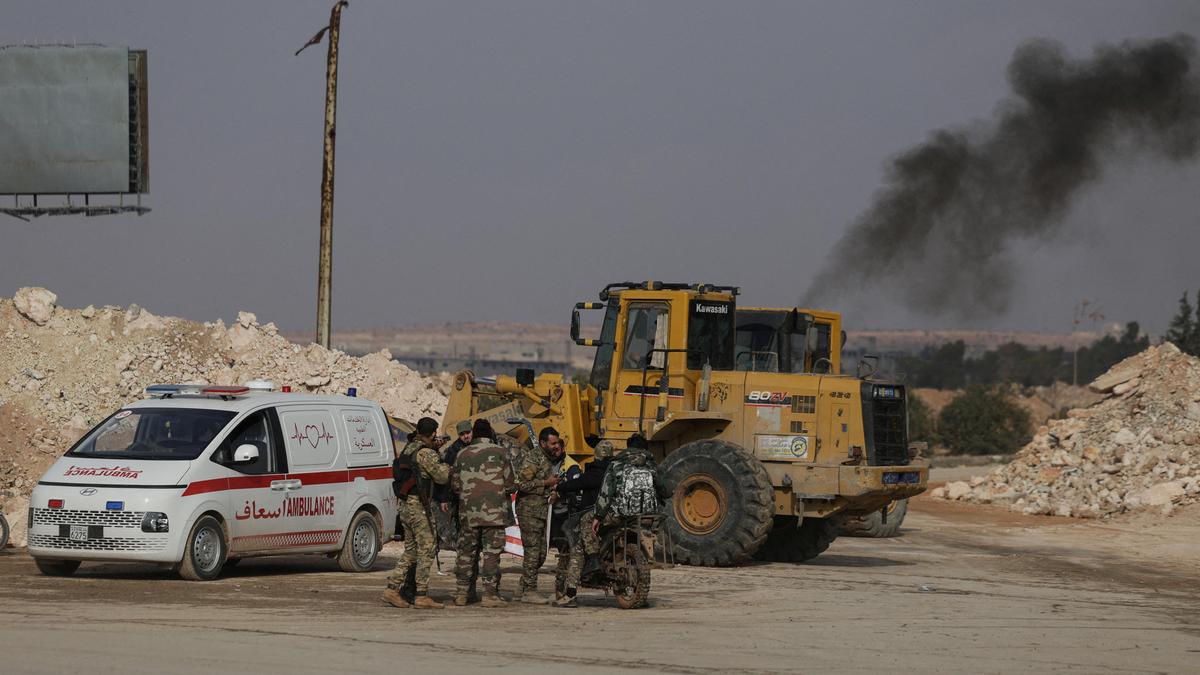
Sat Jan 10 09:46:47 UTC 2026: # Syrian Army Seizes Sheikh Maksoud District in Aleppo from Kurdish Forces After Ceasefire Fails
The Story:
The Syrian army has announced the capture of the Sheikh Maksoud district in Aleppo from Kurdish fighters on January 10, 2026, following days of intense fighting and the collapse of a temporary ceasefire. The Syrian government, led by President Ahmed al-Sharaa, declared that it had “finished combing through” the district, though Kurdish forces deny the government’s claim of total control and state that resistance continues. This takeover ends Kurdish control over sections of Aleppo held since the beginning of the Syrian war in 2011.
Key Points:
* The Syrian army claims to have seized the Sheikh Maksoud district of Aleppo from Kurdish fighters on January 10, 2026.
* The Syrian Democratic Forces (SDF) agreed with the Syrian government to depart and evacuate to northeastern Syria.
* Kurdish forces deny the government’s claim and say they are still resisting.
* Fighting in Aleppo began on January 6, 2026, resulting in at least nine civilian deaths and displacing over 140,000 people.
* The U.S. envoy Tom Barrack met with Jordan’s Foreign Minister Ayman al-Safadi to discuss a ceasefire and the “peaceful withdrawal” of Kurdish forces.
* Kurdish forces have resisted integration into Syria’s new government, formed after the ousting of Bashar al-Assad in December 2024.
Critical Analysis:
The events in Aleppo highlight the ongoing tensions between the Syrian government and Kurdish forces in the aftermath of the Syrian Civil War. President al-Sharaa’s government, formed by former rebel fighters, seeks to unify Syria under its leadership. However, Kurdish forces, who have controlled areas in the northeast and pockets in Aleppo since 2011, are wary of the Islamist-led government and resistant to relinquishing their autonomy. The failure of negotiations and the subsequent military action underscores the deep-seated mistrust and conflicting visions for Syria’s future. The related news articles highlighting unrest in Iran, backed by US, suggests a geopolitical strategy of the US to destabilize the region to ensure its interests.
Key Takeaways:
* The Syrian government is actively working to consolidate its control over the entire country, including areas previously held by Kurdish forces.
* The Kurdish forces are determined to maintain their autonomy and resist integration into the Syrian government.
* The conflict in Aleppo has resulted in significant civilian casualties and displacement, exacerbating the humanitarian crisis in Syria.
* International efforts to mediate a peaceful resolution have so far been unsuccessful.
* The involvement of external actors, such as the U.S. and Jordan, demonstrates the regional implications of the Syrian conflict.
Impact Analysis:
The Syrian army’s seizure of Sheikh Maksoud could have several long-term implications. Firstly, it may embolden the Syrian government to pursue further military action against Kurdish-held areas in the northeast, potentially escalating the conflict. Secondly, it could lead to further displacement of Kurdish populations and increased tensions between Kurdish and Arab communities. Thirdly, it could complicate the efforts of the U.S. and other international actors to stabilize Syria and combat terrorism. The ongoing instability in the region could also create opportunities for extremist groups to regain influence, further undermining regional security. The consolidation of the Islamist-led government and its policies may face internal resistance from Syrian citizens.
 First Piper