
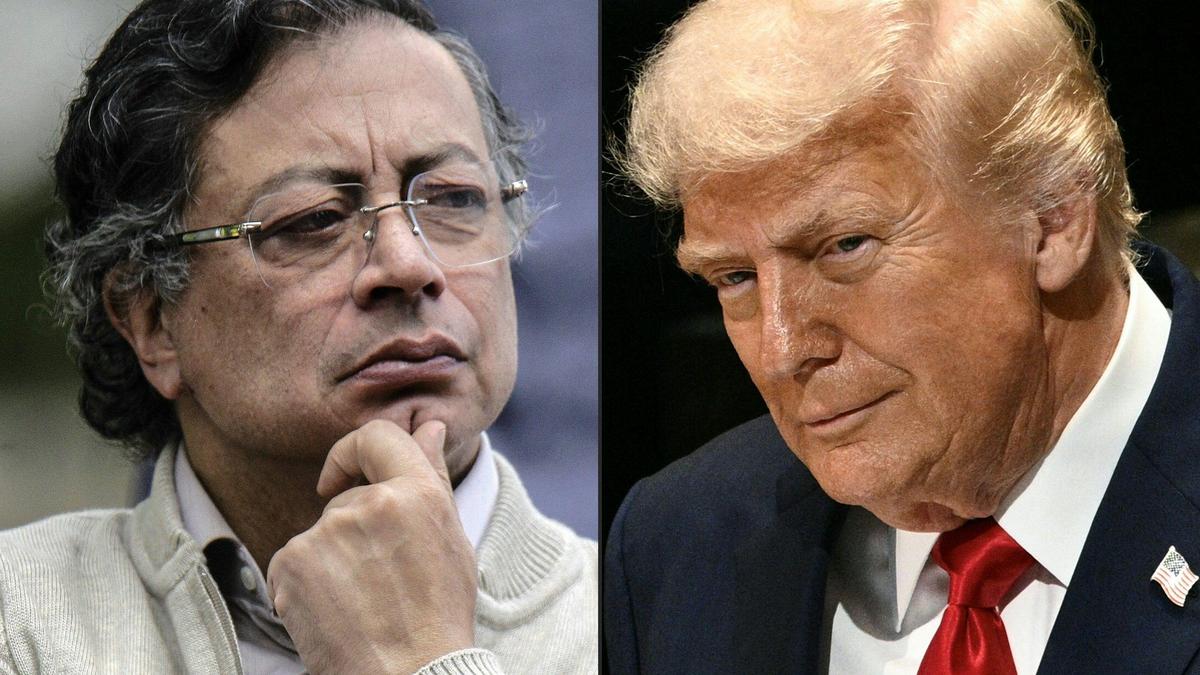
Fri Jan 09 23:06:56 UTC 2026: ### Trump Extends Olive Branch to Colombia Amidst Venezuelan Intervention Fallout
The Story:
U.S. President Donald Trump has shifted his stance towards Colombian President Gustavo Petro, announcing a meeting in early February 2026. This comes shortly after Trump issued vague threats of similar action against Petro as was taken against Venezuelan leader Nicolás Maduro, who was captured in a U.S. military raid on January 3, 2026. The change in tone followed a friendly phone call, where Trump invited Petro to the White House, signaling a potential diplomatic reset.
Key Points:
- U.S. President Donald Trump will meet with Colombian President Gustavo Petro in early February 2026.
- Trump previously threatened similar action against Petro following the U.S. military raid on Nicolás Maduro on January 3, 2026.
- The change in tone occurred after a friendly phone call between Trump and Petro on January 7, 2026.
- Trump urged Petro to accelerate efforts to stem the flow of cocaine into the U.S.
Critical Analysis:
The quick change in approach from threats to an invitation suggests a strategic pivot by the Trump administration. Given the historical context of Trump making promises of “total safety” to oil executives who invest in Venezuela, the shift in strategy likely involves securing Colombia’s cooperation and stability in the region following the intervention in Venezuela. The call for reducing cocaine flow acts as both a point of pressure and a potential bargaining chip for further cooperation.
Key Takeaways:
- The U.S. intervention in Venezuela has created a need for stabilized relations with neighboring Colombia.
- Drug policy continues to be a key factor in U.S.-Colombia relations.
- The shift in tone towards Colombia highlights the complexities and potential contradictions of U.S. foreign policy under the Trump administration.
- The US may need Columbia’s land and support in the case of a military operation in Venezuela.
Impact Analysis:
This shift in diplomatic engagement could have significant long-term implications. It suggests a potential focus on regional stability through diplomatic means, especially in the wake of a destabilizing military action. The success of this approach will depend on Petro’s willingness to cooperate on drug policy and the U.S.’s commitment to sustained diplomatic engagement rather than coercive measures. It remains to be seen if the apparent reset represents a genuine change in U.S. strategy or a temporary measure to secure immediate objectives following the Venezuelan intervention. The focus on drug trafficking may influence trade agreements and aid packages to Colombia.
 First Piper