
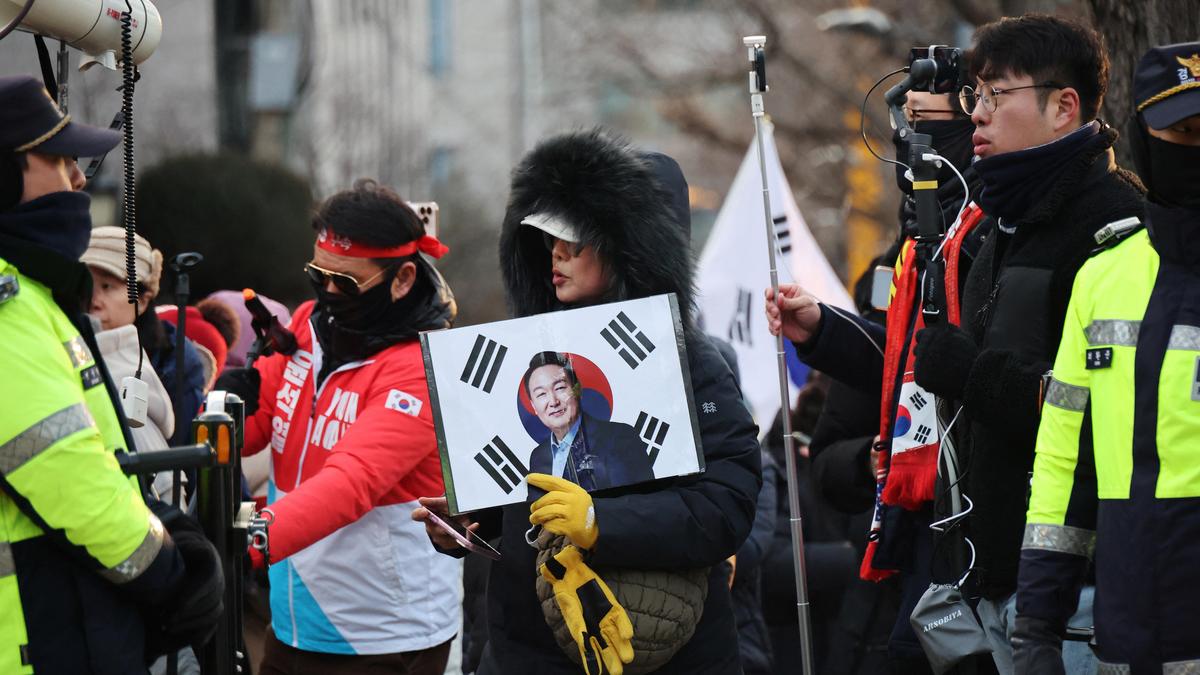
Fri Jan 09 18:00:30 UTC 2026: Headline: Former South Korean President Yoon Suk Yeol Faces Possible Death Penalty in Insurrection Trial
The Story:
Former South Korean President Yoon Suk Yeol is facing a potential death penalty or life imprisonment as his insurrection trial concludes in Seoul. Accused of plotting to impose martial law in 2024, the court adjourned proceedings on January 9, 2026, after a 12-hour session, with a sentencing request now expected on January 13, 2026. Prosecutors allege that Yoon, along with then-Defense Minister Kim Yong-hyun, conspired to suspend Parliament, seize legislative powers, and brand political opponents as “anti-state forces.”
The prosecution further contends that Yoon attempted to manufacture a pretext for martial law by escalating tensions with North Korea through a covert drone operation. Although the alleged martial law bid lasted only six hours, it caused significant turmoil in South Korea, a major U.S. ally and one of Asia’s leading democracies. Yoon, aged 65, denies all charges, maintaining that he acted within his presidential powers to address opposition obstruction.
Key Points:
- Former President Yoon Suk Yeol is on trial for insurrection related to an alleged attempt to impose martial law in 2024.
- Prosecutors are seeking the death penalty or life imprisonment for Yoon.
- The alleged plot involved suspending Parliament, arresting political opponents, and escalating tensions with North Korea.
- The court adjourned on January 9, 2026, and will resume proceedings on January 13, 2026, for the sentencing request.
- Yoon denies the charges, claiming his actions were within his presidential authority.
Critical Analysis:
The historical context provides several relevant pieces of information. The item on North Korea accusing the South of flying drones across the border directly links to the prosecution’s claim that Yoon tried to escalate tensions with North Korea through a covert drone operation. The timing of the BRICS Plus naval exercises in South African waters could be interpreted as a sign of shifting geopolitical alliances, potentially emboldening North Korea.
Key Takeaways:
- The trial underscores the fragility of democratic institutions, even in established democracies like South Korea.
- The accusations against Yoon highlight the potential for abuse of power within executive branches.
- The close U.S.-South Korea relationship will likely be tested regardless of the trial’s outcome, potentially straining diplomatic ties.
- The trial has broader implications for political polarization and the rule of law in South Korea.
Impact Analysis:
The outcome of Yoon’s trial will have significant long-term impacts on South Korean politics and its international relations. A guilty verdict could further polarize the nation, potentially leading to civil unrest and eroding public trust in government. It could also prompt a reevaluation of presidential powers and the mechanisms for preventing future abuses.
Internationally, the trial’s result could influence South Korea’s relationship with the United States, particularly if the U.S. perceives the proceedings as politically motivated. Additionally, the situation could embolden North Korea, potentially leading to increased regional instability. Regardless of the verdict, the trial has already damaged South Korea’s image as a stable democracy and could have lasting repercussions for its standing on the global stage.
 First Piper