
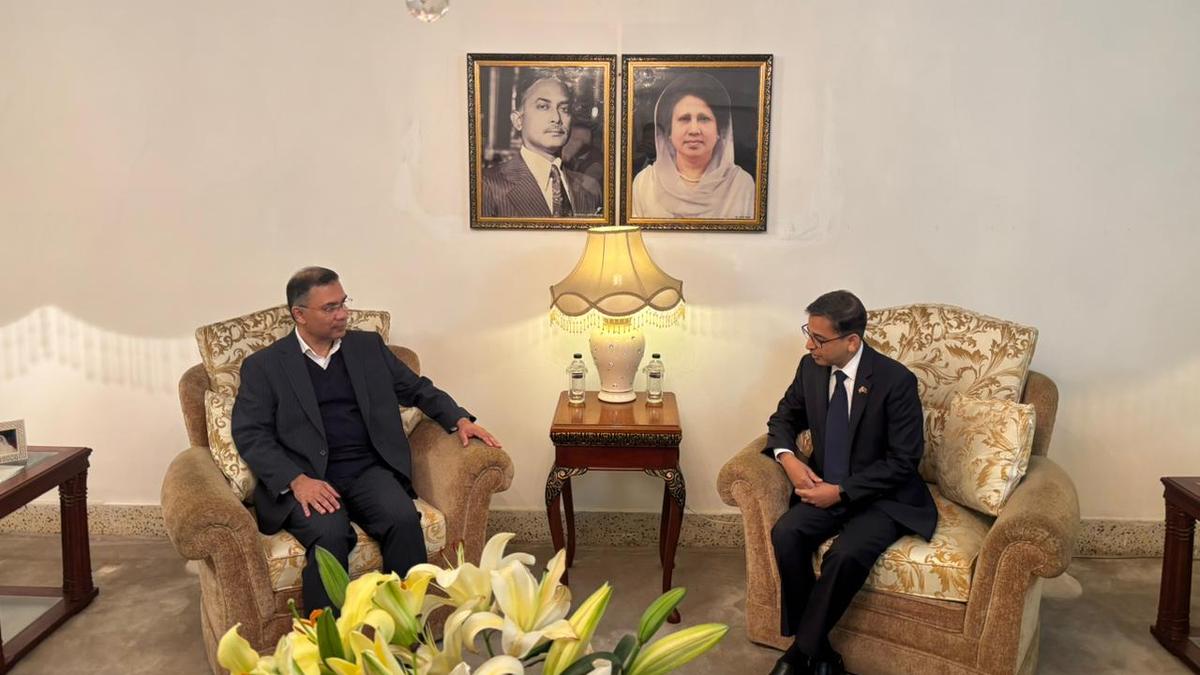
Sat Jan 10 14:57:05 UTC 2026: # Indian High Commissioner Meets BNP Chief Amidst Political Turmoil in Bangladesh
The Story:
On January 10, 2026, Indian High Commissioner to Bangladesh, Pranay Verma, met with Tarique Rahman, the newly elected Chairman of the Bangladesh Nationalist Party (BNP), in Dhaka. This meeting occurred a day after Rahman’s official election and ahead of the scheduled February 12 elections. The BNP has risen to prominence in Bangladesh following the disbanding of the Awami League after student-led protests in August 5, 2024, with the interim government led by Muhammad Yunus barring the Awami League from contesting the elections.
Key Points:
- The meeting between Indian High Commissioner Pranay Verma and BNP Chairman Tarique Rahman lasted approximately 40 minutes.
- Tarique Rahman was formally elected as BNP chief on January 9, 2026, following the death of his mother, Khaleda Zia.
- The Awami League was disbanded following violent student protests in August 2024 and an executive order by the Muhammad Yunus-led interim government.
- Pakistan High Commissioner to Bangladesh Imran Haider also met with Rahman on January 9, 2026.
- Tarique Rahman returned to Bangladesh on December 25, 2025, after 17 years in self-exile in London.
Critical Analysis:
The meetings between the Indian and Pakistani High Commissioners with the newly elected BNP leader highlight the geopolitical interest in Bangladesh’s upcoming elections. The disbanding of the Awami League has created a power vacuum, and both India and Pakistan appear to be positioning themselves to engage with the likely new leadership. India, particularly, has a vested interest in stability and friendly relations with Bangladesh, given its shared border and regional security concerns.
Key Takeaways:
- The meeting signifies India’s acknowledgment of the BNP as a key political player in Bangladesh.
- The political landscape in Bangladesh is undergoing significant change following the disbanding of the Awami League.
- The involvement of both Indian and Pakistani diplomats indicates the strategic importance of Bangladesh in the region.
- The upcoming elections on February 12 will be crucial in determining the future direction of Bangladesh and its relations with neighboring countries.
Impact Analysis:
The rise of the BNP and the engagement of foreign powers could significantly alter Bangladesh’s foreign policy and internal stability. A BNP-led government might pursue different economic and security strategies, potentially impacting regional trade, counter-terrorism efforts, and overall geopolitical balance. The long-term implications hinge on the BNP’s policies and its ability to maintain stability within Bangladesh amidst a potentially volatile political environment.
 First Piper