
Sat Jan 10 09:20:00 UTC 2026: ### North China’s Clean Heating Policy Falters as Villagers Face Unaffordable Winter Heating Costs
The Story:
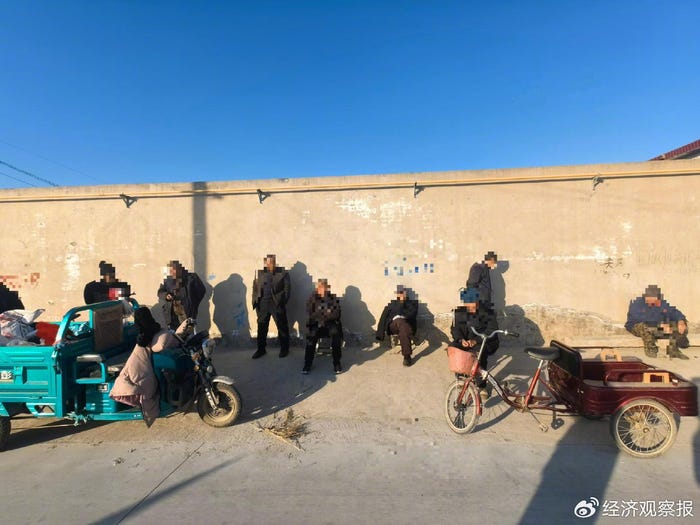
Over the past several years, Beijing and surrounding North China regions celebrated improved air quality, a phenomenon dubbed “Beijing blue,” largely due to the government’s “clean heating” initiative. This policy mandated the replacement of dispersed coal heating in rural households with natural gas or electricity, accompanied by initial subsidies and strict enforcement against coal use. However, this winter, the policy’s shortcomings have become glaringly apparent in parts of Hebei province. As subsidies have tapered off or disappeared, many villagers find themselves unable to afford natural gas, leading to a situation where they are forced to endure freezing temperatures rather than turning on their boilers.
This issue has resonated domestically, sparking debate and even censorship, highlighting the delicate balance between environmental goals and the economic well-being of rural populations. Major Chinese news outlets initially reported on the problem, calling for adjustments to cost-sharing and subsidy mechanisms, although some of these reports were later censored, revealing the political sensitivity of the matter.
Key Points:
- Beijing’s air quality significantly improved with “good or moderate” PM2.5 levels reaching 95.3% in 2026, up from 55.9% in 2013, largely due to the rural “clean heating” campaign.
- The “clean heating” policy banned dispersed coal burning and replaced it with natural gas or electricity, starting around 2017, with subsidies and administrative enforcement.
- Subsidies have been tapering, leaving villagers in areas of Hebei unable to afford natural gas heating costs.
- In Baoding, Hebei Province, villagers report gas costs of 3.18 yuan per cubic meter, requiring 20 cubic meters a day to feel warm (over 60 yuan per day or 5,000–6,000 yuan per heating season).
- The government in Hebei previously stipulated that operating subsidies during the heating season would be borne one-third each by the province, city, and county, and would be subsidized based on actual usage. The subsidies were to be trialed for three years.
- After the three-year subsidy period expired, Hebei’s provincial level adopted a tapering approach and provided two additional years of subsidies: the first year tapered to 50%, the second year to 25%. City and county governments formulated specific operating-subsidy measures based on local conditions.
- Several Chinese official outlets initially reported on the heating cost problem with one report written by Zhang Ling of the Economic Observer, which was later censored.
Key Takeaways:
- The “clean heating” policy, while successful in improving air quality, has unintended negative consequences for the economic well-being of rural residents.
- The gradual reduction or removal of subsidies has created a situation where many villagers cannot afford to heat their homes with natural gas, defeating the purpose of the policy.
- The censorship of certain reports indicates the political sensitivity surrounding the issue and the government’s attempt to control the narrative.
- The reliance on natural gas may not be the most economically efficient solution for rural heating, with experts recommending alternatives such as heat pumps and improved home insulation.
- Adapting to local conditions and using a combination of energy-efficient rural housing and multiple complementary clean-energy technologies may provide a more effective long-term solution.
Impact Analysis:
The current situation poses a significant challenge for the Chinese government. Failure to address the heating affordability issue risks undermining the positive environmental gains made through the “clean heating” policy and could lead to social unrest and dissatisfaction among rural populations. Moving forward, the government may need to re-evaluate its subsidy policies, explore alternative heating solutions, and invest in improving the energy efficiency of rural homes to ensure a sustainable and equitable approach to clean heating. Furthermore, the censorship of critical reporting may erode public trust and hinder effective policy adjustments. The long-term impact will depend on the government’s willingness to address these issues transparently and comprehensively.
 First Piper