
Sat Jan 10 06:45:36 UTC 2026: ### Headline: US Threatens Greenland Seizure, Deepening Transatlantic Rift
The Story
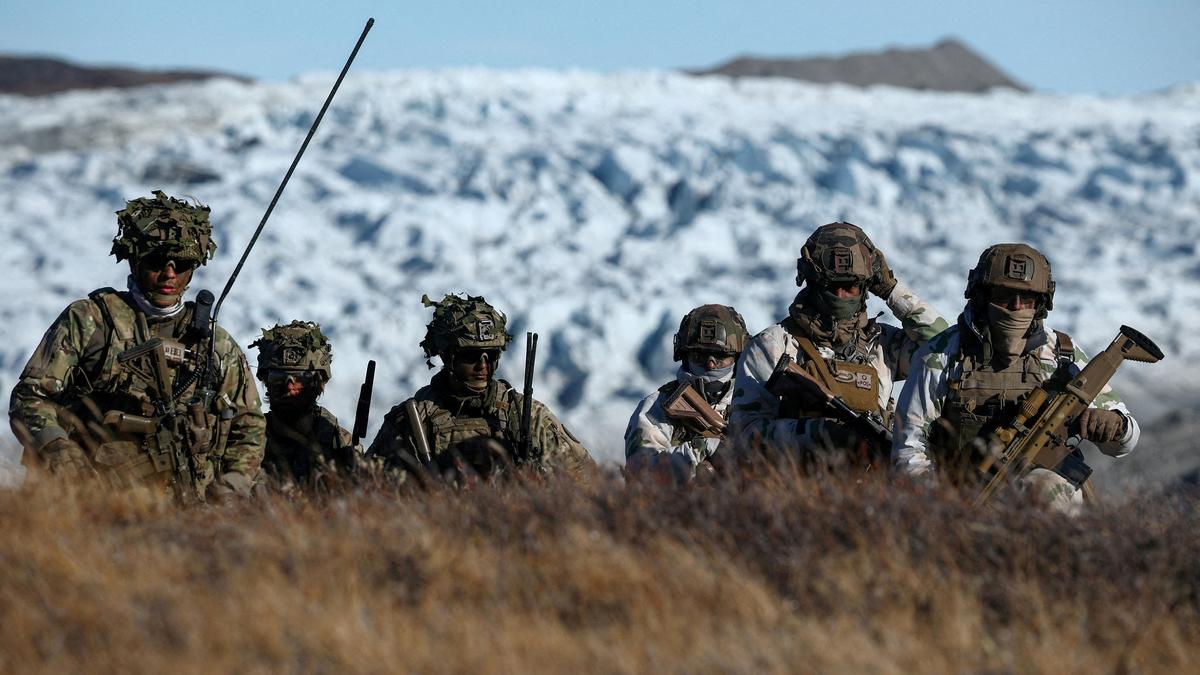
On January 10, 2026, The Hindu reported on escalating tensions between the United States and Europe, particularly Denmark, over the future of Greenland. Emboldened by a recent raid in Venezuela, the U.S., under President Donald Trump‘s second term, is reportedly considering seizing Greenland, citing security concerns related to Russia and China. This move has triggered widespread concern among European leaders and exposed a deepening rift in transatlantic relations already strained by disagreements over trade, social media regulation, environmental policy, and agriculture. Denmark, traditionally a strong U.S. ally, finds itself caught between its transatlantic commitments and its European ties, facing potential economic and territorial repercussions.
Key Points
- The U.S. government is considering seizing Greenland after a successful raid in Venezuela on January 3, 2026.
- Donald Trump claims the U.S. needs to own Greenland to deter Russia and China.
- European leaders have expressed concern but lack a unified response to the potential U.S. action.
- Denmark, a close U.S. ally, is grappling with the implications for its foreign policy, particularly regarding its relationship with the EU and its fixed exchange rate with the Euro.
- The article highlights the growing divide between the U.S. and the EU, exacerbated by disagreements over trade, social media, environment, and agriculture policies.
Critical Analysis
The event highlights the increasingly unilateralist approach of the U.S. under President Trump’s leadership and the growing fragility of traditional alliances. The claim to seize Greenland, framed as a response to threats from Russia and China, reflects a ‘realist’ perspective where national interest supersedes international norms. The article also suggests the motivations may stem from a desire for control of Greenland’s resources, aligning with an analysis that emphasizes the role of wealthy families, corporations and oligarchs.
Key Takeaways
- The U.S. is willing to take unilateral action, even against allies, to pursue its perceived national interests.
- Transatlantic relations are at a critical juncture, with potential long-term consequences for global geopolitics.
- Small nations like Denmark are increasingly vulnerable in a multipolar world dominated by great powers.
- Resource competition and strategic positioning are key drivers of international conflict.
- The established ‘liberal order’ based on international law may be in decline.
Impact Analysis
The U.S. pursuit of Greenland has far-reaching implications:
* Geopolitical Realignment: This event could accelerate the fragmentation of the Western alliance and lead to a more multipolar world order.
* Economic Instability: A U.S. intervention in Greenland could destabilize the Danish economy and potentially impact the Eurozone.
* Environmental Concerns: Increased resource exploitation in Greenland could have detrimental environmental consequences, exacerbating existing planetary crises.
* Indigenous Rights: The future of Greenland’s indigenous population is uncertain, potentially undermining self-determination and sustainable development.
* International Law: The U.S. action challenges the existing international legal framework and could set a dangerous precedent for future territorial disputes.
 First Piper