
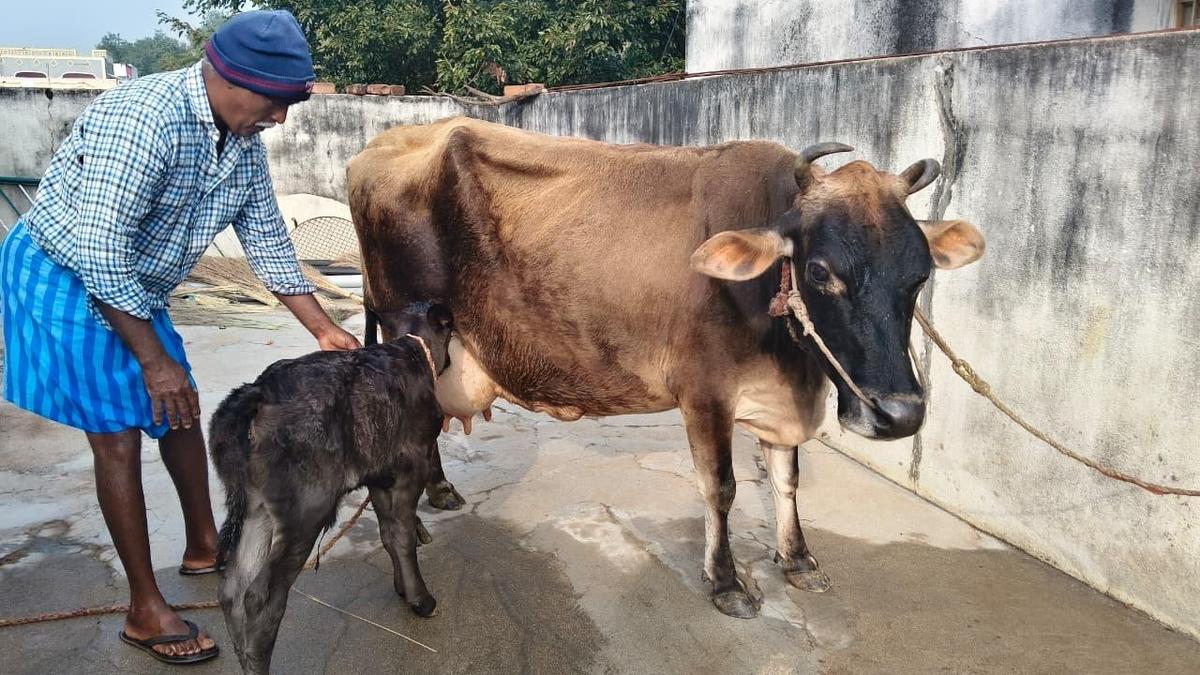
Fri Jan 09 01:00:30 UTC 2026: ### Chittoor Dairy Farmers Thrive Amidst Challenges: A Look at Andhra Pradesh’s Milk Production
The Story:
Dairy farmers in the Chittoor district of Andhra Pradesh are experiencing relative prosperity, contributing to the region’s status as one of India’s most productive milk belts. Despite challenges such as price volatility, rising input costs, and fragmented procurement, many farmers like Muneppa, who owns eight cows, have seen significant improvements in their livelihoods since 2020. The district produces an estimated 18–20 lakh litres of milk daily, feeding major urban centers and sustaining countless rural households. Women play a critical, often unseen, role in the dairy sector, managing operations from feeding to bookkeeping.
While the dairy sector provides a crucial income source for many, especially small and marginal farmers, it remains vulnerable. The collapse of the Chittoor Cooperative Milk Producers’ Union in the past has led to private dairies dominating procurement. Farmers are hopeful for the revival of cooperative dairy structures, while government initiatives, like Amul’s entry and the establishment of Bulk Milk Chilling Units (BMCUs), have provided some relief by ensuring better prices and transparent testing.
Key Points:
- Chittoor district produces an estimated 18–20 lakh litres of milk daily.
- Over 80% of dairy farmers in Chittoor are small and marginal, owning two to four cattle.
- Women shoulder the majority of the labor in the dairy sector.
- Bulk Milk Chilling Units (BMCUs) have improved transparency and increased milk prices by ₹3–₹7 per litre.
- The collapse of the Chittoor Cooperative Milk Producers’ Union has allowed private dairies to dominate procurement.
- Cow milk prices range between ₹27 and ₹32 per litre, while buffalo milk fetches ₹35–₹38.
- The entry of Amul has reintroduced a competitive benchmark, leading to better prices and transparent testing.
- Fodder shortages, particularly during the summer, remain a significant challenge.
Key Takeaways:
- The dairy sector is a critical economic driver in the Chittoor district, supporting livelihoods and supplementing agricultural income.
- Women are central to the success of the dairy industry, yet their contributions are often undervalued.
- Reviving cooperative structures could provide stability and fair prices for dairy farmers.
- Addressing challenges such as fodder shortages and price volatility is crucial for the long-term sustainability of the dairy sector.
- Government and private sector initiatives, like BMCUs and Amul’s presence, are helping to improve market conditions for farmers.
Impact Analysis:
The sustained prosperity of the dairy sector in Chittoor has significant long-term implications:
- Economic Stability: Maintaining a thriving dairy sector ensures economic stability for thousands of rural households in the region, reducing reliance on rain-dependent agriculture.
- Social Impact: Increased income allows farmers to invest in education, healthcare, and other essential needs, improving the overall quality of life in rural communities.
- Regional Food Security: Chittoor’s milk production plays a vital role in supplying dairy products to major urban centers in Andhra Pradesh and Tamil Nadu, contributing to regional food security.
- Gender Empowerment: Recognizing and supporting the role of women in the dairy sector can lead to greater economic empowerment and social recognition.
- Sustainable Development: Addressing challenges such as fodder shortages and promoting sustainable farming practices are essential for ensuring the long-term viability of the dairy industry and mitigating its environmental impact.
 First Piper