
Wed Jan 07 22:43:22 UTC 2026: # Trump Proposes Massive Military Spending Surge Amidst Caribbean Tensions
The Story:
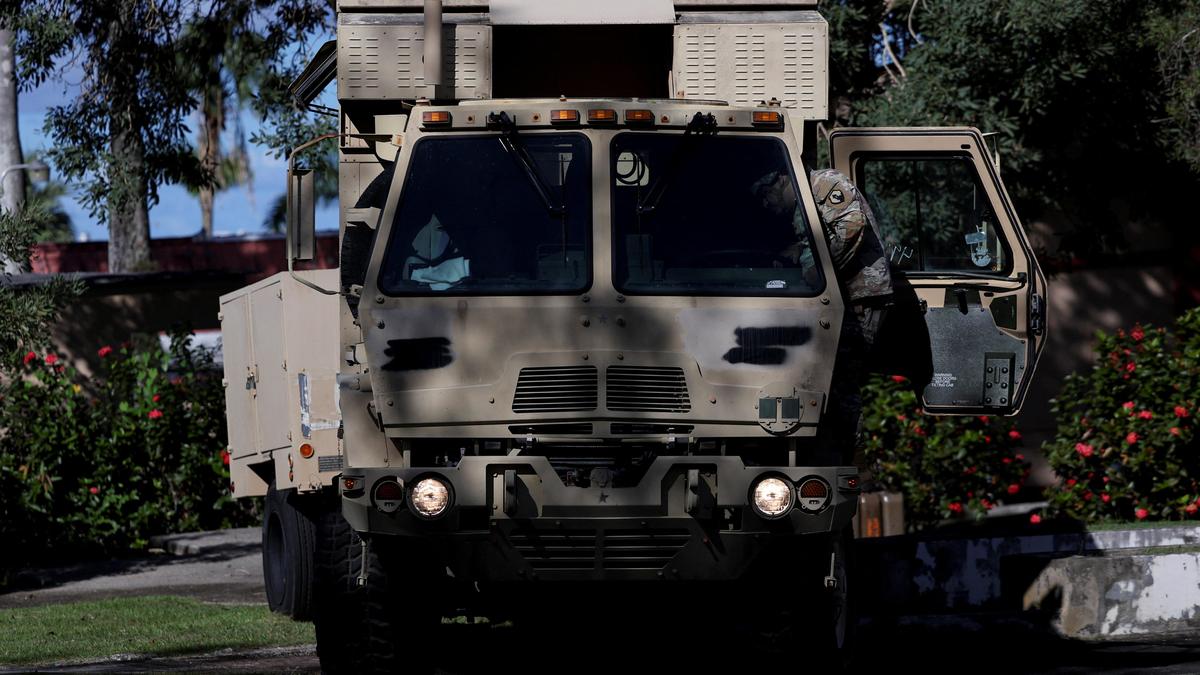
On January 7, 2026, President Donald Trump proposed a $1.5 trillion military spending budget for 2027, citing “troubled and dangerous times.” This proposal comes shortly after a U.S. military operation to capture Venezuelan leader Nicolás Maduro. Tensions are rising as U.S. forces amass in the Caribbean Sea. Simultaneously, Trump is pressuring defense contractor Raytheon to halt stock buybacks and increase investment in weapons manufacturing, threatening to cut off Pentagon purchases if they fail to comply.
Key Points:
- President Donald Trump proposes a $1.5 trillion military budget for 2027.
- The proposal follows a U.S. military operation to capture Venezuelan leader Nicolás Maduro.
- U.S. forces are massing in the Caribbean Sea.
- Trump is pushing for the U.S. to take over Greenland for national security reasons and has suggested potential military operations in Colombia.
- Secretary of State Marco Rubio ominously warns that Cuba “is in trouble.”
- Trump threatens to cut off Pentagon purchases from Raytheon if they don’t stop stock buybacks and invest more in manufacturing.
- Shares of defense contractors, including Northrop Grumman, Lockheed Martin, and RTX Corp., fell on Wall Street following the announcement.
- The current 2026 military budget is set at $901 billion.
Critical Analysis:
The historical context reveals a multi-pronged strategy by the Trump administration: securing Venezuelan oil, escalating tensions in the Caribbean, and exerting control over defense contractors. Trump’s renewed interest in Greenland mirrors his past attempts to acquire it, highlighting a consistent focus on perceived strategic assets. The Senate’s planned vote to “rein in” Trump on Venezuela suggests internal political opposition to his aggressive foreign policy. Trump’s public statements coupled with the administration’s overt actions in Venezuela and veiled threats to Cuba indicate a proactive approach to dominating the region through military strength.
Key Takeaways:
- The U.S. is pursuing an increasingly assertive foreign policy in the Caribbean under President Trump, particularly regarding Venezuela and potentially Cuba.
- Military spending is set to drastically increase, despite internal opposition and concerns about defense contractor practices.
- There’s a clear connection between resource acquisition (Venezuelan oil, potential Greenland takeover) and military strategy.
- Defense contractors are under pressure to prioritize manufacturing and investment over shareholder returns.
- Increased revenue from tariffs is being used as a justification for increased military spending.
Impact Analysis:
This event series has significant long-term implications:
- Regional Instability: The interventionist approach in Venezuela and the implied threats towards Cuba could destabilize the entire Caribbean region, leading to potential conflicts and refugee crises.
- Economic Shifts: The re-prioritization of defense spending and the pressure on defense contractors could reshape the U.S. economy, favoring manufacturing and military-industrial complex over shareholder interests.
- Geopolitical Realignment: The aggressive stance could alienate allies and embolden adversaries, leading to a re-evaluation of international alliances and power dynamics.
- Domestic Political Divide: The Senate’s opposition signals a deep political divide within the U.S., potentially leading to legislative gridlock and further polarization.
- Environmental Concerns: The pursuit of Venezuelan oil and potential acquisition of Greenland raise serious environmental concerns and could exacerbate climate change.
 First Piper