
Thu Jan 08 15:50:29 UTC 2026: # Karnataka Government Extends Relief to B-Khata Property Owners, Aims for Regularization
The Story:
The Karnataka state government announced on Thursday, January 8, 2026, an extension of relief measures for owners of properties currently under B-Khata classification within urban local bodies across the state. This initiative aims to regularize approximately 10 lakh properties that are situated in illegal or unauthorized layouts. While the exact revenue expected from this regularization process remains uncalculated, the government intends to levy a charge similar to the 5% of the guidance value already being applied in the Greater Bengaluru Authority region. However, the scheme specifically excludes the regularization of buildings that deviate from existing building bylaws.
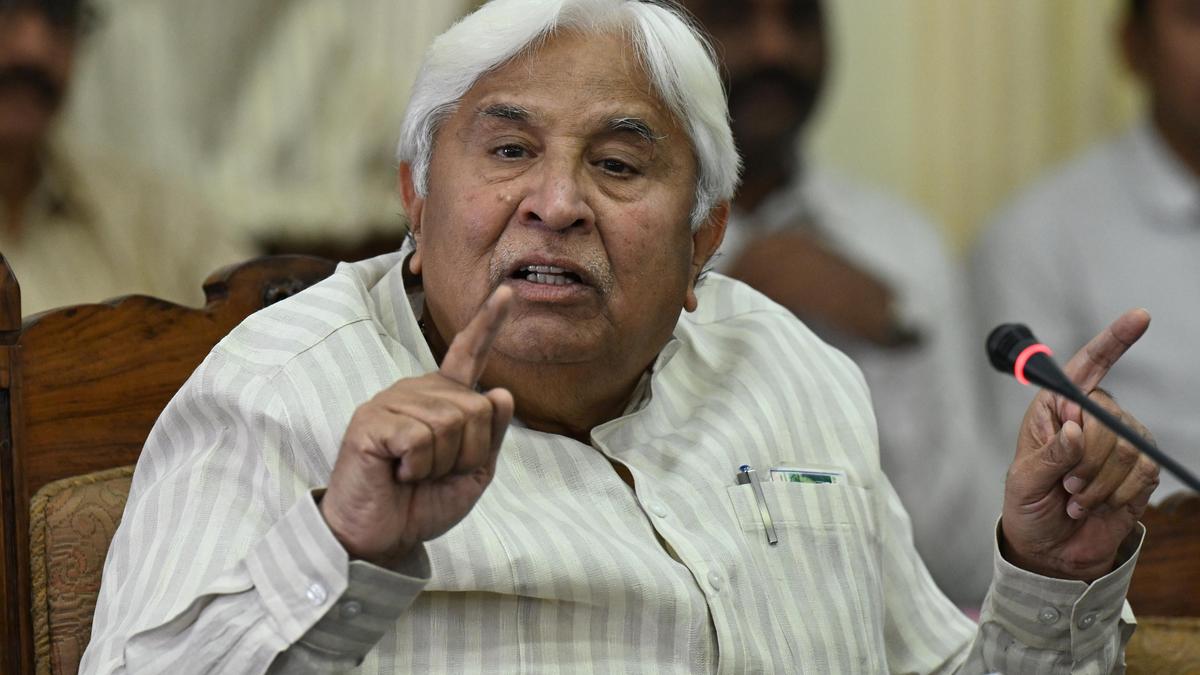
Law and Parliamentary Affairs Minister H.K. Patil stated that the scheme covers B-Khata properties including sites, buildings, apartments, and flats lacking prior approval from relevant planning authorities. The issuance of A-Khata, the legal property title, will be contingent upon these properties obtaining the necessary approvals from planning authorities. The government’s stated goal is to restrict unauthorized developments, prevent property sales in unapproved layouts, and bring existing developments under legal compliance.
Key Points:
- The Karnataka government is extending relief to owners of properties in illegal/unauthorized layouts under B-Khata.
- An estimated 10 lakh properties stand to benefit from this scheme.
- The regularization fee will be similar to the 5% of guidance value levied in the Greater Bengaluru Authority region.
- The scheme does NOT include regularization of buildings with bylaw deviations.
- A-Khata titles will be issued only after properties secure approvals from planning authorities.
- The stated aims are to restrict unauthorized development and bring existing developments under legal compliance.
Critical Analysis:
The Karnataka government is actively working to bring order to the real estate sector. Regularizing B-Khata properties and issuing A-Khata titles after ensuring regulatory compliance is a step towards improving transparency, property ownership rights, and urban planning. The penalty aspect mentioned by Mr. Patil suggests a dual approach of incentivizing compliance while disincentivizing past illegal construction practices. The timing of this announcement, coinciding with discussions on central government schemes and judicial rulings within the state, indicates a proactive approach to state governance and revenue generation through regularization.
Key Takeaways:
- The Karnataka government is prioritizing the regularization of unauthorized properties, impacting a large number of property owners.
- Revenue generation is a likely secondary benefit of the regularization process, although the exact amount is yet to be determined.
- The scheme emphasizes bringing properties into legal compliance with planning regulations.
- This move aims to improve urban planning and development within the state.
- The government is taking a balanced approach by penalizing non-compliance while incentivizing regularization.
Impact Analysis:
The Karnataka government’s B-Khata regularization scheme has potentially far-reaching implications. In the short term, it offers relief and legal recognition to a significant number of property owners. However, its long-term impact could be substantial. The regularization can lead to increased property values, enhanced access to loans and financial services for property owners, and a more organized real estate market. Moreover, by bringing these properties under the tax net, the government can increase its revenue, which can then be used for infrastructure development and public services. The success of this initiative will depend on its effective implementation and the government’s commitment to enforcing planning regulations in the future.
 First Piper