
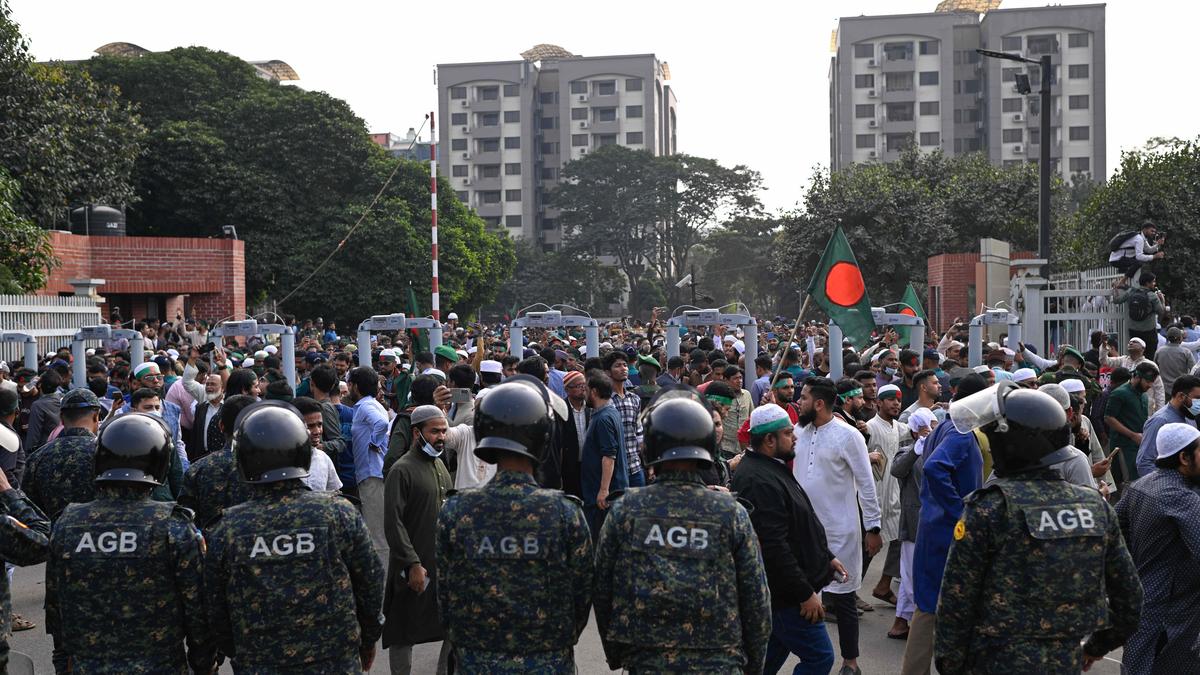
Wed Jan 07 16:24:25 UTC 2026: ### Headline: Political Crisis Deepens in Bangladesh as Party Rejects Police Chargesheet in Slain Leader’s Murder
The Story:
The Inquilab Mancho party in Bangladesh has vehemently rejected the police chargesheet in the murder case of their leader, Sharif Osman Hadi, who was assassinated earlier in December 2025. The party alleges that the state machinery is involved in the killing, dismissing the police’s claim that Hadi was murdered due to “political vengeance” orchestrated by an Awami League ward councillor. The party has warned of potential retaliatory actions if justice is not served, further escalating political tensions. The incident has also strained relations between Bangladesh and India, following accusations of Indian involvement, which New Delhi has vehemently denied.
Key Points:
- Sharif Osman Hadi was shot in the head on December 12, 2025, and died on December 18, 2025, after leading mass protests in July-August 2024.
- The Dhaka Metropolitan Police (DMP) has charged 17 people, including Faisal Karim Masud, who is allegedly connected to the Awami League’s student wing.
- Inquilab Mancho rejects the police chargesheet, claiming a wider “criminal syndicate” and the “state machinery” were involved.
- The party warns of potential violence if justice is not served and “Indian hegemony” is not ended.
- India has denied any involvement in the murder and called for a thorough probe, while accusing Bangladesh groups of spreading a “false narrative.”
- Bangladesh police claimed suspects fled to India, a claim that Meghalaya security agencies refuted.
Critical Analysis:
The historical context provided doesn’t offer any direct or significant patterns to explain the events. Therefore, this section is omitted.
Key Takeaways:
- The murder of Sharif Osman Hadi has triggered a significant political crisis in Bangladesh.
- Distrust in the investigation and potential government cover-up is fueling unrest and threatening further violence.
- The allegations of Indian involvement are adding a complex international dimension to the internal political turmoil.
- The incident highlights the fragile state of Bangladesh’s political environment.
- There is a potential risk of escalating violence and further instability in the region.
Impact Analysis:
The political instability in Bangladesh, fueled by the murder of Sharif Osman Hadi and the subsequent controversy, could have long-term implications:
- Increased Political Polarization: The rejection of the police chargesheet and accusations against the state machinery are likely to deepen the divide between political factions. This could lead to further unrest and violence, especially in the lead-up to the February 12 elections.
- Strained India-Bangladesh Relations: The allegations of Indian involvement, even if unfounded, could significantly damage bilateral ties. This could impact trade, security cooperation, and other areas of mutual interest. The denial and counter-accusations further complicate diplomatic efforts.
- Rise in Extremist Sentiments: The Inquilab Mancho’s warning of violence and claims of “Indian hegemony” could exploit nationalist sentiments and create a breeding ground for extremism. This poses a threat to regional stability.
- Economic Consequences: Political instability could deter foreign investment and disrupt economic activity in Bangladesh. This could further exacerbate existing social and economic problems.
- Regional Security Implications: A destabilized Bangladesh could create a security vacuum, potentially attracting transnational criminal organizations and terrorist groups. This would have wider implications for regional security.
 First Piper