
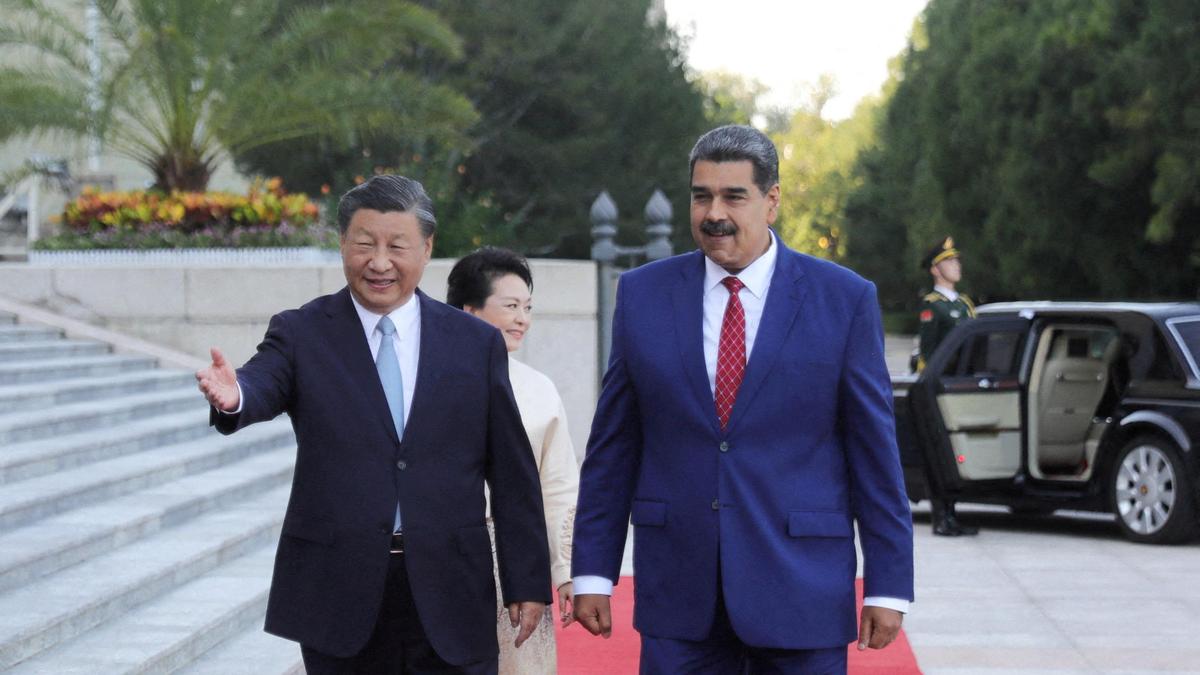
Thu Jan 08 02:30:00 UTC 2026: Headline: U.S. Military Intervention in Venezuela: A Geopolitical Chess Move Against China
The Story:
On Saturday, January 8, 2026, approximately 200 American troops entered Caracas, Venezuela, leading to the capture of President Nicolas Maduro. This action marks the most significant U.S. intervention in Latin America since the 1989 Panama invasion. The move has sparked widespread condemnation from both allies and adversaries, who view it as a blatant violation of international law aimed at reasserting the Monroe Doctrine and curbing China’s growing influence in the region.
Key Points:
- The U.S. military intervened in Venezuela, capturing President Nicolas Maduro.
- The intervention is widely condemned as a violation of international law.
- The U.S. aims to re-establish the Monroe Doctrine and reduce China’s influence.
- Venezuela has shifted from relying on the U.S. for weapons to China and Russia.
- Since 2014, China has accounted for 46% of Venezuela’s arms imports.
- China’s investments in Latin America totaled over $300 billion between 2001-2023, with over $106 billion invested in Venezuela.
- Venezuela is the fourth-largest recipient of Chinese aid globally, with over 170 projects committed.
Critical Analysis:
The U.S. intervention in Venezuela represents a calculated response to China’s increasing economic and strategic foothold in Latin America. The historical context provided, specifically the White House’s concern over Russian and Chinese influence in the Arctic, underscores a broader strategy of containing both nations’ global reach. The timing of the intervention suggests a sense of urgency, possibly driven by intelligence indicating further Chinese consolidation in Venezuela’s vital sectors, like energy and mining. Trump administration’s actions are an attempt to realign the power dynamics in the region back in favor of the U.S.
Key Takeaways:
- The intervention signals a renewed U.S. commitment to asserting its dominance in Latin America.
- The event escalates tensions between the U.S. and China, transforming Venezuela into a key battleground for geopolitical influence.
- Venezuela’s economic reliance on China makes it a vulnerable target in this power struggle.
- The intervention raises significant questions about the future of international law and the sovereignty of nations.
- Global condemnation highlights the diminishing support for unilateral actions by major powers.
Impact Analysis:
The U.S. intervention in Venezuela is likely to have far-reaching consequences:
- Regional Instability: The action may trigger unrest and instability within Venezuela, potentially leading to a prolonged conflict.
- Economic Repercussions: Sanctions and trade disruptions could further destabilize Venezuela’s economy, exacerbating the humanitarian crisis.
- Shifting Alliances: Latin American countries may re-evaluate their relationships with both the U.S. and China, potentially leading to new alliances.
- Global Power Dynamics: The event underscores a broader trend of escalating competition between the U.S. and China for global influence.
- International Law Erosion: The blatant disregard for international law could set a dangerous precedent for future interventions by other powerful nations.
 First Piper