
Thu Jan 08 08:54:40 UTC 2026: ### U.S. Action in Venezuela Sparks International Outcry, Military Funeral Held
The Story:
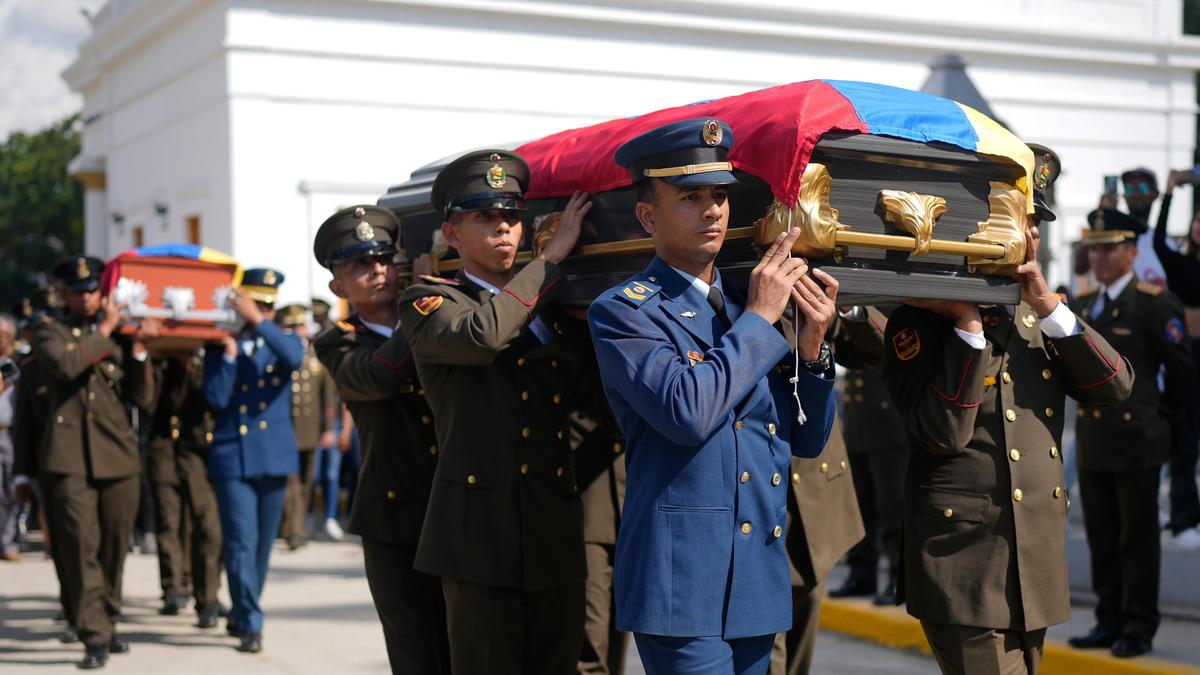
Venezuela held a military funeral on January 7, 2026, for soldiers killed during a U.S. operation that resulted in the capture of President Nicolás Maduro and his wife, Cilia Flores. The event, marked by military honors and emotional displays, underscored the escalating tensions between Venezuela and the U.S. following the raid. Acting President Delcy Rodríguez has declared a seven-day mourning period.
The U.S. operation, which took place on January 3, 2026, has resulted in at least 24 Venezuelan military casualties, with Venezuela’s Interior Minister claiming at least 100 deaths overall, including civilians. Cuba has reported 32 Cuban military and police officers killed in the operation. Maduro and Flores appeared in a U.S. court on January 5, 2026, pleading not guilty to drug charges.
Key Points:
- A military funeral was held in Caracas on January 7, 2026, for Venezuelan soldiers killed during the U.S. operation.
- The U.S. military operation to capture Nicolás Maduro and Cilia Flores occurred on January 3, 2026.
- Maduro and Flores pleaded not guilty to drug charges in a U.S. court on January 5, 2026.
- Venezuela’s Interior Minister claims at least 100 people were killed in the U.S. operation.
- Cuba reported 32 Cuban military and police officers killed.
- Acting President Delcy Rodríguez declared a seven-day mourning period.
Critical Analysis:
The historical context hints at the underlying reasons for the U.S. intervention. The article “How oil once made Venezuela rich, but not its people” suggests that economic factors, particularly oil, likely played a role in the U.S. decision to act. The alleged drug charges against Maduro may serve as a justification, but the resource wealth of Venezuela is a significant factor. This suggests a strategic calculation by the U.S., leveraging the drug charges as a pretext for regime change and control over Venezuelan oil resources.
Key Takeaways:
- The U.S. capture of Maduro has significantly destabilized Venezuela, leading to mourning, military funerals, and accusations of war crimes.
- The high death toll, including Venezuelan and Cuban military personnel, indicates the operation was far more extensive and violent than initially portrayed.
- The U.S. action is likely driven by a combination of factors, including alleged criminal activity and strategic economic interests in Venezuelan oil.
- The Venezuelan military’s vow to “rescue our legitimate President” signals potential for further conflict and instability.
- The involvement of Cuban military and police highlights the complex geopolitical relationships in the region.
Impact Analysis:
The U.S. capture of Venezuela’s president is a major geopolitical event with potential long-term implications. Firstly, the US plans to control Venezuala’s oil sales “indefinitely”. This action could trigger regional and international condemnation, particularly from countries wary of U.S. interventionism. The event may embolden other nations to challenge U.S. foreign policy decisions and could reshape alliances in Latin America, potentially drawing in countries like Russia and China as counterweights to U.S. influence. Furthermore, the internal situation in Venezuela is highly volatile. The power vacuum created by Maduro’s removal could lead to a prolonged period of instability, civil unrest, and potentially, a civil war. This could generate a refugee crisis, further straining regional resources and stability. Finally, the event could set a dangerous precedent for future U.S. interventions in other countries, particularly those with valuable resources or governments perceived as hostile to U.S. interests. The overall impact will be a significant deterioration in international relations and a heightened risk of conflict in Latin America.
 First Piper