
Tue Jan 06 06:54:03 UTC 2026: # ISRO Faces Growing Pains Amidst Ambitions and Liberalization
The Story:
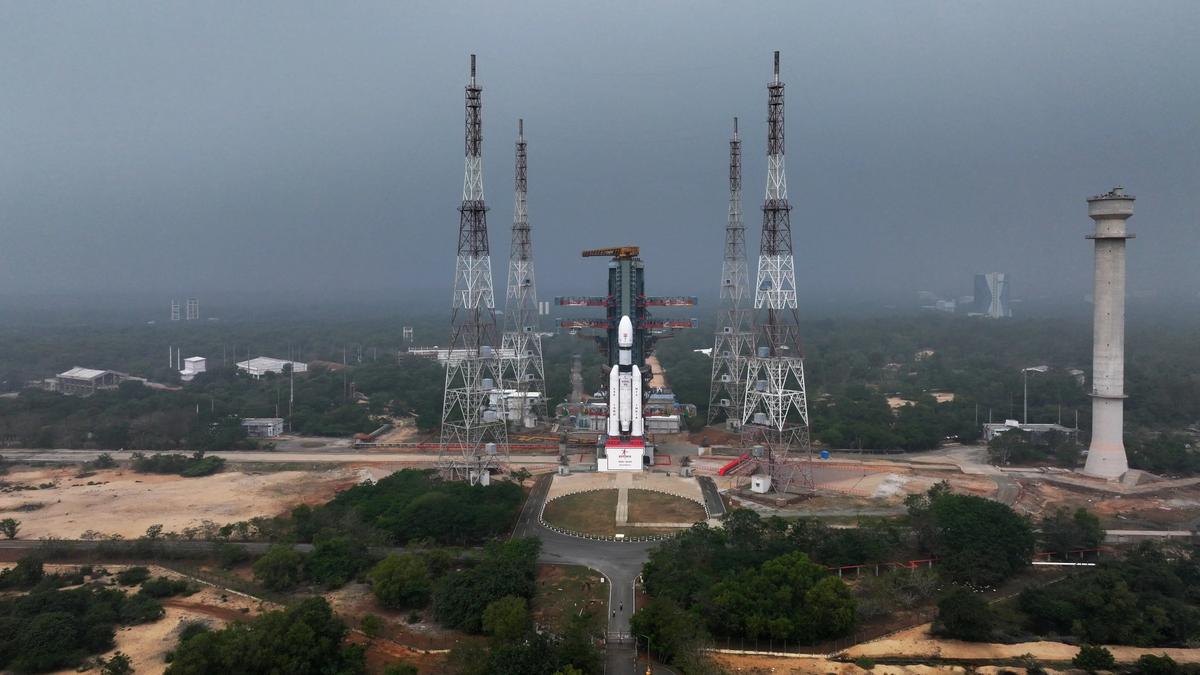
The Indian Space Research Organisation (ISRO) is at a critical juncture, facing challenges related to its capacity to execute complex missions, navigating the complexities of a newly liberalized space sector, and ensuring its competitiveness in a rapidly evolving global landscape. While ISRO has celebrated numerous successes over the past decade, including the Chandrayaan-3 lunar landing in August 2023 and the Aditya-L1 solar mission reaching its orbit on January 6, 2024, these accomplishments have raised expectations and highlighted existing bottlenecks. The agency’s ability to manage multiple ambitious projects simultaneously, such as Gaganyaan, Chandrayaan-4, and the Next-Generation Launch Vehicle (NGLV), is being strained.
Key Points:
- ISRO is struggling with its capacity to execute complex missions due to parallel preparation for human spaceflight, science missions, satellite replenishment, and the development of the NGLV.
- Only five launches occurred in 2025, falling short of the projected eight. Experts attribute delays to a focus on big-ticket programs and the dependence of private launch providers on ISRO infrastructure.
- India lacks a comprehensive national space law, creating ambiguity in the roles and responsibilities of ISRO, the Indian National Space Promotion and Authorisation Centre (IN-SPACe), and New Space India, Ltd. (NSIL).
- Investment in India’s space sector sharply declined in 2024, impacting the development and deployment of long-horizon hardware.
- The NGLV project acknowledges the importance of reusable launch vehicles and economic launches, requiring advanced manufacturing capabilities and significant capital investment.
Key Takeaways:
- ISRO must improve its integration capacity and access to test stands to manage multiple projects effectively and avoid cascading delays.
- The implementation of a comprehensive national space law is crucial for clarifying the roles of ISRO, IN-SPACe, and NSIL, and protecting ISRO from ad hoc regulatory demands.
- India needs to invest in advanced manufacturing capabilities, higher qualification capacity, and capital to compete in the global space sector.
- The future success of the Indian space program depends on sustained institutional performance, not just individual feats.
- Engineering, regulation, manufacturing, and finance must mature together for ISRO to transition from executing individual missions to operating as an industrial system.
Impact Analysis:
The future trajectory of ISRO and the Indian space program hinges on addressing these challenges. Successfully navigating the transition towards a more liberalized and competitive space sector will determine whether India can sustain its position as a leading spacefaring nation. A failure to do so could lead to missed opportunities, project delays, and a diminished role for ISRO in the global space arena. The development of NGLV and related launch facilities will also dictate India’s future share in the launch industry.
 First Piper