
Sun Jan 04 23:18:32 UTC 2026: # North Korea Escalates Tensions with Hypersonic Missile Test Amid Geopolitical Shifts
The Story:
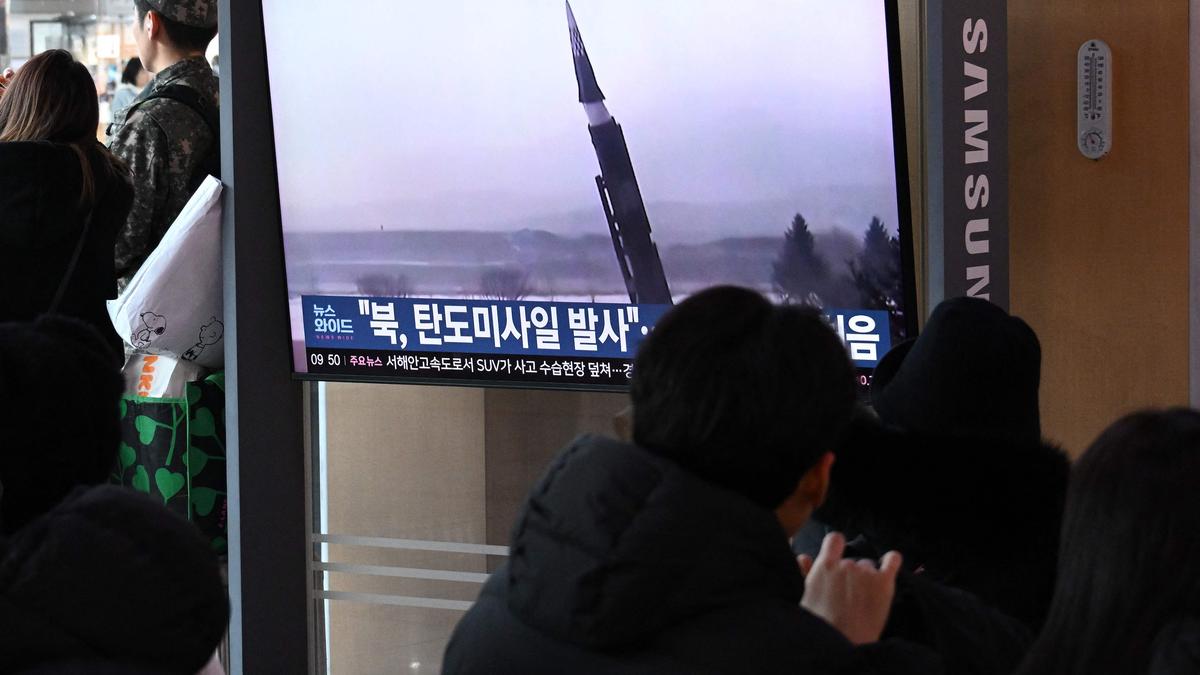
North Korea test-fired hypersonic missiles on Sunday, January 4, 2026, according to state media KCNA, claiming the launch aimed to assess its military operational capabilities for war deterrence. The test was overseen by North Korean leader Kim Jong Un, who emphasized the necessity of a “strong and reliable nuclear deterrent” due to “the recent geopolitical crisis and various international circumstances.” The missiles reportedly hit targets approximately 1,000 km (621 miles) away, east of North Korea.
The launch coincided with South Korean President Lee Jae Myung’s state visit to China, and followed a North Korean statement condemning U.S. strikes on Venezuela as a violation of its sovereignty. The South Korean military confirmed the missile launch towards the Sea of Japan (East Sea).
Key Points:
- North Korea test-fired hypersonic missiles on January 4, 2026.
- The launch was intended to assess the military’s war deterrence capabilities.
- Kim Jong Un cited geopolitical crises as justification for strengthening nuclear deterrence.
- The missiles traveled approximately 1,000 km (621 miles).
- The launch occurred during South Korean President Lee Jae Myung’s state visit to China.
- North Korea denounced U.S. strikes on Venezuela prior to the missile test.
Critical Analysis:
This event is happening in the context of escalating global tensions. North Korea’s focus on strengthening its nuclear deterrent, as stated by Kim Jong Un, is directly linked to the perceived “geopolitical crisis” and international circumstances. The timing of the launch, coinciding with both the South Korean President’s visit to China and the denouncement of US strikes in Venezuela, suggests a deliberate attempt to signal North Korea’s alignment within the evolving global power dynamics. China’s growing influence and South Korea’s increasing ties, combined with North Korea’s disapproval of US foreign policy, is likely a catalyst for this missile launch.
Key Takeaways:
- North Korea is actively developing and testing advanced missile technology, specifically hypersonic missiles.
- Geopolitical tensions and perceived threats are driving North Korea’s pursuit of a stronger nuclear deterrent.
- North Korea is strategically using missile launches to express its stance on international issues and regional power dynamics.
- The simultaneous occurrence of President Lee’s trip to China and the missile launch shows the complex relationships unfolding in the region.
Impact Analysis:
This missile launch is significant for several reasons. Firstly, it demonstrates North Korea’s continued defiance of international sanctions and its commitment to advancing its military capabilities. Secondly, it creates further instability in the region, potentially triggering a renewed arms race and increased military presence from other powers. Finally, it puts pressure on South Korea and its allies to respond, either through diplomatic channels or increased military preparedness. The launch also has implications for the future of denuclearization talks, making any potential progress even more challenging. The condemnation of US strikes in Venezuela also signifies the changing global alliance landscape, as countries band together in opposition to perceived hegemonic actions. The long-term impact is likely to be a more volatile and unpredictable security environment in Northeast Asia.
 First Piper