
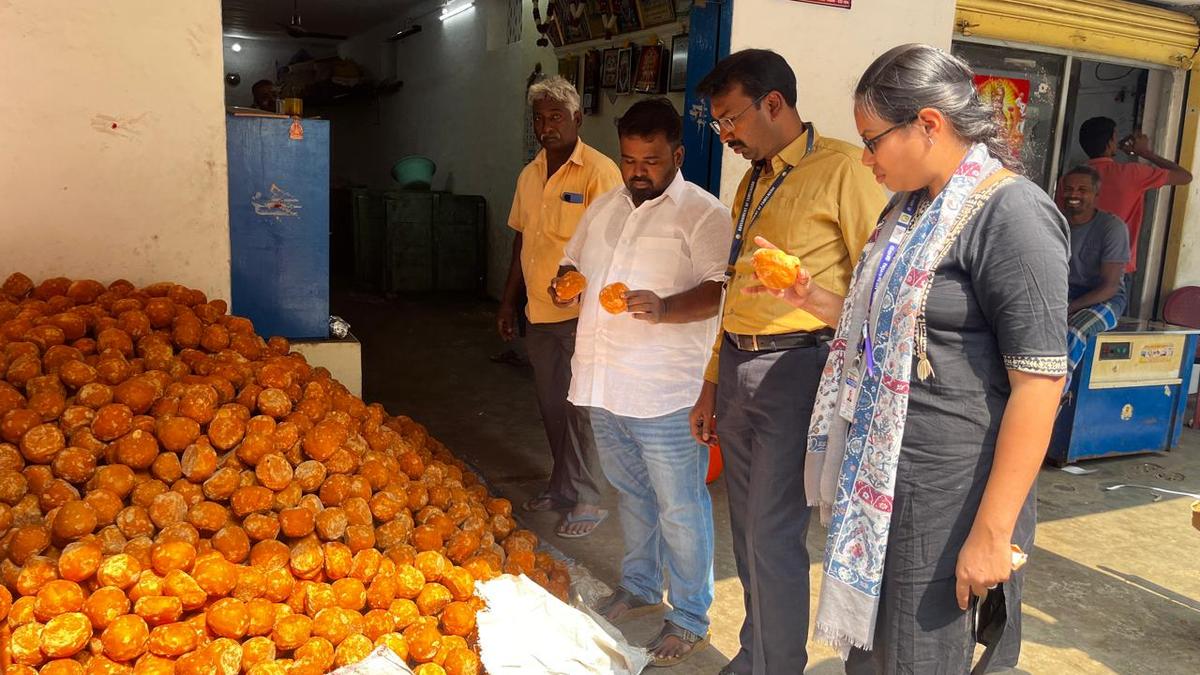
Wed Jan 07 00:00:00 UTC 2026: # Vellore Officials Seize One Ton of Adulterated Jaggery Ahead of Pongal Festival
The Story:
On January 7, 2026, officials from the Food Safety Division in Vellore, India, seized approximately one ton of adulterated jaggery during a surprise inspection of shops and warehouses in the Vellore wholesale market. The raid, prompted by consumer complaints, targeted the common practice of adulterating jaggery with kesari synthetic powder and wheat flour (maida) to enhance its color and weight. This operation occurs annually before the Pongal festival, a period of high jaggery demand.
The inspection, led by V. Prabhakaran, Designated Officer (DO), Department of Food Safety (Vellore), revealed that several traders were violating Food Safety and Standards Authority of India (FSSAI) norms by selling jaggery adulterated with sugar, kesari powder, and wheat flour. Samples have been sent to the Food Analysis Laboratory (FAL) in Chennai for further examination, and legal action is threatened against those found culpable.
Key Points:
- One ton of adulterated jaggery seized in Vellore.
- The raid was led by V. Prabhakaran, Designated Officer, Department of Food Safety (Vellore).
- Adulteration involves using kesari synthetic powder and wheat flour (maida).
- The targeted areas include the Vellore wholesale market, specifically lanes like Mandi Street and Kallukadai (Arrack shop) Street.
- Most of the jaggery consumed in Chennai, Tiruvallur, and Kancheepuram districts comes from the Vellore region (approximately 1,000 tons annually).
- Adulterated jaggery can cause health hazards like stomach discomfort, respiratory issues, and increased risk of cancer.
- Samples sent to Food Analysis Laboratory (FAL) in Chennai for testing.
- Food Safety and Standards Authority of India (FSSAI) norms are being violated.
Key Takeaways:
- Food adulteration remains a persistent problem in India, particularly during festival seasons when demand surges.
- The Department of Food Safety is actively conducting inspections and taking action against offenders.
- Consumer awareness plays a crucial role in identifying and reporting adulterated products.
- The health risks associated with consuming adulterated food are significant.
- Enforcement of FSSAI norms is essential to protect public health.
Impact Analysis:
This event highlights the ongoing struggle to ensure food safety in India. While the immediate impact is the seizure of adulterated jaggery and potential prosecution of offenders, the long-term implications involve the need for:
- Strengthened Regulatory Oversight: More frequent and comprehensive inspections are required to deter adulteration.
- Enhanced Public Awareness Campaigns: Educating consumers about identifying adulterated products can empower them to make informed choices and report violations.
- Stricter Penalties for Offenders: Imposing significant penalties can deter traders from engaging in food adulteration.
- Investment in Food Analysis Infrastructure: Ensuring that food analysis laboratories are well-equipped and efficient is critical for timely identification of adulterated products.
- Support for Sustainable Farming Practices: Promoting organic and sustainable jaggery production can reduce the incentive for adulteration.
 First Piper