
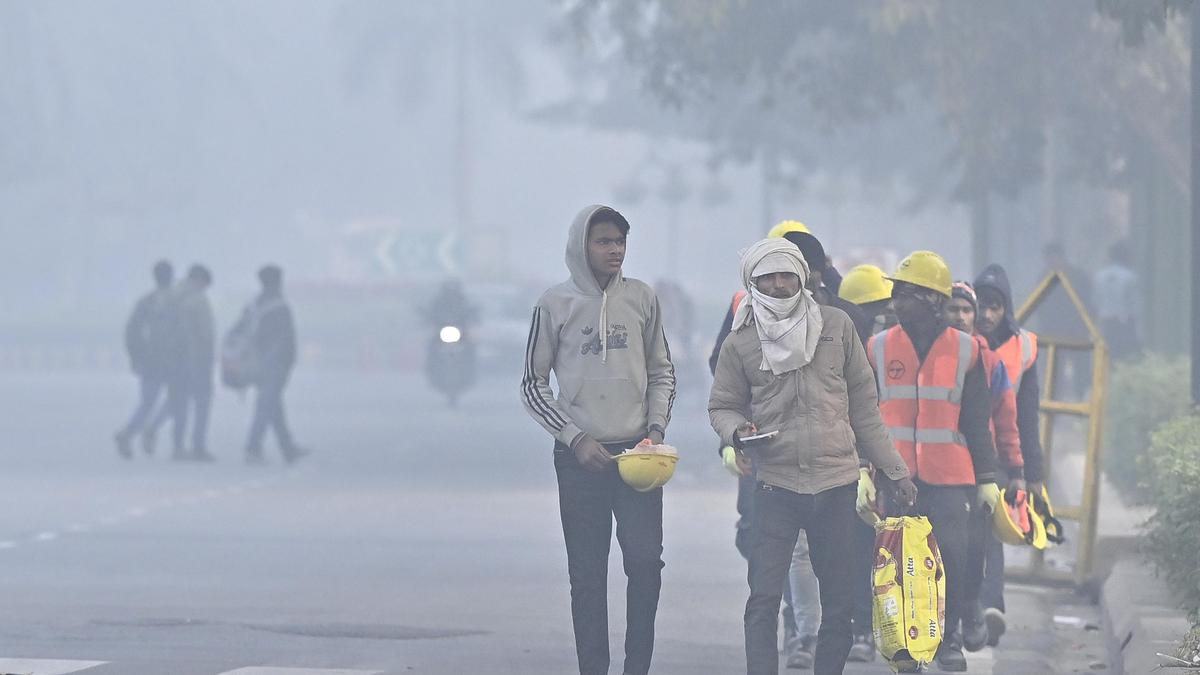
Wed Jan 07 06:43:07 UTC 2026: # Delhi Grapples with “Very Poor” Air Quality Amid Cold Wave and Dense Fog
The Story:
New Delhi is experiencing a confluence of adverse weather conditions, resulting in significantly degraded air quality. On January 7, 2026, the city’s Air Quality Index (AQI) reached 336, placing it in the “very poor” category, according to the Central Pollution Control Board (CPCB). This deterioration comes amidst a cold wave and dense fog, prompting the India Meteorological Department (IMD) to issue a yellow alert, warning of potential disruptions to daily activities. Several stations recorded “very poor” air quality with Nehru Nagar recording the worst air quality at 360.
Adding to the concerns, Delhi also recorded its first cold day of the year on January 6, 2026, with maximum temperatures falling significantly below normal. The IMD forecasts that these cold conditions will likely persist. Coupled with high humidity levels of 95% recorded in parts of the city, the weather conditions pose significant challenges for residents.
Key Points:
- Delhi’s air quality was in the “very poor” category on January 7, 2026, with an AQI of 336.
- Nehru Nagar recorded the worst air quality at 360.
- The India Meteorological Department (IMD) issued a yellow alert for dense fog.
- Delhi recorded its first cold day of the year on January 6, 2026.
- Relative humidity levels reached 95% in parts of the city.
Key Takeaways:
- Delhi’s ongoing struggle with air pollution is exacerbated by seasonal weather patterns like cold waves and dense fog.
- The issuance of a yellow alert indicates potential disruptions to daily life and necessitates caution.
- The convergence of poor air quality and cold conditions poses significant health risks to residents.
- Continued monitoring and mitigation strategies are crucial to address the air quality crisis in Delhi.
- School closures in nearby Noida due to the cold wave indicate the wider regional impact of the weather conditions.
Impact Analysis:
The combination of “very poor” air quality and cold wave conditions in Delhi has the potential for significant short and long-term impacts.
- Public Health: Respiratory illnesses and cardiovascular problems are likely to increase, particularly among vulnerable populations like children, the elderly, and those with pre-existing conditions.
- Economic Impact: The yellow alert and poor weather conditions could lead to disruptions in transportation, construction, and other outdoor activities, potentially affecting the local economy. School closures also impact working parents.
- Environmental Concerns: Persistently high pollution levels contribute to long-term environmental degradation and climate change.
- Policy Implications: The event highlights the urgent need for stricter enforcement of pollution control measures, improved public awareness campaigns, and long-term strategies for sustainable urban development in Delhi. Future policies and regulations regarding construction and transportation may be affected.
 First Piper