
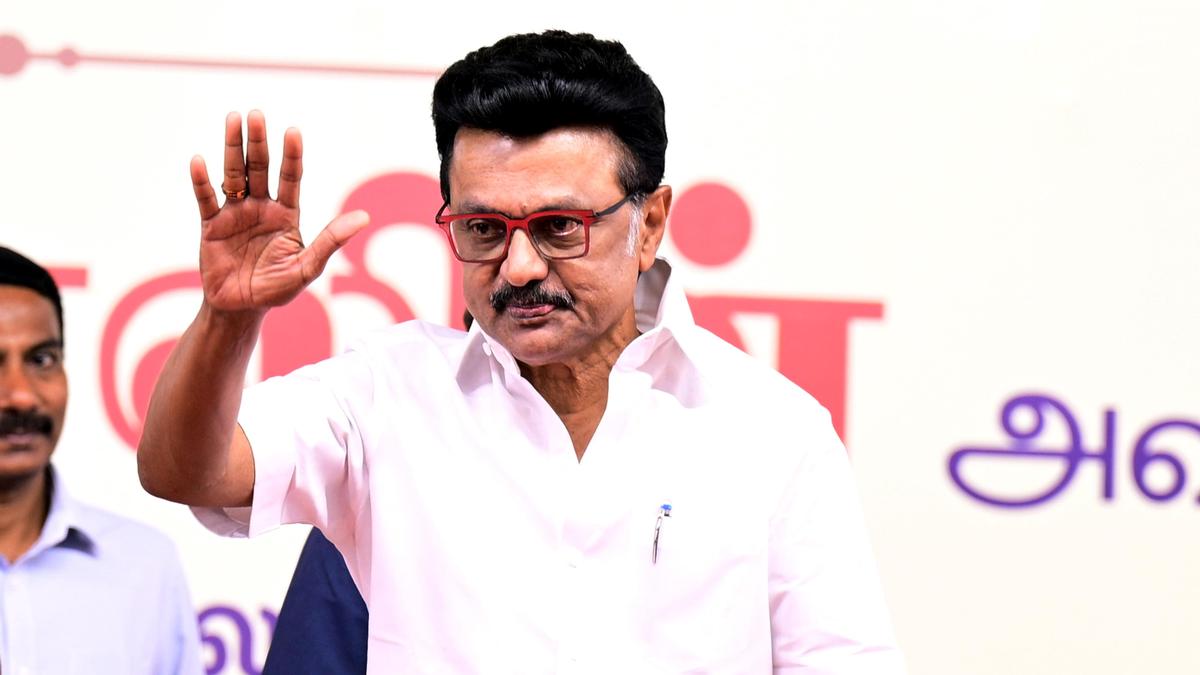
Wed Jan 07 17:15:50 UTC 2026: # Stalin Condemns Shah’s Accusations, Defends DMK’s Record on Religious Harmony
The Story:
Tamil Nadu Chief Minister M.K. Stalin has strongly refuted accusations made by Union Home Minister Amit Shah that the DMK government is acting against Hindu beliefs. Speaking at a function in Dindigul district on Wednesday, January 7, 2026, Stalin accused Shah of slander and ignorance regarding the situation in Tamil Nadu. He highlighted the DMK government’s efforts in temple consecration and land retrieval, asserting its respect for all faiths and warning against any attempts to divide the people of Tamil Nadu through hate propaganda.
Stalin further questioned Shah’s motives, framing the upcoming Assembly election as a choice between a DMK-led government representing Tamil self-respect and rule from Delhi by the BJP, implicitly through its alliance with the AIADMK. He criticized the BJP’s perceived lack of interest in Tamil Nadu’s welfare and expressed confidence in the DMK front’s victory, promising a continuation of the “Dravidian Model” of governance.
Key Points:
- M.K. Stalin criticized Amit Shah for accusing the DMK government of functioning against Hindu beliefs.
- Stalin claimed the DMK government has consecrated over 4,000 temples and retrieved over 7,000 acres of temple lands.
- He accused Shah of attempting to divide the people of Tamil Nadu with hate propaganda.
- Stalin framed the upcoming election as a battle for Tamil self-respect against rule from Delhi.
- He highlighted the DMK’s focus on balanced development and welfare schemes.
Critical Analysis:
The timing of Shah’s accusations and Stalin’s strong rebuttal suggest a strategic political maneuver ahead of upcoming elections. Shah’s comments likely aim to consolidate the BJP’s Hindu nationalist base and weaken the DMK’s support by portraying them as anti-Hindu. Stalin’s response aims to directly counter this narrative by highlighting the DMK’s actions benefiting temples and accusing Shah of spreading misinformation, seeking to solidify the DMK’s image as protectors of all faiths. This exchange reflects the ongoing ideological battle between the DMK’s Dravidian identity politics and the BJP’s Hindutva ideology, playing out on the political stage of Tamil Nadu. The reference to “rule from Delhi” is a consistent DMK tactic to reinforce regional identity.
Key Takeaways:
- The DMK and BJP are engaged in a direct ideological clash in Tamil Nadu, centering on religious and regional identity.
- Accusations and counter-accusations are likely to intensify as the Assembly election approaches.
- The DMK is actively positioning itself as a protector of Tamil self-respect against perceived encroachment from the central government.
- Temple politics remain a significant factor in Tamil Nadu’s political landscape.
- The “Dravidian Model” continues to be a central theme for the DMK government.
Impact Analysis:
This exchange has the potential to further polarize the political climate in Tamil Nadu. While Shah’s accusations might resonate with some segments of the population, Stalin’s strong response could solidify the DMK’s base and attract support from those who value regional autonomy and social harmony. The long-term impact will depend on how effectively each party can communicate its message and mobilize its supporters in the lead-up to the election. The outcome of the Assembly election will be a crucial indicator of the prevailing political sentiment in Tamil Nadu and the success of each party’s strategy.
 First Piper