
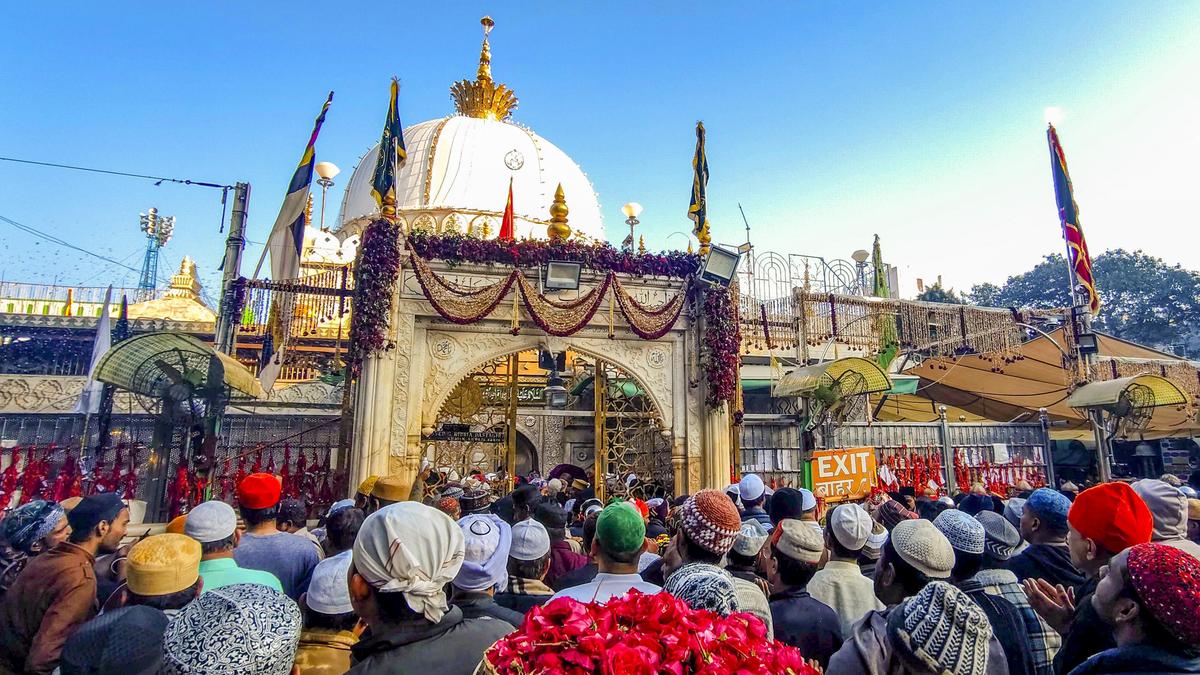
Mon Jan 05 17:36:22 UTC 2026: ### Headline: Supreme Court Declines Plea to Restrain PM Modi from Offering Chadar at Ajmer Sharif Dargah
The Story:
On Monday, January 5, 2026, the Supreme Court of India refused to entertain a petition seeking to prevent Prime Minister Narendra Modi from offering a ceremonial ‘chadar’ at the Ajmer Sharif Dargah. The bench, consisting of Chief Justice Surya Kant and Justice Joymalya Bagchi, stated that the issue was not justiciable. The plea also challenged the Union government’s extension of state-sponsored ceremonial honour and symbolic recognition to the Islamic scholar Khwaja Moinuddin Chishti and the Ajmer Dargah.
The petitioners, Jitender Singh and Vishnu Gupta, representing a Hindu outfit, argued that the practice, initiated by Jawaharlal Nehru in 1947, lacked a legal or constitutional basis and that a civil suit was pending, claiming the dargah was built over a Shiva temple. The Supreme Court clarified that the dismissal of the writ petition would not impact the pending civil suit.
Key Points:
- The Supreme Court dismissed a plea seeking to prevent Prime Minister Narendra Modi from offering a ‘chadar’ at the Ajmer Sharif Dargah.
- The petitioners, Jitender Singh and Vishnu Gupta, argued against the state-sponsored ceremonial honour and recognition extended to Khwaja Moinuddin Chishti and the Ajmer Dargah.
- The petitioners claimed the practice originated with Jawaharlal Nehru in 1947 without legal basis.
- A civil suit is pending, alleging the dargah was built over a Shiva temple.
- The Supreme Court clarified that the dismissal of the writ petition would not affect the pending civil suit.
Key Takeaways:
- The Supreme Court is maintaining a position of non-interference in matters of ceremonial practices with historical precedent.
- The case highlights the ongoing tension between secularism and religious tradition in India, particularly regarding government involvement in religious practices.
- The judiciary is careful to separate this specific petition from the larger, pending civil suit regarding the historical claims on the land where the dargah is located.
 First Piper