
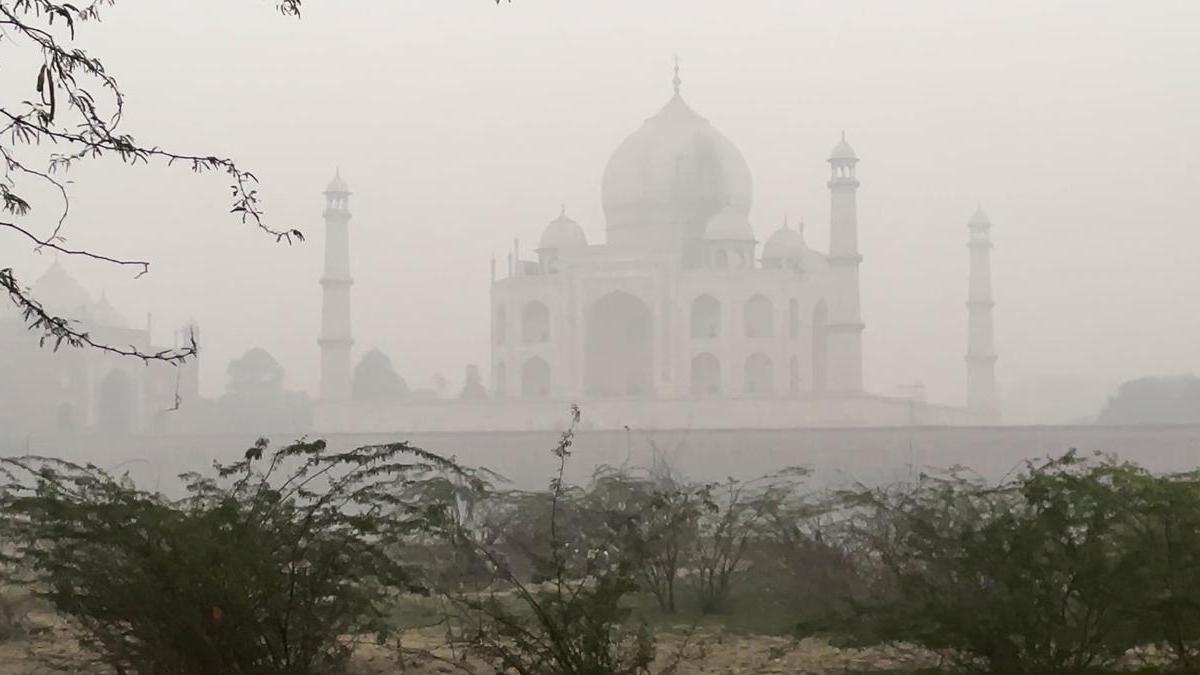
Mon Jan 05 22:55:00 UTC 2026: ### Taj Mahal at Risk: NGT Investigates Illegal Activities in Agra’s Ecological Zone
- Key Points:
- The National Green Tribunal (NGT) has issued notices to the Union Environment Ministry, the Uttar Pradesh government, and other entities regarding allegations of illegal activities in the ecologically sensitive zone around the Taj Mahal.
- The allegations include illegal felling of trees, illegal construction, and encroachment along the Agra-Gwalior Highway.
- The Agra Development Authority is accused of constructing kiosks, paved paths, and brick-cement structures in Shahjahan Park, located between the Taj Mahal and Agra Fort.
- The applicant claims that any tree felling within a 5 km aerial distance from the Taj Mahal requires prior approval from the Supreme Court.
- The Agra Municipal Corporation is allegedly building a concrete structure for a “selfie point” on the green belt.
- Private individuals and L&T (involved in metro construction) are also accused of cutting trees without permission.
- The next hearing is scheduled for March 12.
- Critical Analysis:
The NGT’s action highlights a persistent problem of environmental degradation and disregard for regulations in areas surrounding historical monuments. The timing of the order, just a day after the NGT directed the CAQM to act on a complaint regarding the health of a two-month-old due to pollution (January 5, 2026), suggests an increased focus by the tribunal on environmental protection and enforcement. The accusations against various entities, including government bodies, private individuals, and a major corporation, point towards a systemic issue where development pressures are overriding environmental concerns. The construction of tourist-centric facilities like “selfie points” reflects a prioritization of short-term economic gains over long-term ecological preservation. The alleged illegal felling of trees, despite Supreme Court guidelines, indicates a blatant disregard for judicial authority and environmental laws. -
Key Takeaways:
- Environmental regulations around historical monuments are being consistently violated.
- There is a conflict between development projects and environmental preservation efforts in Agra.
- Government bodies and private entities alike are implicated in illegal activities.
- The NGT is actively intervening to address environmental concerns, but its effectiveness depends on the cooperation and compliance of the involved parties.
- Supreme Court guidelines are not being adequately enforced.
- Impact Analysis:
The NGT’s investigation could have significant consequences for ongoing and future development projects in the Agra region. If the allegations are substantiated, the involved parties could face penalties, demolition orders, and stricter environmental regulations. This could lead to project delays, increased costs, and a shift in development priorities towards sustainable practices. The investigation also sets a precedent for environmental enforcement around other historical sites and ecologically sensitive zones across India. Increased public awareness of these issues, spurred by media coverage and NGT actions, could lead to greater pressure on government and corporations to adhere to environmental regulations and prioritize conservation efforts. The long-term impact will depend on the outcome of the NGT hearing on March 12 and the subsequent actions taken by the government and other stakeholders. Failure to address these issues could lead to further degradation of the environment around the Taj Mahal, threatening its structural integrity and cultural significance.
 First Piper