
Tue Jan 06 00:58:10 UTC 2026: # Maduro Pleads Not Guilty to Narco-Terrorism Charges in U.S. Court
The Story:
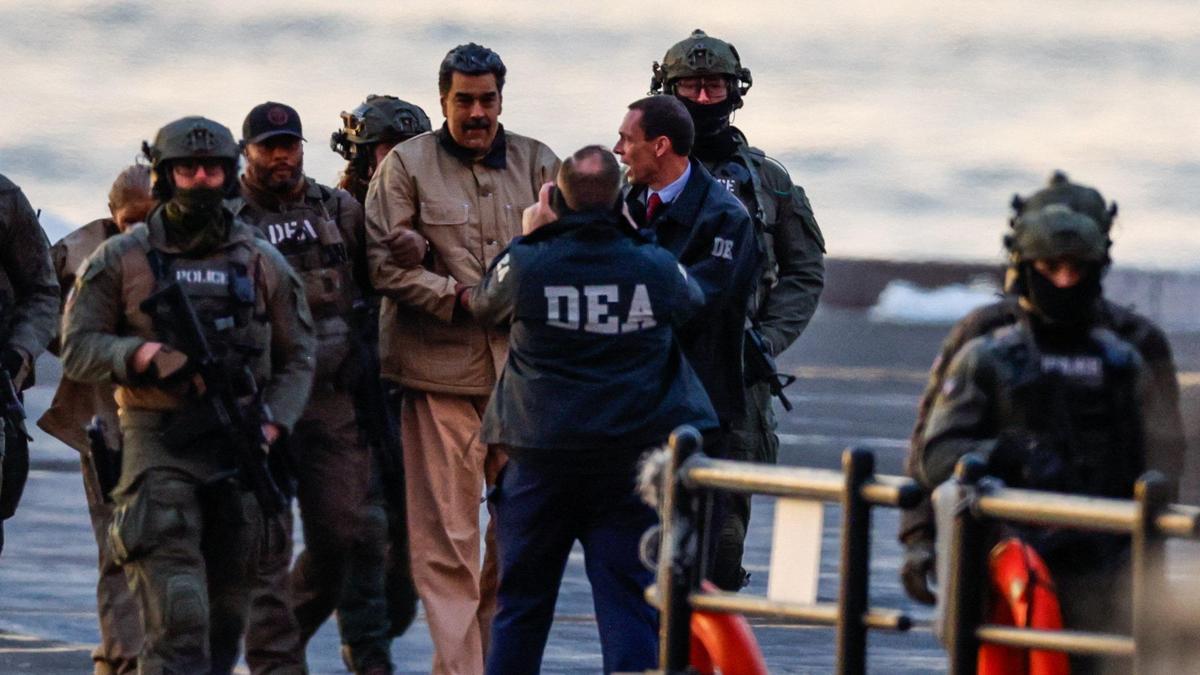
Venezuelan President Nicolas Maduro pleaded not guilty to narco-terrorism charges in a New York court on Monday, January 5, 2026. He and his wife, Cilia Flores, were captured by U.S. forces in Caracas two days prior. Both were ordered to remain in custody, and a new hearing was set for March 17. The situation has sparked international condemnation and debate, with Maduro’s legal defense being taken up by WikiLeaks Founder’s Lawyer.
Key Points:
- Nicolas Maduro and Cilia Flores were captured by U.S. forces in Caracas.
- Both pleaded not guilty to narco-terrorism charges in a New York court on January 5, 2026.
- A new hearing date has been set for March 17, 2026.
- WikiLeaks Founder’s Lawyer is set to defend Nicolas Maduro in the U.S. case.
- U.S. critics and allies condemn Maduro’s abduction at UN Security Council
Critical Analysis:
The sudden capture and arraignment of Maduro, coupled with the U.S. administration’s approach, suggests a calculated escalation of U.S. policy towards Venezuela. The “narco-terrorism” charges provide a legal justification for the intervention, but the method of apprehension raises concerns about international law and sovereignty. The CPI(M)’s attempted protest in front of the U.S. Consulate in Chennai indicates the global political tensions this event is creating. The involvement of WikiLeaks Founder’s Lawyer adds another layer of complexity, suggesting a potential battle over information and narrative.
Key Takeaways:
- The U.S. has taken a direct and aggressive approach in dealing with the Maduro regime.
- The capture raises questions about international law and the limits of U.S. power.
- International reactions are varied and complex, with both condemnation and support.
- The “narco-terrorism” framing is a significant element in justifying U.S. actions.
- This event is likely to further destabilize the political situation in Venezuela and the broader region.
Impact Analysis:
The capture of Maduro and subsequent trial could have far-reaching implications. A successful conviction would embolden the U.S. to pursue similar actions against other leaders it deems threats. It could also destabilize Venezuela further, potentially leading to a power vacuum and increased regional instability. Conversely, an unsuccessful prosecution could damage U.S. credibility and raise serious questions about the legality and morality of its interventionist foreign policy. The long-term impact will depend on the legal outcomes, the international community’s response, and the internal dynamics within Venezuela itself.
 First Piper