
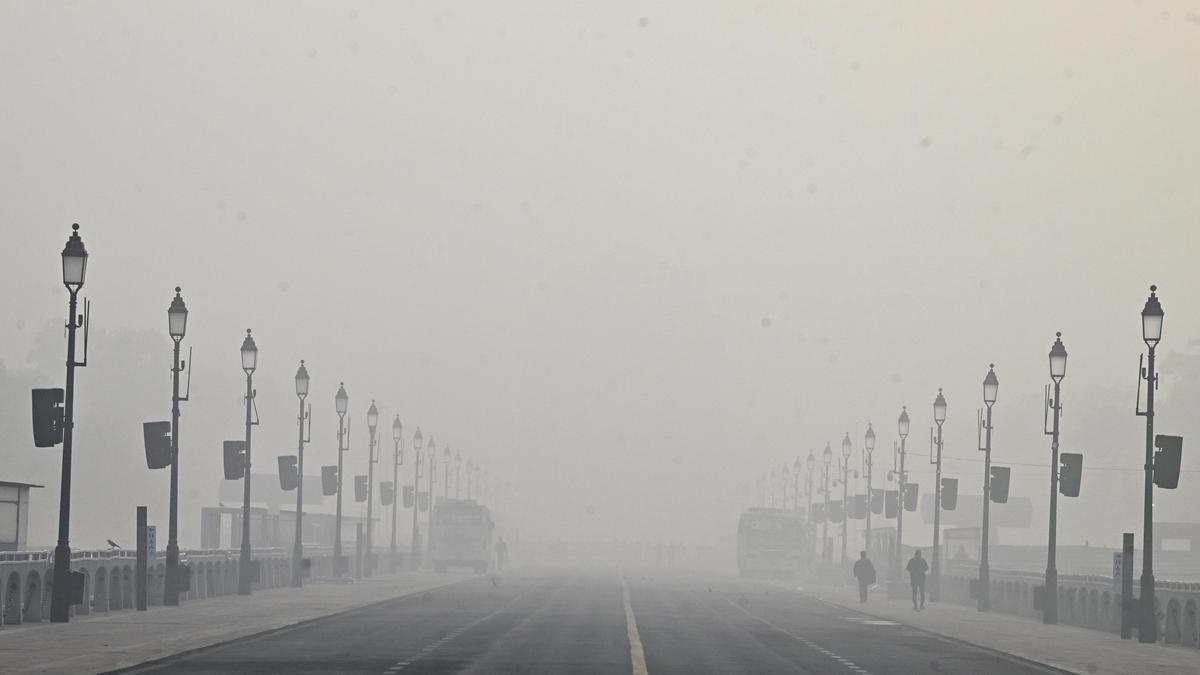
Tue Jan 06 04:18:34 UTC 2026: # Delhi Chokes on “Poor” Air Quality as Smog Grips the City
The Story:
On January 6, 2026, Delhi’s air quality remained in the ‘poor’ category, with an average Air Quality Index (AQI) of 293, according to the Central Pollution Control Board (CPCB). Several stations recorded ‘very poor’ air quality, with Chandni Chowk registering the worst at 352. The Air Quality Early Warning System forecasts similar conditions for the next six days. Shallow fog and high humidity compounded the situation, with the minimum temperature slightly above the seasonal average at 7.6 degrees Celsius.
Key Points:
- Delhi’s average AQI was 293 on January 6, 2026, placing it in the ‘poor’ category.
- Chandni Chowk recorded the worst air quality with an AQI of 352 (‘very poor’).
- The Air Quality Early Warning System predicts ‘poor’ to ‘very poor’ air quality for the next six days.
- The minimum temperature was recorded at 7.6 degrees Celsius, slightly above the seasonal average.
- Relative humidity reached 100% in parts of the city.
Critical Analysis:
- The consistency of ‘poor’ to ‘very poor’ air quality in Delhi is a recurring issue, as seen in previous years. The lack of substantial improvement despite various mitigation efforts points to the complex interplay of factors like vehicular emissions, industrial pollution, construction activities, and meteorological conditions.
Key Takeaways:
- Delhi’s persistent air pollution remains a severe public health concern.
- The Air Quality Early Warning System is crucial for informing the public and enabling preventative measures.
- Long-term and comprehensive strategies are needed to address the root causes of air pollution in Delhi.
- The current measures are insufficient, given the consistent ‘poor’ to ‘very poor’ AQI readings.
Impact Analysis:
- The continuous exposure to poor air quality can lead to increased respiratory illnesses and cardiovascular diseases among Delhi’s residents, placing a strain on the healthcare system.
- The environmental impact includes damage to vegetation, reduced visibility, and potential disruptions to economic activities.
- The situation calls for increased investment in clean energy, public transportation, and stricter enforcement of environmental regulations. Failure to address air pollution could lead to long-term public health and economic consequences for Delhi.
 First Piper