
Mon Jan 05 03:00:00 UTC 2026: Summary:
This article from “The Hindu” examines the history of Pakistan’s civil-military relations, highlighting the military’s consistent influence on the country’s political landscape. It traces the rise of the military from the early years after Partition, through various coups and periods of civilian rule, to the present day. The article argues that systemic weaknesses in civilian institutions, ethnic and linguistic divides, and geopolitical challenges have allowed the military to maintain its dominance. The recent appointment of Field Marshal Asim Munir as Chief of Defence Force, while also serving as Chief of Army Staff, is presented as the latest example of this enduring pattern, solidifying military control. The authors suggest that only by strengthening civilian governance, addressing internal divisions, and rebuilding political institutions can Pakistan break free from this cycle.
News Article:
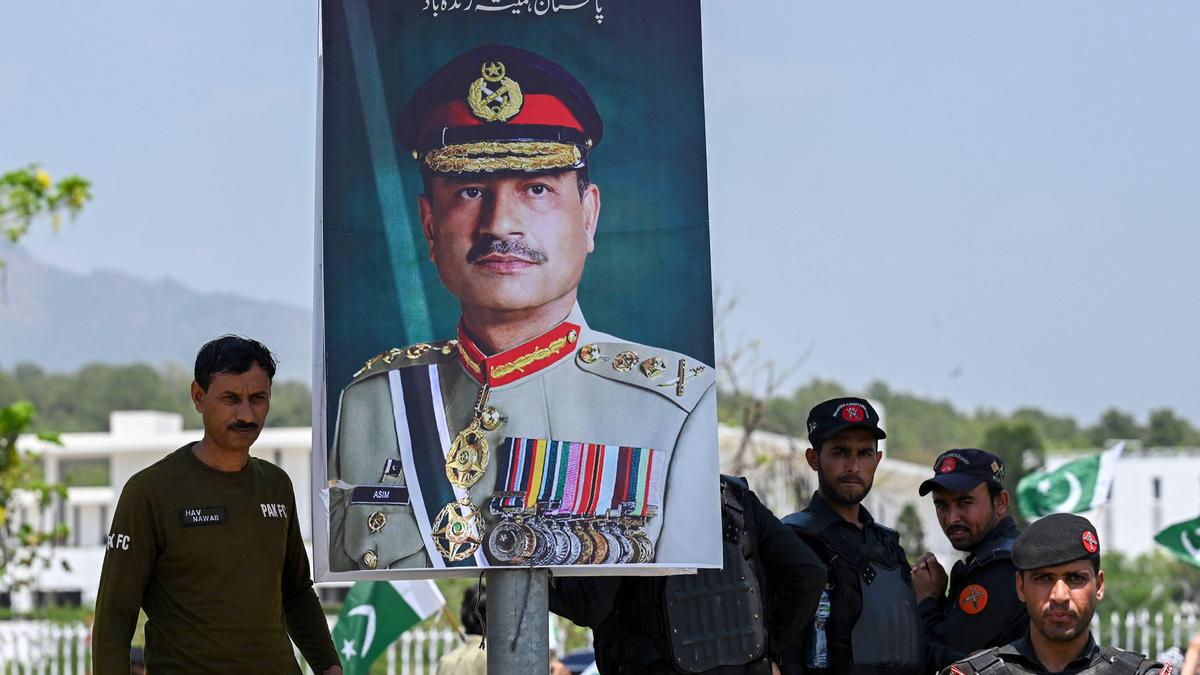
Pakistan Solidifies Military Control with Appointment of First Chief of Defence Force
Islamabad – January 5, 2026 – Pakistan has appointed Field Marshal Asim Munir as its first-ever Chief of Defence Force (CDF), while he simultaneously serves as Chief of Army Staff (COAS), raising concerns about a further consolidation of military power within the country. Recent constitutional amendments grant the CDF extensive authority, leading some analysts to describe the move as a “silent coup.”
The appointment follows a pattern of military influence in Pakistani politics that stretches back to the nation’s founding. Numerous coups and periods of military rule have punctuated the country’s history, often justified by the military’s claim of needing to restore order amidst political instability and ineffectiveness of civilian governments.
Past attempts by civilian leaders to assert autonomy, including those of Imran Khan, Benazir Bhutto, and Nawaz Sharif, have been met with resistance from the military establishment, which has effectively controlled the state since its inception. Analysts point to Pakistan’s deep ethnic and linguistic divisions, corruption, radicalization, geopolitical entanglements, and the persistent weakness of civilian institutions as factors that have enabled the military’s dominance.
The article concludes that Pakistan will remain under the shadow of the military until it successfully rebuilds its political institutions, heals its internal divisions, and strengthens civilian governance.
 First Piper