
Sat Jan 03 19:20:17 UTC 2026: Summary:
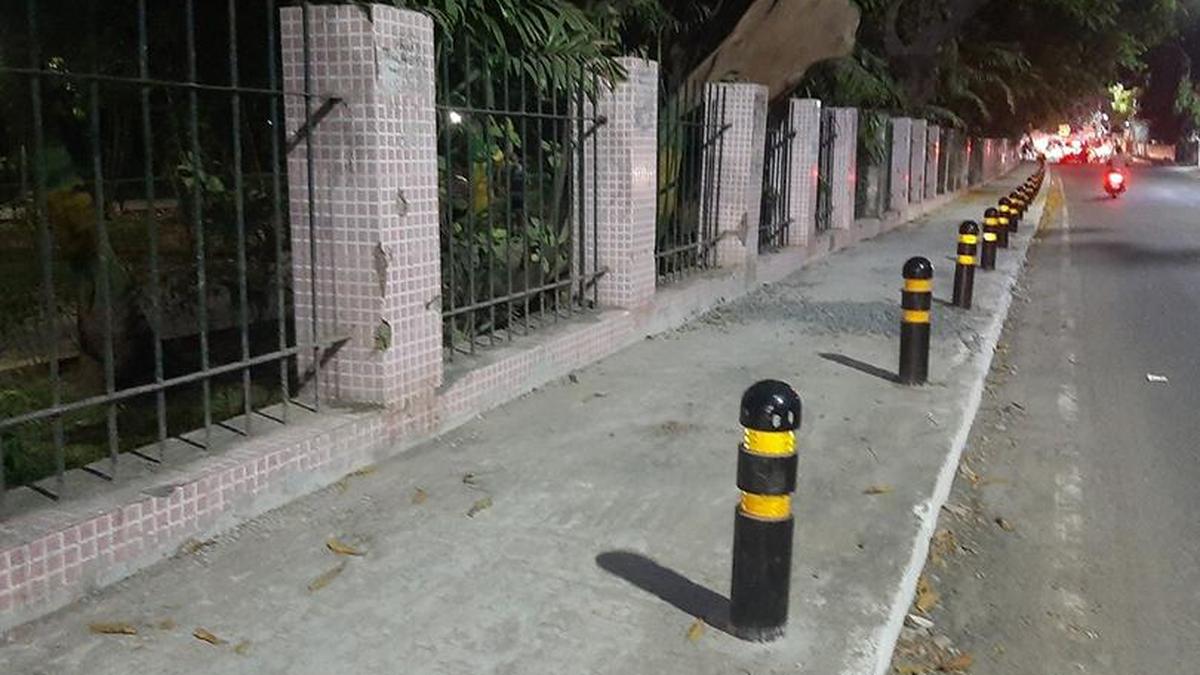
Disability rights activists in Chennai are protesting the Greater Chennai Corporation’s (GCC) plan to install bollards on pavements. They argue that the current plans, lacking specific details on placement, spacing, and design, will obstruct pedestrian access, particularly for wheelchair users. Activists emphasize that bollards are meant to protect pedestrians and should not hinder their movement. They are pushing for designs and placements that adhere to accessibility standards and allow for seamless pedestrian flow, citing previous court orders and suggesting alternative designs. The GCC has proposed installing 24,400 bollards across various zones at an estimated cost of ₹8.68 crore.
News Article:
Chennai Bollard Plan Draws Ire from Disability Rights Activists
Chennai, January 4, 2026 – A plan by the Greater Chennai Corporation (GCC) to install over 24,000 bollards across the city has sparked controversy, with disability rights activists raising concerns about accessibility. The proposed ₹8.68 crore project, intended to protect pedestrians, is facing criticism for its lack of clarity regarding placement, spacing, and design specifications.
Activists argue that the bollards, as currently envisioned, will obstruct pedestrian access, especially for wheelchair users, effectively undermining pedestrian safety. Vaishnavi Jayakumar, a prominent disability rights activist, stated that the original intent of bollards – to protect pedestrians while allowing clear passage – seems to have been lost.
“Instead of ensuring clear pedestrian passages, bollards and paver blocks are often laid around trees or electric poles without considering accessibility,” Jayakumar lamented.
Concerns are also being raised about the lack of adherence to a 2023 Madras High Court order mandating that bollards be designed and placed to ensure easy passage for wheelchair users. Activists claim that bollards identified as obstructive in a previous public interest litigation remain unrectified.
Sathish Kumar, another PwD activist, has proposed alternative bollard designs, similar to those used in Malaysia, that would prevent two-wheeler encroachment while allowing wheelchair movement. He also suggested implementing table-top or continuous footpaths with speed-breaker-like structures at intersections.
The Disability Rights Alliance has submitted recommendations including a minimum 1,000 mm clear width for wheelchair access and layouts to prevent two-wheeler encroachment.
The Standing Committee Chairperson (Works) N. Chitrarasu said he was not aware of the design and would check on the issue as soon as possible.
 First Piper