
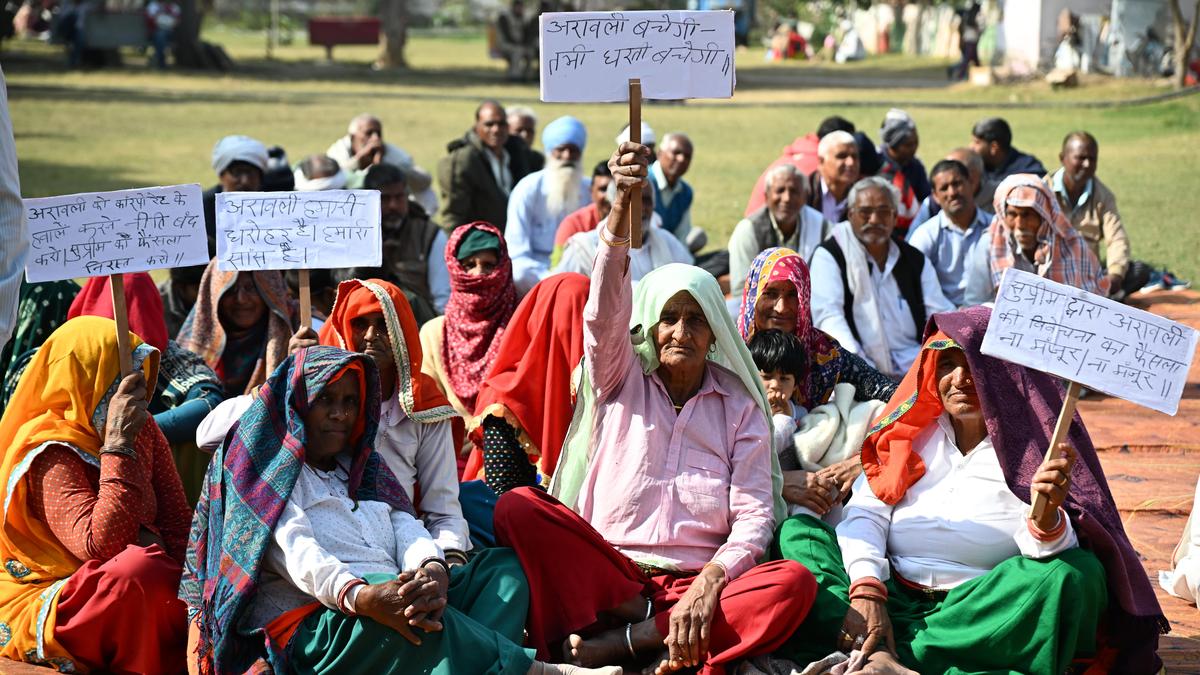
Sat Jan 03 00:16:00 UTC 2026: Headline: Aravalli Hills Face Uncertain Future as Protests Erupt Over Mining Concerns
Kotputli, Rajasthan – Protests are intensifying across the Aravalli hill range as communities fight to protect the ancient geological formation from rampant mining and quarrying. Villagers in Rajasthan and Haryana are demanding a complete ban on all mining activities, citing severe environmental degradation, health issues, and economic hardship.
The Aravallis, stretching across Delhi, Haryana, Rajasthan, and Gujarat, have been under mining restrictions since a 2009 Supreme Court order. However, illegal mining persists, fueled by strong local lobbies and alleged administrative apathy. The issue was reignited in November 2025 when the Supreme Court initially upheld a definition that environmentalists fear would strip protection from lower-lying areas of the hills, potentially leading to increased exploitation.
Following widespread outrage, the Supreme Court stayed its November order on December 29th, proposing a high-powered committee to assess the impact of “sustainable mining” within the newly defined Aravalli area. However, activists argue that “no mining is sustainable” and are calling for a comprehensive environmental and social impact study across the entire range.
Local communities report devastating consequences of mining, including depleted water levels, dust pollution leading to respiratory illnesses like silicosis, and displacement of families. Some, like Mufisa from Nuh, Haryana, have been forced into alternative livelihoods, further threatened by environmental regulations. Others, like Arshad, argue that limited, local stone cutting is necessary for their survival, contrasting with the large-scale mining operations.
Rajiv Saini, from Sammanwala, claims that halting mining activities has led to improved education and employment opportunities for the younger generation.
The Aravalli Virasat Jan Abhiyan, a citizen-driven campaign, is leading the protests, demanding the hills be declared a “national asset.” They emphasize the Aravallis’ vital role in climate regulation, groundwater recharge, and as a barrier against desertification.
As protests continue, the future of the Aravallis and the livelihoods of the communities that depend on them remain uncertain, highlighting the ongoing conflict between economic development and environmental conservation in India.
 First Piper