
Wed Dec 17 10:53:48 UTC 2025: FOR IMMEDIATE RELEASE
India Unveils Indigenous DHRUV64 Microprocessor, Aiming for Semiconductor Independence
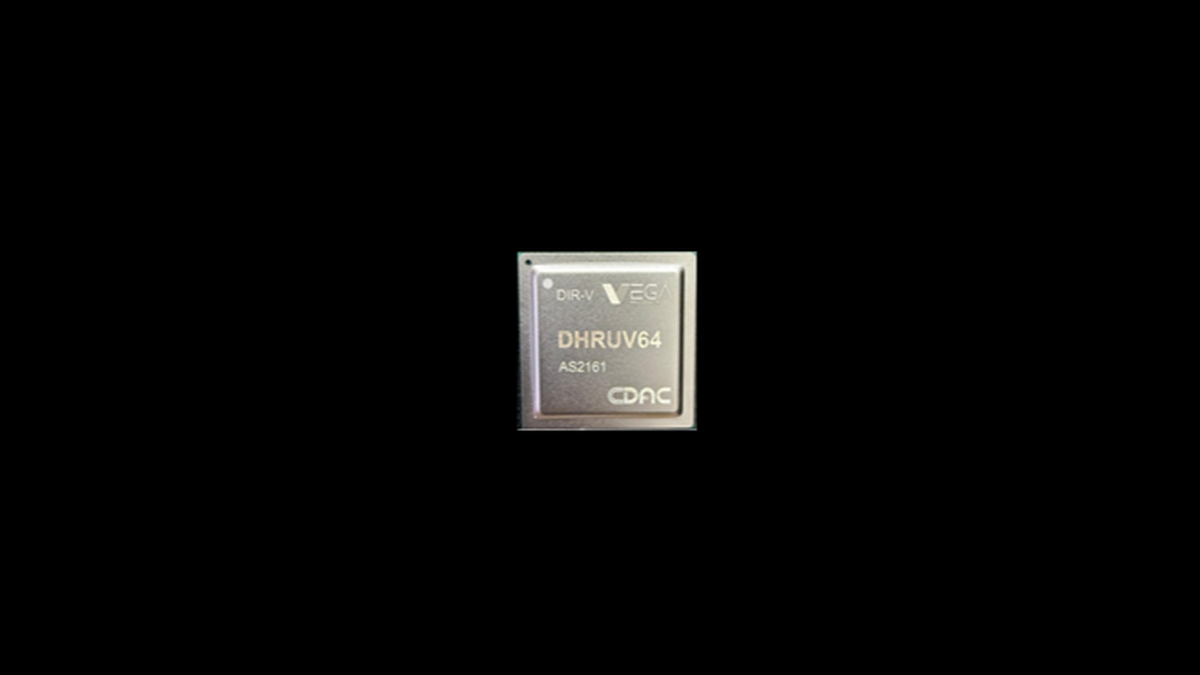
New Delhi, December 17, 2025 – The Ministry of Electronics and Information Technology (MEITY) announced the launch of the DHRUV64 microprocessor, a domestically designed chip intended to bolster India’s indigenous processor capabilities. Developed by the Centre for Development of Advanced Computing (C-DAC) under MEITY’s Microprocessor Development Programme, the 64-bit, dual-core processor, operating at 1 GHz, is intended for a wide range of applications, from consumer electronics to industrial automation.
India, a significant consumer of processors, currently relies heavily on imported designs and supply chains. The DHRUV64 is part of the government’s push for a “homegrown processor technology,” vital for securing critical infrastructure such as telecom networks and industrial controls against supply shocks and potential security vulnerabilities.
While the DHRUV64’s performance is not expected to rival top-tier consumer chips, it targets applications prioritizing reliability and hardware-software integration, including telecommunications base stations, industrial controllers, routers, and automotive modules.
The DHRUV64 is part of India’s processor ecosystem that includes SHAKTI, AJIT, VIKRAM, and THEJAS64. The goal is to address strategic operations, control systems, spaceflight systems, and industrial automation.
MEITY is positioning DHRUV64 as a platform for startups, academia, and industry to innovate and develop prototypes “without relying on foreign processors.” The architecture is based on the RISC-V open instruction set, providing royalty-free access to core rules, which is attractive to governments and research groups.
The DHRUV64 is tied to the Digital India RISC-V (DIR-V) programme, to build microprocessors for industry, military, and consumer technologies. THEJAS32 and THEJAS64 preceded it. The location of DHRUV64’s fabrication remains undisclosed.
Some tech experts have expressed caution, noting the lack of detailed engineering specifications and benchmarking data to fully evaluate the chip’s capabilities. Key information such as memory subsystem details, input/output capabilities, performance per watt, foundry details, and reliability targets are currently missing. Questions are also raised about the ambiguity of the phrase “fully indigenous,” and a lack of information on developer boards, operating system support, security features, and deployment plans.
MEITY also indicated future iterations of the chip, with “DHANUSH” slated to be a 1.2-GHz quad-core processor and “DHANUSH+” a 2-GHz quad-core processor.
The launch of DHRUV64 follows several government initiatives, including the ‘Chips to Startup’ program, the Design Linked Incentive scheme, and the INUP-i2i initiative, aimed at bolstering the semiconductor ecosystem. The India Semiconductor Mission has approved ten projects in six states, committing ₹1.6 lakh crore.
The government aims to foster a robust ecosystem around Indian-designed chips, providing system-on-chip families, reference designs, and software support for domestic products. The ultimate goal is to allow Indian consumers to choose Indian chips without increased risk or cost.
About MEITY:
The Ministry of Electronics and Information Technology is a ministry of the Government of India responsible for IT policy, strategy and electronics industry development.
 First Piper