
Tue Dec 16 21:00:00 UTC 2025: Here’s a summary and news article based on the provided text:
Summary:
On December 16, 2025, the Rajya Sabha approved the Union Government’s first batch of Supplementary Demands for Grants, authorizing an additional expenditure of ₹41,455 crore for the fiscal year 2025-26. This includes significant allocations for fertilizer subsidies, compensation for oil marketing companies, and additional funding for higher education. While the government emphasizes fiscal consolidation and increased urea production, opposition MPs raised concerns about reduced allocations to states and advocated for legislation enabling asset tokenization.
News Article:
Rajya Sabha Approves ₹41,455 Crore in Supplementary Grants; Opposition Voices Concerns
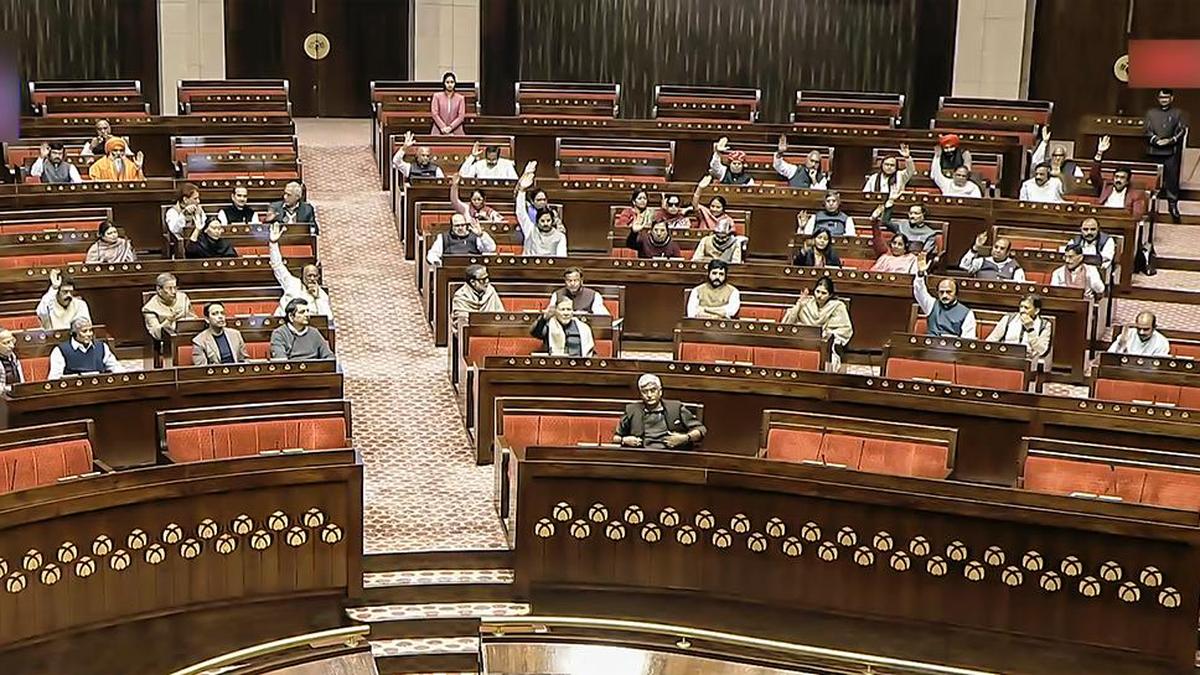
New Delhi – December 17, 2025 – The Rajya Sabha yesterday approved the Union Government’s request for ₹41,455 crore in additional spending as part of the first batch of Supplementary Demands for Grants for the 2025-26 fiscal year. The approved funding includes over ₹18,000 crore dedicated to fertilizer subsidies, ₹9,500 crore for compensating oil marketing companies, and ₹1,304 crore for the Department of Higher Education.
Minister of State for Finance Pankaj Chaudhary addressed the Rajya Sabha, highlighting the government’s commitment to fiscal consolidation, noting a target deficit of 4.4% for 2025-26, a significant decrease from 9.2% in 2020-21. He also stated that urea production in the country had increased by approximately one lakh tonne per month.
However, the opposition raised concerns during the debate. Congress MP G.C. Chandrashekhar alleged that the central government has been reducing allocations to states and discriminating against those ruled by opposition parties. Aam Aadmi Party member Raghav Chadha called for a “Tokenisation Bill” to facilitate fractionalized ownership of assets through digital tokens, arguing that it would democratize access to investment opportunities. He claims through asset tokenization, real estate and infra projects, and commodities will be divided into small pieces of digital tokens. This tradeable token can be used by anyone for buying or selling and make profits.
The approval of these supplementary grants comes amidst ongoing discussions regarding the nation’s economic priorities and the balance of power between the central government and the states.
 First Piper