
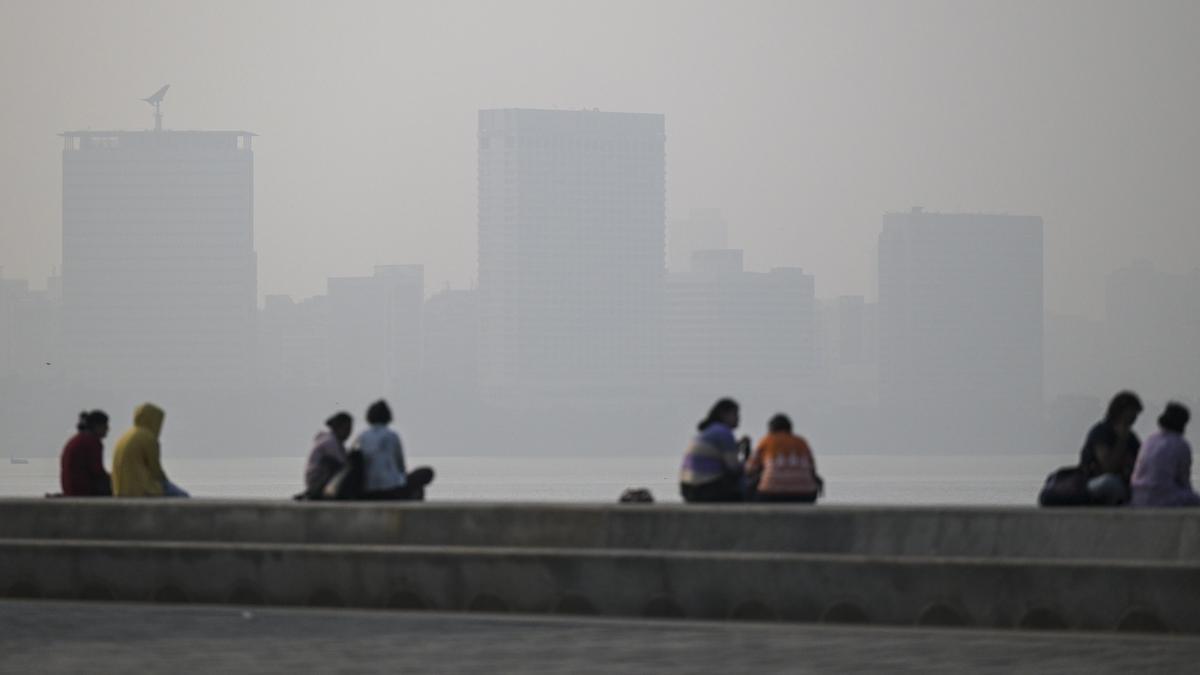
Sun Dec 07 02:20:30 UTC 2025: Mumbai Chokes on Air Pollution Crisis; High Court Demands Action
Mumbai, December 7, 2025 – Mumbai is grappling with a severe air pollution crisis, impacting the health and well-being of its residents, according to an investigation published today in The Hindu’s e-Paper. From the slums of Mankhurd to the college campuses of Matunga, the city is blanketed in smog, with particulate matter levels frequently exceeding safe limits.
Shabnam Abdul Gaffar Shah, a resident of Mankhurd, reports widespread illness in her family, attributing it to the poor air quality near ongoing construction. Medical professionals are also reporting a surge in respiratory illnesses, particularly among children. Dr. Asmita Mahajan of Fortis Raheja Hospital calls for a “pollution lockdown” due to the alarming increase in cases. Dr. Samir Garde, a pulmonologist, notes a rise in lung diseases, including cancer, among non-smokers, linking it to air pollution.
The Maharashtra Pollution Control Board (MPCB) found that dust contributes to 30% of PM10 pollution in Mumbai. While a Respirer Living Sciences report shows a slight increase in PM2.5 levels from 2019 to 2024, it also notes an increase in “good” air quality days. However, the persistence of “moderate” and “poor” days, especially during construction periods, remains a concern.
The Bombay High Court has taken suo motu cognizance of the issue, initiating a public interest litigation in 2023. Despite court-ordered guidelines for construction sites, including mandatory air quality sensors and water sprinklers, compliance remains low. The court recently criticized the worsening air quality and non-compliance at construction sites and rejected an attempt to blame volcanic ash from Ethiopia. Of the 1,000 construction sites in the city, only 400 have installed working sensors. The court has ordered the formation of a committee to ensure strict adherence to existing guidelines and submit findings within a week. The matter will be heard again on December 15.
BMC Commissioner Bhushan Gagrani announced Project MANAS, a collaboration with IIT Kanpur, to install a hyperlocal sensor-based air quality monitoring system. However, experts like Rakesh Kumar, former director of CSIR-NEERI, argue that the real problem is not data collection but translating data into action. He criticizes “knee-jerk reactions” like banning construction activities and implementing Graded Response Action Plan stages, calling for more granular data on sources like vehicle types and construction activities.
Other experts like Tuhin Banerji advocate for investing in pollutant removal technologies, such as electrostatic precipitators and air purifying devices like WAYU. Environmentalists like Sumaira Abdulali have accused authorities of obscuring crucial data, noting the disappearance of PM2.5 data from the Central Pollution Control Board’s Sameer app in May 2025.
While Gagrani states that stop-work notices have been issued and measures like road watering are being implemented, experts question their effectiveness. The BMC has also deployed flying squads to enforce construction site guidelines. The Dharavi redevelopment project and bullet train project have been issued show-cause notices.
The city now faces mounting pressure from the High Court to address the crisis and protect public health.
 First Piper