
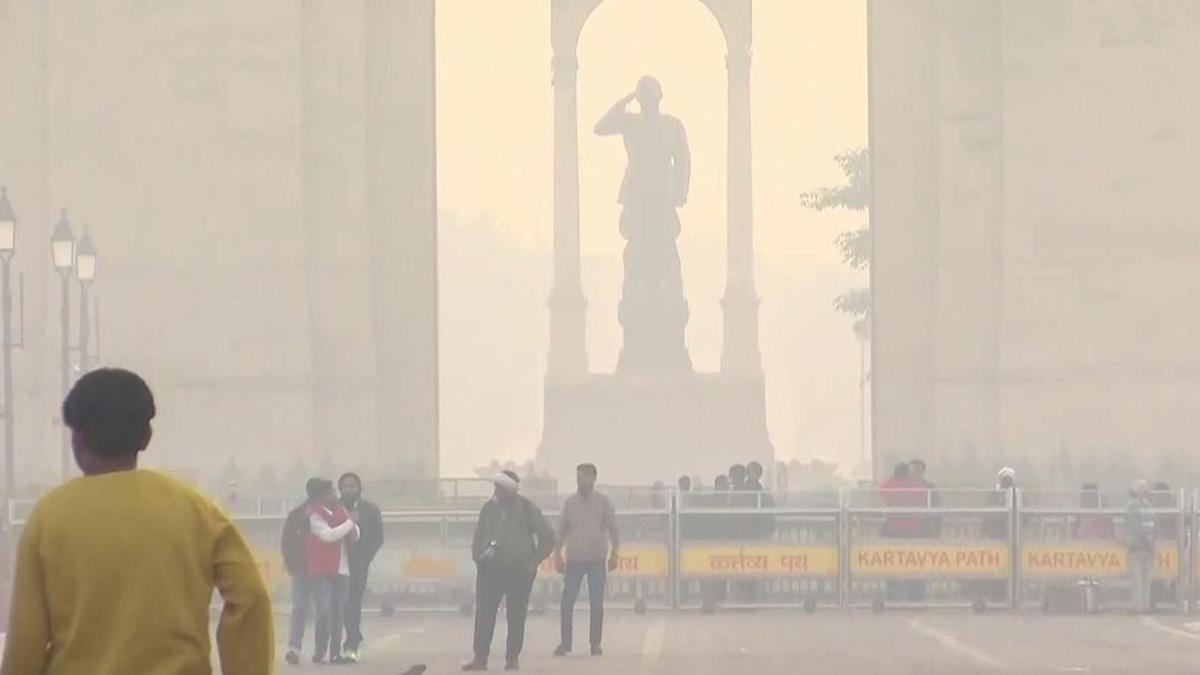
Thu Dec 04 02:30:00 UTC 2025: ## News Article: Delhi Chokes on Local Pollution Despite Reduced Farm Fires
New Delhi – December 4, 2025 – Despite a significant reduction in stubble burning in neighboring states, Delhi’s air quality remains stubbornly poor, indicating local emissions are the primary driver of the capital’s persistent pollution crisis. A new report by the Centre for Science and Environment (CSE) confirms that Delhi and the National Capital Region (NCR) can no longer blame farm fires for the choking smog.
Data shows that Punjab and Haryana have achieved a 90% reduction in stubble burning incidents compared to 2021, reaching their lowest levels in five years. However, the Air Quality Index (AQI) in Delhi remained in the ‘very poor’ to ‘severe’ range for most of November, even when the contribution of farm fires to pollution levels remained below 5% for the majority of days.
The Supreme Court echoed this sentiment on Monday, suggesting farmers should not be scapegoated for Delhi’s pollution, questioning why clear skies were observed during the pandemic when vehicular traffic was minimal despite comparatively higher levels of stubble burning.
PM 2.5, a dangerous particulate matter, remained the dominant pollutant for 34 days in October and November. The CSE report highlights a close correlation between particulate pollution spikes and traffic-related emissions of toxic gases like nitrogen dioxide (NO2) and carbon monoxide (CO), especially under low-dispersion winter conditions.
The problem is widespread across the city, with established hotspots like Jahangirpuri, Bawana, and Wazirpur consistently exceeding pollution standards. Emerging hotspots such as Vivek Vihar, Nehru Nagar, and Dwarka Sector 8 are also registering alarming levels of PM 2.5.
Furthermore, the CSE report reveals that NCR cities are facing similar, or even worse, pollution levels than Delhi. Bahadurgarh, for instance, experienced a prolonged smog episode exceeding Delhi’s intensity, highlighting that the entire region operates as a single airshed where smaller towns are becoming equally polluted.
Worryingly, data suggests Delhi is losing ground in its fight against air pollution. After a period of improvement between 2018 and 2020, PM2.5 levels have risen sharply since 2021-22, indicating that sustained efforts to curb local sources of pollution are urgently needed to protect public health. The report was compiled by Sharanjeet Kaur and Anumita Roychowdhury from the Centre for Science and Environment on December 1st, 2025.
 First Piper