
Mon Oct 06 16:49:50 UTC 2025: Here’s a news article summarizing the provided text:
**India to Host Inaugural Emerging Science, Technology, and Innovation Conclave in November**
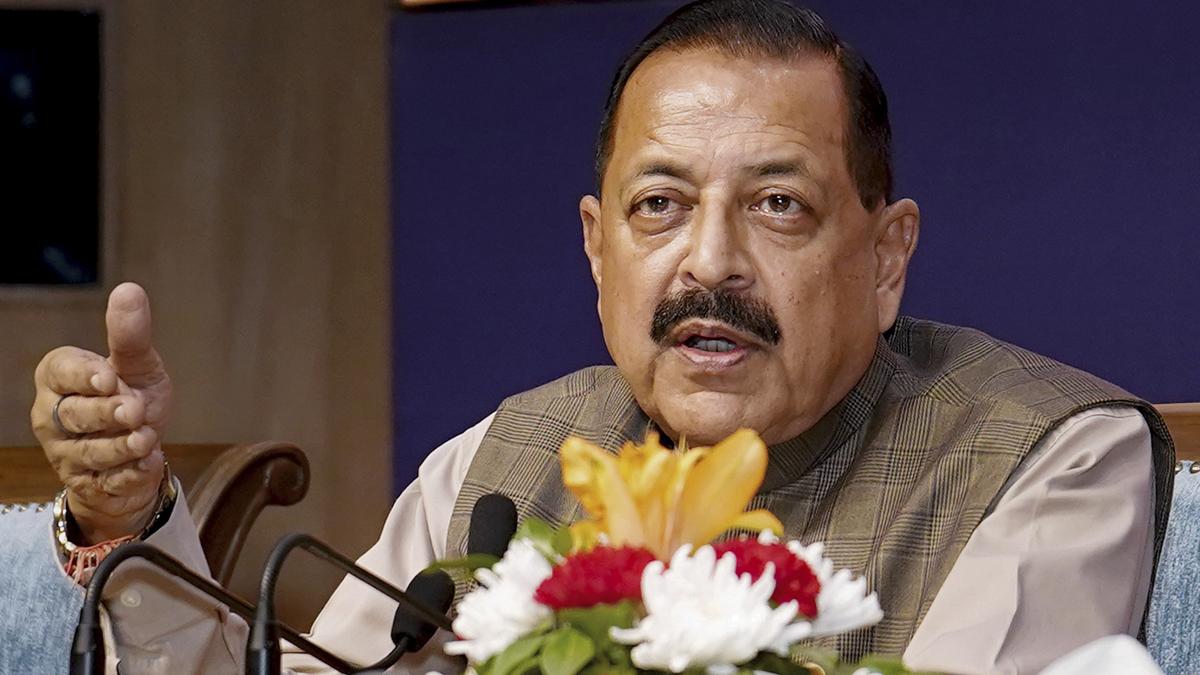
**NEW DELHI, October 6, 2025** – India is set to launch its first-ever Emerging Science, Technology, and Innovation Conclave (ESTIC) this November, replacing the long-standing Indian Science Congress (ISC). The announcement was made today by Science Minister Jitendra Singh at a press conference held at the National Media Centre.
The inaugural ESTIC event will take place at the Bharat Mandapam in New Delhi on November 3rd and 4th. The conclave aims to showcase India’s advancements in science and technology, its burgeoning startup ecosystem, and future ambitions.
Minister Singh emphasized that ESTIC is not merely an “upgrade” of the ISC but a reflection of India’s growing stature in the global science and technology landscape. He expressed hope that Prime Minister Modi would inaugurate the event. The Minister also shared that future iterations will be held outside of Delhi and will have an increased international presence, including participation from Nobel Laureates and other prominent figures.
The event will involve all government scientific ministries, including those focused on atomic energy, space, and information technology. The event website states that it will feature 11 thematic technical sessions and 75 exhibition stalls by deep-tech startups. Nobel Laureate Andre Geim (Physics, 2010) and international dignitaries such as Jean-Yves Le Gall (former president of the French Space Agency), and Prof. Masaru Tomita (Keio University, Japan) are expected to participate.
Abhay Karandikar, Secretary of the Department of Science and Technology (DST), highlighted that ESTIC-2025, through its thematic sessions and high-level panels, will establish a roadmap for achieving Viksit Bharat 2047 by aligning innovation with national priorities. He also stressed that the “whole-of-government” approach sets ESTIC apart, embedding innovation across various sectors of national development, including Health, Education, Agriculture, Energy, Space, Electronics and IT, and Environment.
The Indian Science Congress, while historically significant, had been in decline. A dispute between the DST and the Indian Science Congress Association ultimately led to its discontinuation.
 First Piper